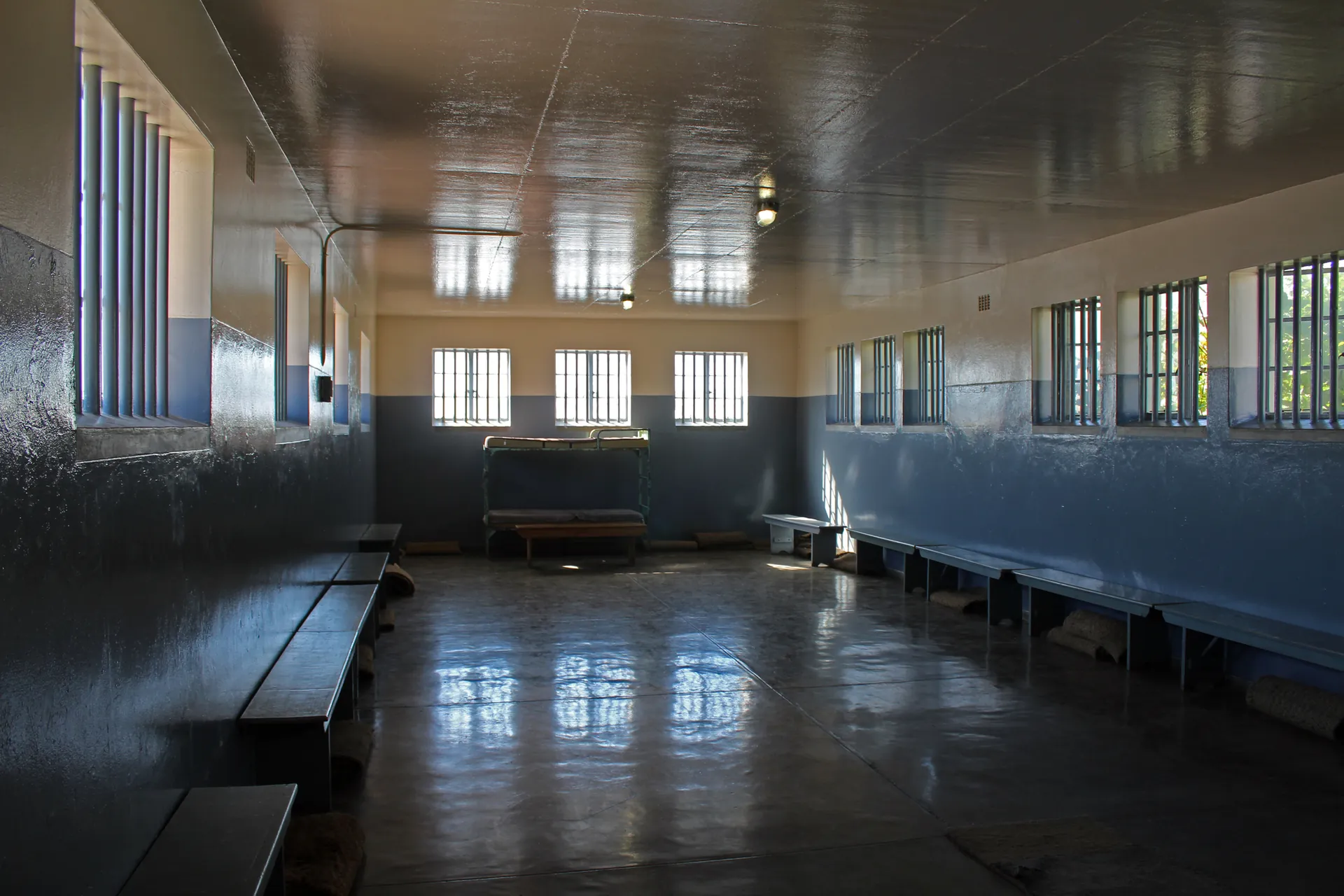
Robben Island Prisoners List: the political prisoners who became presidents, ministers and judges
 By Andrea Semonella
Updated on 14 min read
By Andrea Semonella
Updated on 14 min read
In short
We checked, name by name, which political prisoners of Robben Island went on to hold high office. In South Africa we found 19: three presidents (Nelson Mandela, Kgalema Motlanthe and Jacob Zuma), nine cabinet ministers, five deputy ministers, four provincial premiers, two judges and two presiding officers of Parliament, with some people in more than one role. Six more held office in independent Namibia. The full list, the sources and the method are below.
Key findings
The apartheid government sent the men it feared most to Robben Island. Within a few years of the last political prisoners leaving in May 1991, many of those same men were running the country. We set out to count them, with a source for every name, date and office.
These are the numbers for South Africa, for political prisoners held on the island between 1961 and 1991 and offices held after 1994:
- 19 former prisoners held high national or provincial office.
- Three of them became President of South Africa: Nelson Mandela, Kgalema Motlanthe and Jacob Zuma. Two of them, Zuma and Motlanthe, were also Deputy President.
- Nine became cabinet ministers, and five became deputy ministers.
- In 1994, three of the nine first provincial premiers were former Robben Island prisoners: Raymond Mhlaba in the Eastern Cape, Mosiuoa Lekota in the Free State and Tokyo Sexwale in Gauteng.
- Mandela's first cabinet, sworn in in May 1994, had three ministers who had been held on the island: Mac Maharaj, Steve Tshwete and Jeff Radebe.
- Jeff Radebe, held on the island until 1990, sat in cabinet for 25 years without a break, from 1994 to 2019, in six different portfolios.
Robben Island also held prisoners of SWAPO, the movement that fought South Africa's rule over Namibia. Six of them held office after Namibian independence in 1990, among them Andimba Toivo ya Toivo, who shared B Section with Mandela.
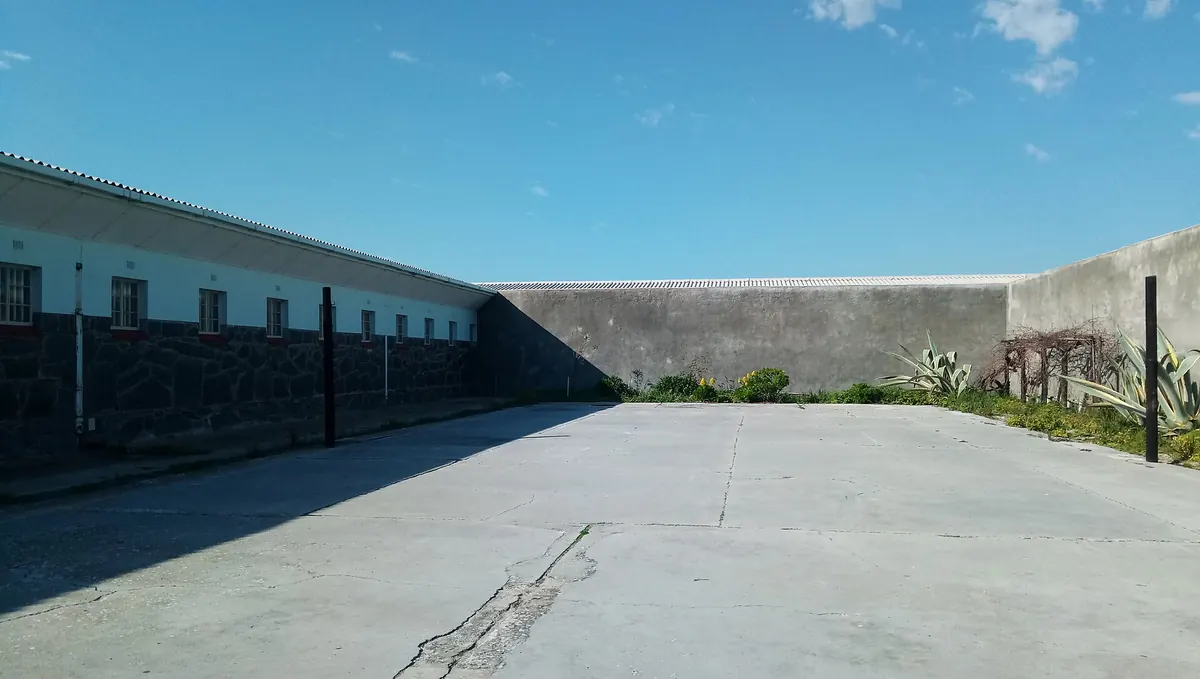
The B Section courtyard, where the leaders of the liberation movements were held
The full list: South Africa
The table gives each person's years on Robben Island, the sentence that sent them there and the offices they held later. Years on the island are those given by the sources we cite; where a source gives only the length of the sentence, we say so. Mandela also spent about two weeks on the island in 1963, before his Rivonia sentence.
| Name | On Robben Island | Sentence | Later office |
|---|---|---|---|
| Nelson Mandela | 1964-1982 | Life, Rivonia Trial | President, 1994-1999 |
| Jacob Zuma | 1963-1973 | 10 years, conspiracy to overthrow the state | Deputy President, 1999-2005; President, 2009-2018 |
| Kgalema Motlanthe | 1977-1987 | 10 years, Terrorism Act | Minister in the Presidency, 2008; President, 2008-2009; Deputy President, 2009-2014 |
| Govan Mbeki | 1964-1987 | Life, Rivonia Trial | Deputy President of the Senate, 1994-1997 |
| Raymond Mhlaba | 1964-1982 | Life, Rivonia Trial | Premier of the Eastern Cape, 1994-1997; High Commissioner to Uganda from 1997 |
| Mac Maharaj | 1965-1976 | 12 years, sabotage | Minister of Transport, 1994-1999 |
| Steve Tshwete | 1964-1978 | 15 years, sabotage | Minister of Sport, 1994-1999; Minister of Safety and Security, 1999-2002 |
| Mosiuoa Lekota | Released end of 1982 | 6 years, Terrorism Act | Premier of the Free State, 1994-1996; Chair of the NCOP, 1997-1999; Minister of Defence, 1999-2008 |
| Tokyo Sexwale | 1978-1990 | 18 years, Pretoria Twelve trial | Premier of Gauteng, 1994-1998; Minister of Human Settlements from 2009 |
| Jeff Radebe | 1986-1990 | 10 years, cut to 6 on appeal | Cabinet minister, 1994-2019, in six portfolios |
| Sbu Ndebele | 10-year sentence, arrested 1976 | 10 years | Premier of KwaZulu-Natal, 2004-2009; Minister of Transport, then of Correctional Services, 2009-2014 |
| Collins Chabane | 1984-1990 | 6 years, terrorism charges | Minister in the Presidency from 2009; Minister of Public Service, until 2015 |
| Mosibudi Mangena | 1973-1978 | 5 years, Terrorism Act | Deputy Minister of Education, 2001-2004; Minister of Science and Technology, 2004-2009 |
| Ebrahim Ismail Ebrahim | 1964-1979 | 15 years, sabotage | Deputy Minister of International Relations, 2009-2014 |
| Mluleki George | From 1978 | 5 years | Deputy Minister of Defence, 2004-2008 |
| Peter Mokaba | Early 1980s, sentence suspended 1984 | Underground work for MK | Deputy Minister of Environmental Affairs and Tourism under Mandela |
| Sfiso Buthelezi | Until 1991 | Not published | Deputy Minister of Finance, 2017-2018; of Agriculture, 2018-2019 |
| Dikgang Moseneke | 1963-1973 | 10 years, PAC membership | Constitutional Court judge, 2002-2016; Deputy Chief Justice, 2005-2016 |
| Fikile Bam | 1964-1974 | 10 years | Judge President of the Land Claims Court, 1995-2011 |
Some names you might expect are missing on purpose. Walter Sisulu, on the island from 1964 to 1982, was Deputy President of the ANC, a party post, not a state office. Ahmed Kathrada and Andrew Mlangeni became members of Parliament, and Kathrada was also Parliamentary Counsellor to President Mandela: important roles, but outside the categories we count. The section on how we compiled this list explains where we drew the line.
What offices they held
Counted by type of office, cabinet ministers are the largest group, and former prisoners of the island reached every branch of the state, from the presidency to the Constitutional Court.
- Cabinet ministers9 people
- Deputy ministers5 people
- Provincial premiers4 people
- Presidents3 people
- Deputy presidents2 people
- Presiding officers of Parliament2 people
- Judges2 people
- Ambassadors and high commissioners1 person
Our count, from the sources listed in this article. One person can hold more than one type of office, so the bars add up to more than 19.
The presiding officers are Govan Mbeki, Deputy President of the Senate from 1994 to 1997, and Mosiuoa Lekota, who chaired the National Council of Provinces from 1997 to 1999. Lekota is the only person on the list who was a provincial premier, a presiding officer of Parliament and a cabinet minister.
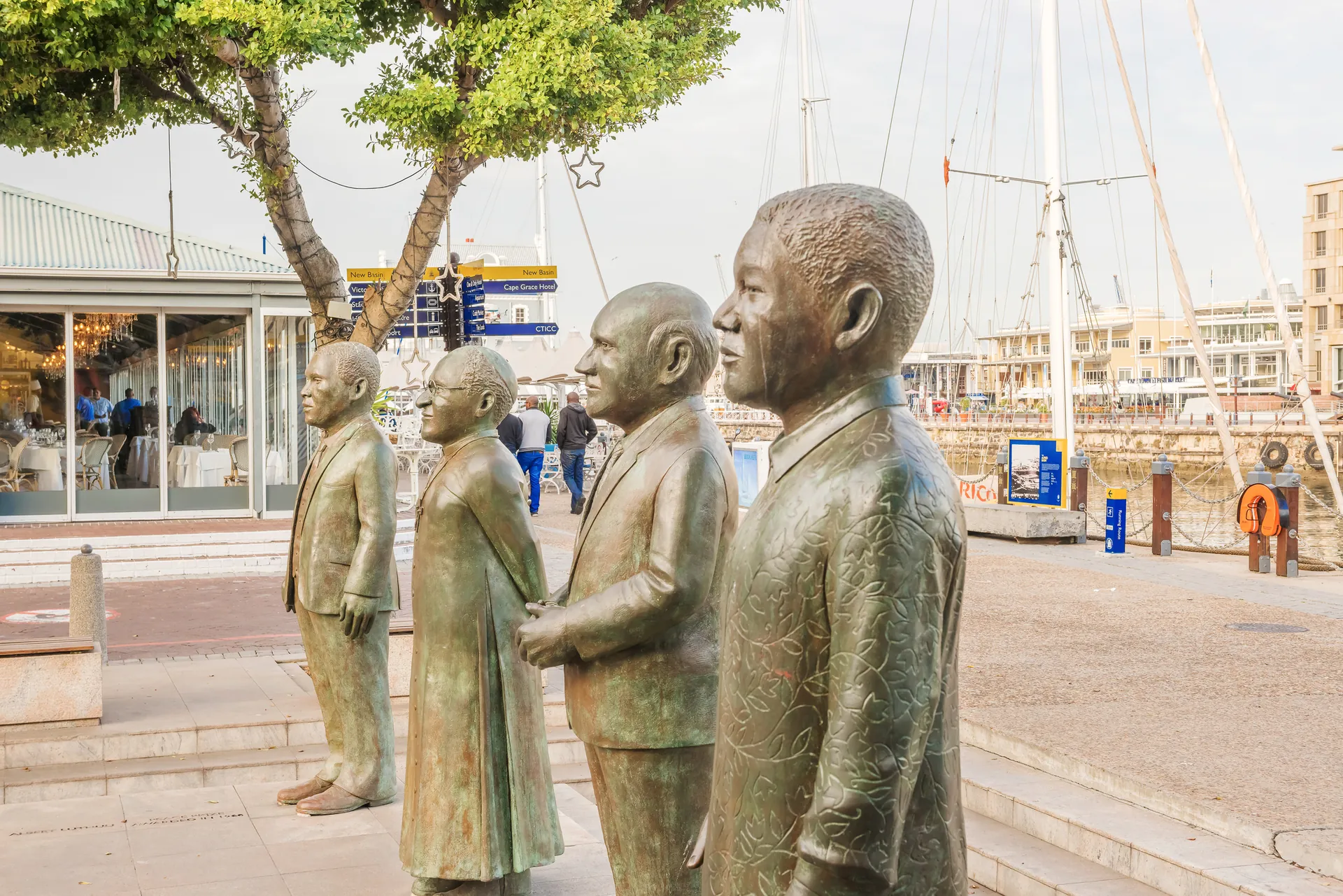
Mandela among the Nobel laureates in Nobel Square, V&A Waterfront
The 19 South Africans, one by one
Nelson Mandela
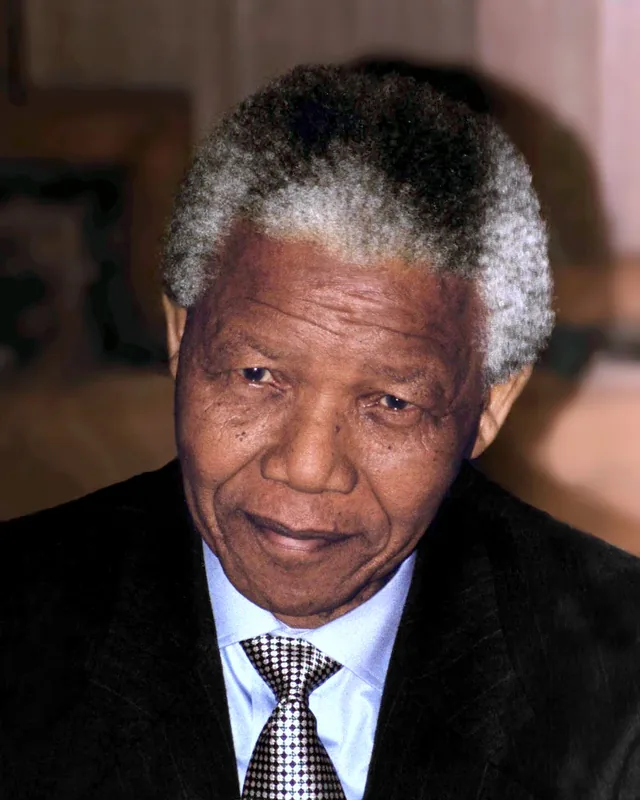
Sentenced to life at the end of the Rivonia Trial, Mandela arrived on 13 June 1964 and left on 31 March 1982 for Pollsmoor Prison. He was released from Victor Verster Prison on 11 February 1990 and inaugurated as president on 10 May 1994. His years on the island have their own page: Nelson Mandela on Robben Island.
Jacob Zuma
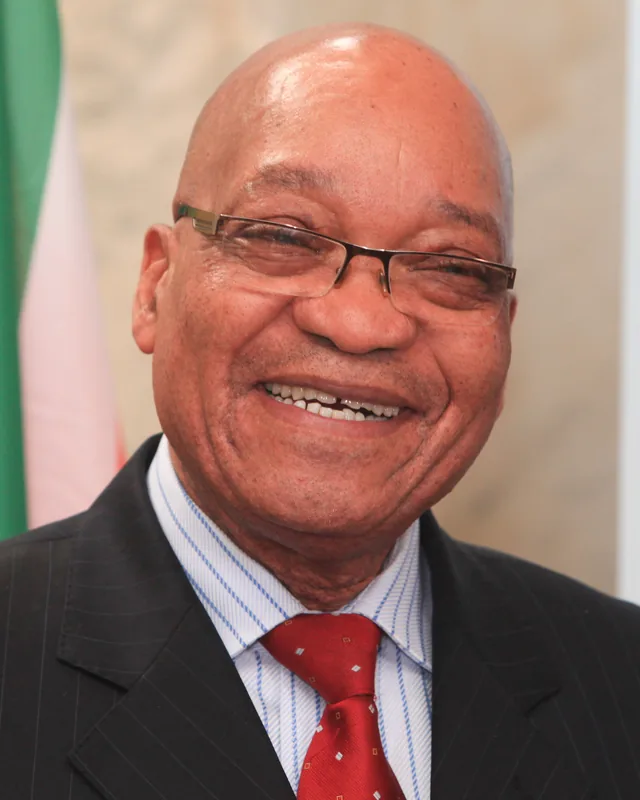
Zuma was sentenced to ten years for conspiring to overthrow the government. The prison register quoted by IOL records him as prisoner 1/5268, admitted on 30 December 1963 and released on 29 December 1973. He was Deputy President from 1999 to 2005 and President from May 2009 until he resigned in February 2018.
Kgalema Motlanthe
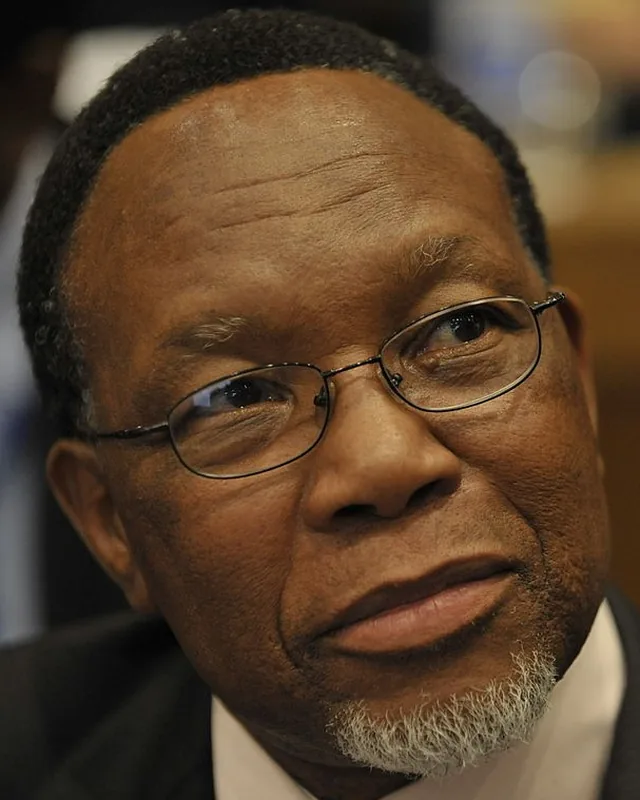
Arrested in April 1976 and convicted under the Terrorism Act, Motlanthe was on the island from July 1977 to April 1987. He became president in September 2008, handed over to Zuma in May 2009 and served as his deputy until 2014.
Govan Mbeki
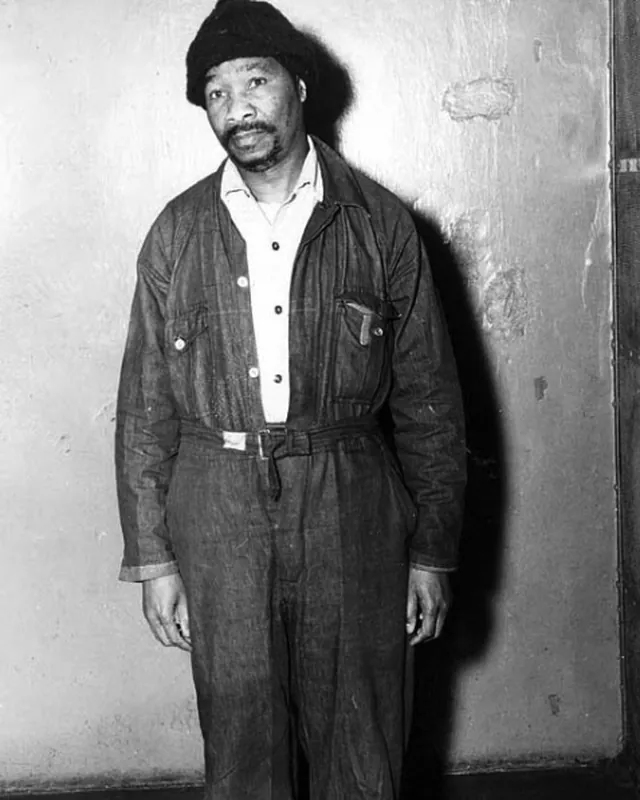
One of the Rivonia trialists sentenced to life in 1964. Govan Mbeki stayed on the island until his release on 5 November 1987 and, from 1994 to 1997, sat as Deputy President of the Senate. He was the father of Thabo Mbeki, who was never held on the island: he had left South Africa for exile in 1962.
Mac Maharaj
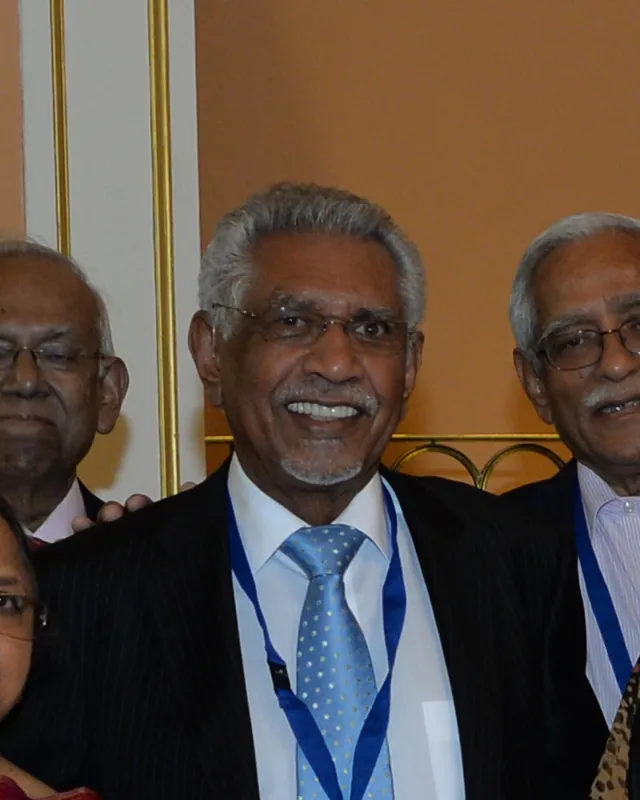
Arrested in July 1964 and sentenced to 12 years for sabotage, Maharaj arrived on Robben Island in January 1965 and was released in December 1976. He was Minister of Transport in Mandela's government from 1994 to 1999, and from 2011 to 2015 spokesperson for President Zuma.
Mosiuoa "Terror" Lekota
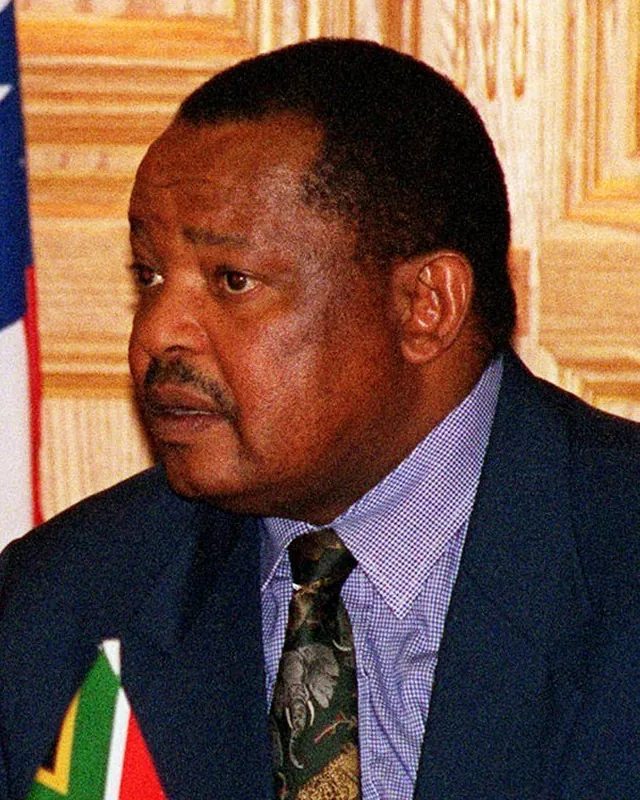
Arrested in 1974 with other members of the South African Students' Organisation, Lekota was sentenced to six years and released from the island at the end of 1982. After 1994 he was the first Premier of the Free State, chaired the National Council of Provinces and was Minister of Defence from 1999 to 2008. He died on 4 March 2026.
Tokyo Sexwale
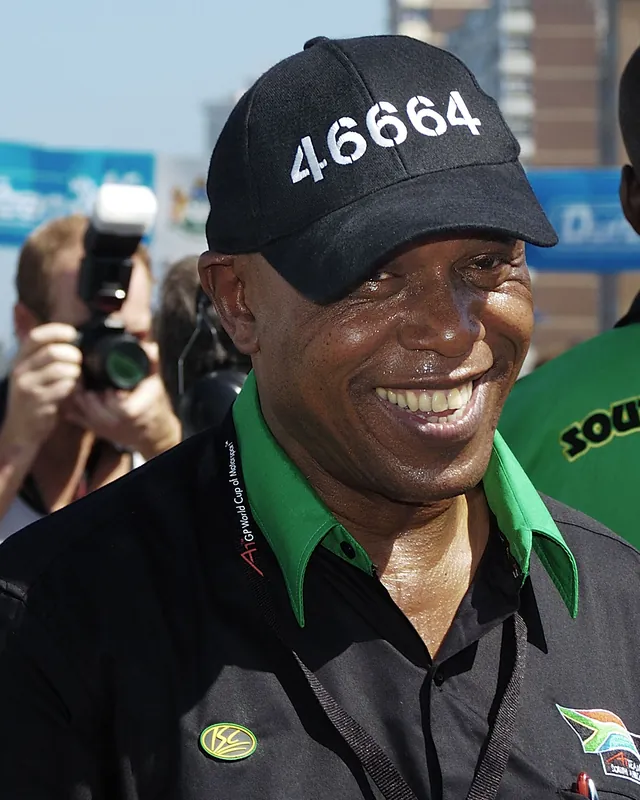
Convicted in the "Pretoria Twelve" trial and sentenced to 18 years, Sexwale stayed on Robben Island until 9 June 1990. He was the first Premier of Gauteng, the province that includes Johannesburg and Pretoria, and from 2009 Minister of Human Settlements.
Jeff Radebe
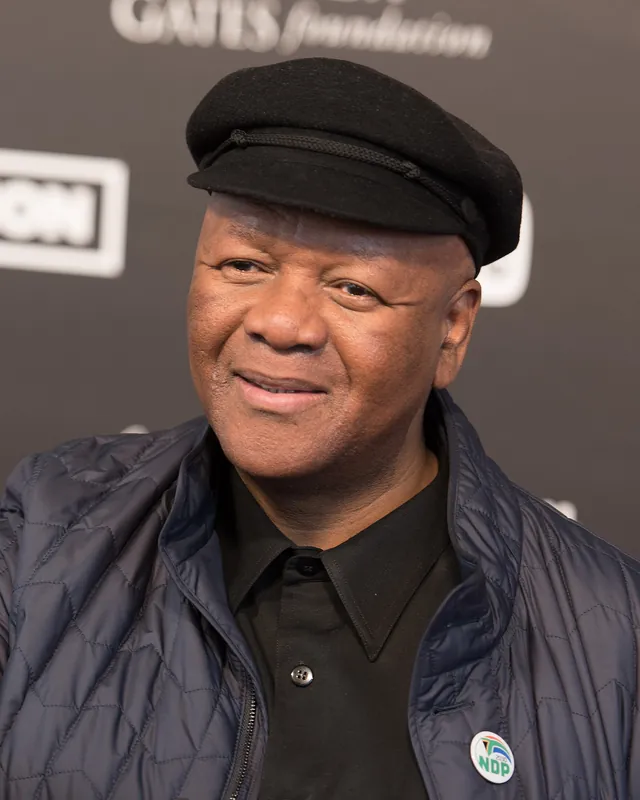
Arrested in 1986, Radebe was sentenced to ten years, reduced to six on appeal. On the island he headed the ANC's political department among the prisoners and was released in 1990, after leading a 12-day hunger strike. From 1994 to 2019 he was a minister without interruption: public works, public enterprises, transport, justice, the presidency and energy.
Ebrahim Ismail Ebrahim
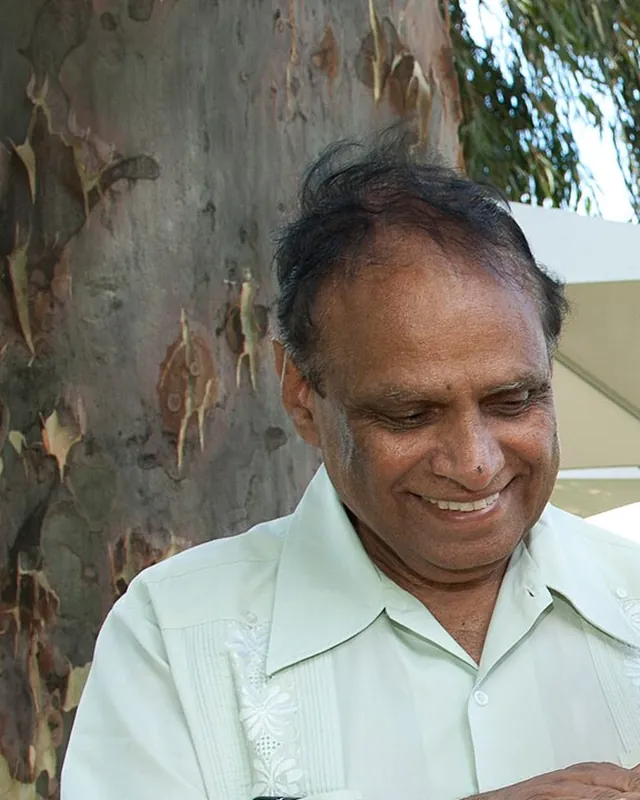
Sentenced to 15 years for sabotage, Ebrahim was on the island from 1964 to February 1979. From 2009 to 2014 he was Deputy Minister of International Relations and Cooperation.
Dikgang Moseneke
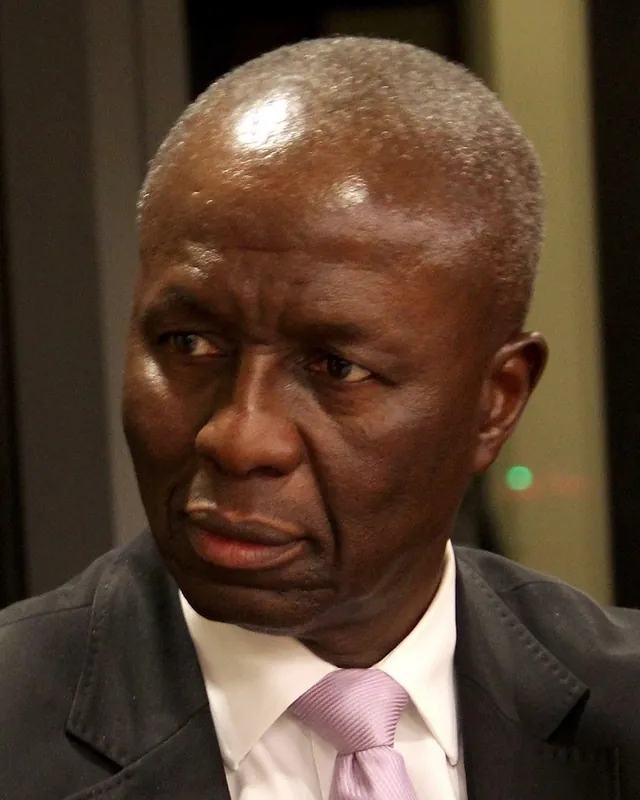
Moseneke was the youngest man on this list when he was jailed. Arrested at 15, he served ten years on Robben Island. He was appointed to the Constitutional Court in 2002 and was Deputy Chief Justice from 2005 until he retired in 2016. His career is set out on the Constitutional Court's page on former judges.
Raymond Mhlaba
Another Rivonia trialist with a life sentence, Mhlaba was moved from the island to Pollsmoor with Mandela on 31 March 1982. In 1994 he became the first Premier of the Eastern Cape, and in 1997 High Commissioner to Uganda.
Steve Tshwete
Tshwete served 15 years on the island and was released, according to South African History Online, in 1978. He became the country's first Minister of Sport and Recreation in 1994 and Minister of Safety and Security in 1999, the post he held when he died in April 2002.
Sbu Ndebele
Arrested in 1976, Sibusiso "Sbu" Ndebele spent ten years on Robben Island. He was Premier of KwaZulu-Natal from 2004 to 2009, then joined the national cabinet as Minister of Transport in 2009 and, from 2012, Minister of Correctional Services, the department that runs South Africa's prisons.
Collins Chabane
Arrested in 1984 and sentenced to six years on terrorism charges, Chabane served his term on Robben Island and was released in 1990. From 2009 he was Minister in the Presidency, and later Minister of Public Service and Administration, the post he held when he died on 15 March 2015.
Mosibudi Mangena
The only member of the Azanian People's Organisation on the list. Sentenced to five years under the Terrorism Act, Mangena was on the island from October 1973 to 2 October 1978, then served as Deputy Minister of Education from 2001 and, from 2004 to 2009, Minister of Science and Technology.
Mluleki George
George was sentenced to five years and sent to Robben Island in 1978. From 2004 to 2008 he was Deputy Minister of Defence, serving alongside Mosiuoa Lekota, another former prisoner of the island.
Peter Mokaba
Mokaba was convicted for underground work for Umkhonto we Sizwe, the ANC's armed wing, and held on Robben Island until his sentence was suspended in 1984. Under President Mandela he became Deputy Minister of Environmental Affairs and Tourism; the source we use does not give the years.
Sfiso Buthelezi
Buthelezi was among the last political prisoners on the island, held there until 1991; the government's own biography does not state his sentence. He was Deputy Minister of Finance from 2017 to 2018 and Deputy Minister of Agriculture from 2018 to 2019.
Fikile Bam
Sentenced to ten years, Bam was on the island from 15 April 1964 to 14 April 1974. In 1995 he became Judge President of the Land Claims Court, the court that hears claims for the return of land, and held the post until his death on 18 December 2011.
Namibia: the SWAPO prisoners
From 1968, Robben Island also held Namibians convicted for their part in SWAPO's struggle against South African rule. After Namibia became independent in 1990, six of them held office in its government or diplomatic service.
| Name | On Robben Island | Sentence | Later office |
|---|---|---|---|
| Andimba Toivo ya Toivo | 1968-1984 | 20 years, Terrorism Act | Minister of Mines and Energy, of Labour, then of Prisons, 1990-2005 |
| Jerry Ekandjo | 1973-1980 | Convicted in 1973 | Cabinet minister in several portfolios, until 2018 |
| John Pandeni | 1978-1985 | Not published | Minister of Regional and Local Government, 2005-2008 |
| Petrus Iilonga | Until 1985 | Not published | Deputy minister in several portfolios, 2000-2015 |
| Marten Kapewasha | 1974-1981 | Not published | Deputy minister from 1994; High Commissioner to the Seychelles, 2011 |
| Ben Ulenga | Until 1985 | 15 years, Terrorism Act | Deputy minister in the 1990s; High Commissioner to the UK, until 1998 |
Dates for the Namibian prisoners are less complete in public sources than those for South Africans: for some of them we could not find the sentence, and we say so in the table rather than fill the gap.
Andimba Toivo ya Toivo
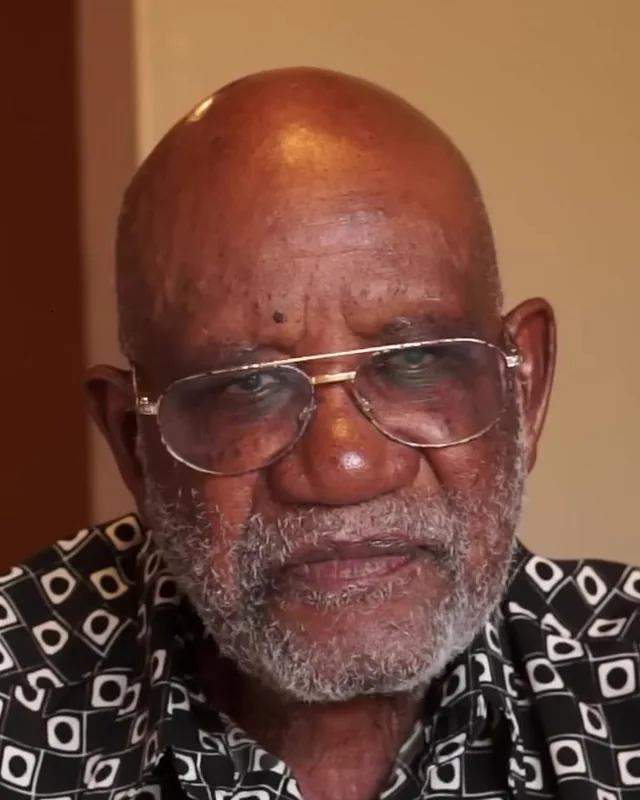
The SWAPO leader was sentenced in Pretoria in 1968 to 20 years under the Terrorism Act. On Robben Island he was held in B Section with Mandela and Sisulu, and was released in March 1984. In independent Namibia he was Minister of Mines and Energy, then of Labour, then of Prisons and Correctional Services.
Ben Ulenga
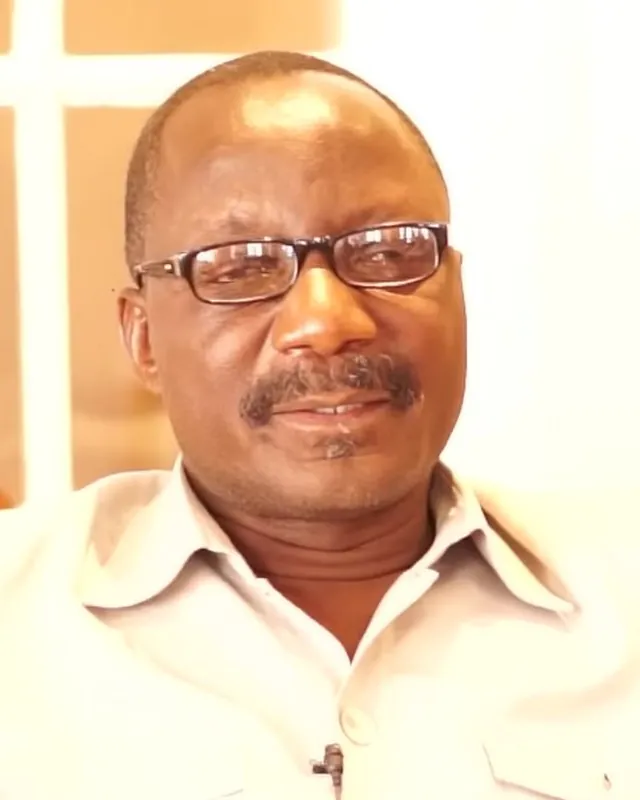
Sentenced in 1977 to 15 years under the Terrorism Act, Ulenga was released in 1985. In the 1990s he was a deputy minister, then High Commissioner to the United Kingdom until he resigned on 27 August 1998.
Jerry Ekandjo
Ekandjo was admitted to Robben Island on 13 December 1973 and released on 15 February 1980. In independent Namibia he served as a cabinet minister in several portfolios, among them Regional and Local Government, until he left the government in February 2018.
John Pandeni
According to the Parliament of Namibia, Pandeni was held on Robben Island from 1978 to 1985. From 2005 to 2008 he was Minister of Regional and Local Government.
Petrus Iilonga
Iilonga was released from Robben Island on 7 April 1985. From 2000 to 2015 he was a deputy minister in several Namibian governments.
Marten Kapewasha
Kapewasha spent 1974 to 1981 on Robben Island. He became a deputy minister in 1994 and, in 2011, Namibia's High Commissioner to the Seychelles.
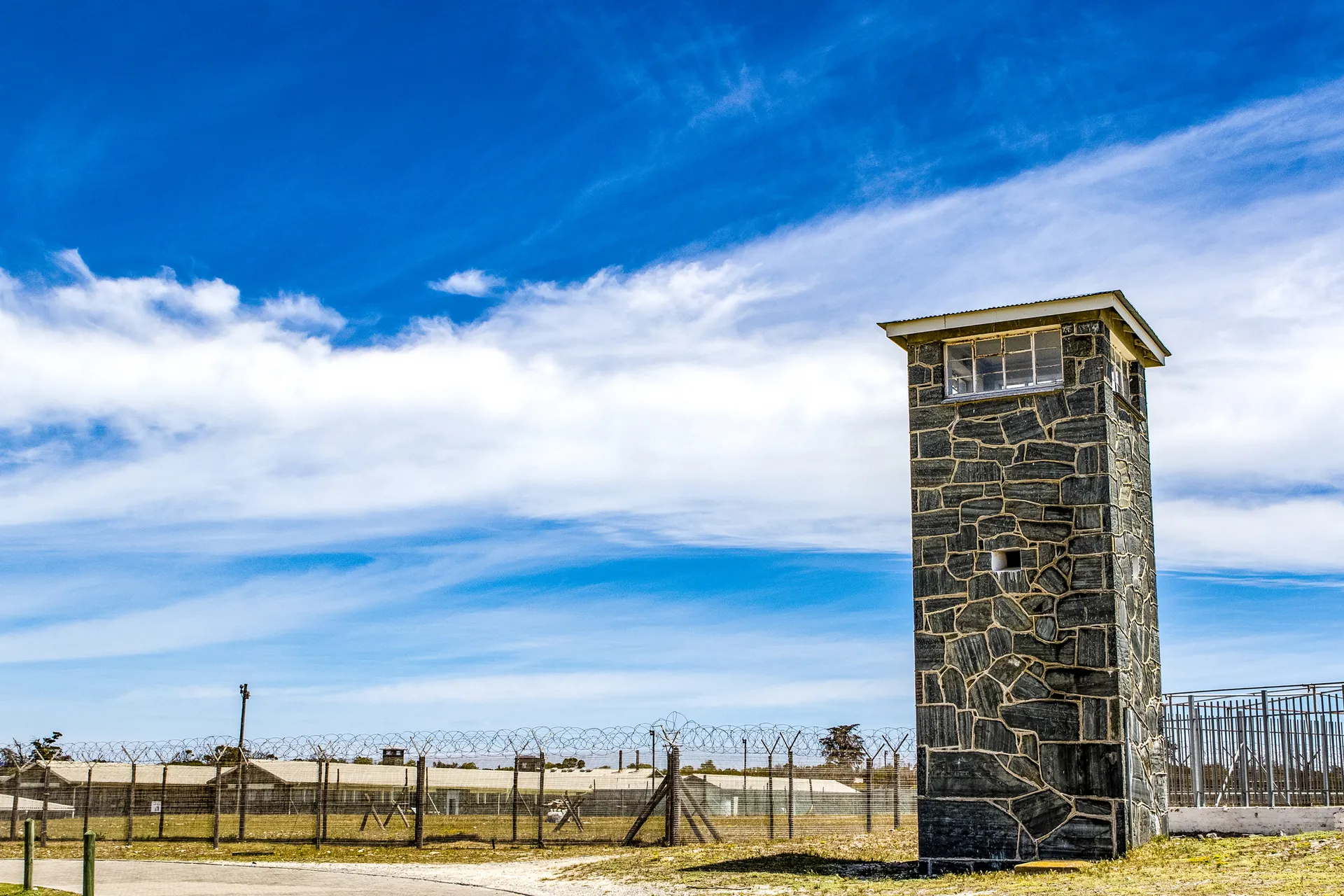
A stone guard tower beside the prison fence
From prison to public office: a timeline
- 1963
Jacob Zuma and Dikgang Moseneke begin ten-year sentences on the island.
- 1964
Mandela and the Rivonia trialists arrive on 13 June.
- 1968
Toivo ya Toivo is sentenced to 20 years and sent to Robben Island.
- 1977
Kgalema Motlanthe arrives on the island in July.
- 1990
Mandela is released on 11 February; Sexwale leaves the island in June.
- 1991
In May the last political prisoners leave Robben Island.
- 1994
Mandela becomes president; three former prisoners join his cabinet.
- 2002
Dikgang Moseneke is appointed to the Constitutional Court.
- 2008
Kgalema Motlanthe becomes president in September.
- 2009
Jacob Zuma becomes president in May, with Motlanthe as deputy.
- 2019
Jeff Radebe leaves cabinet after 25 years.
Seeing where they were held
The cells where most of these men spent their sentences are part of the standard tour of the Robben Island Museum. After the ferry from the Nelson Mandela Gateway and a bus tour of the island, you walk through the Maximum Security Prison and end in B Section, where Mandela, Sisulu, Mbeki and Toivo ya Toivo were held. The prison part of the visit is often led by a former political prisoner. The whole visit takes about 3.5 to 4 hours, ferries included.
You can book the ferry and prison tour on Tiqets from €42.50. That ticket cannot be cancelled; if your plans may change, the flexible ticket at €65 can be cancelled or moved for free up to 24 hours before. For the prison itself, its sections and daily life, read our guide to Robben Island prison; for the island's longer story, see Robben Island history.
How we compiled this list
This list was compiled and checked on 14 October 2026. We included a person only if two things were confirmed by an authoritative public source: that they were held on Robben Island as a political prisoner between 1961 and 1991, the years of the apartheid political prison, and that they later held one of the offices below.
The offices we count are: president and deputy president; cabinet minister and deputy minister; provincial premier; presiding officer of a house of Parliament; judge of a superior court; ambassador or high commissioner. For Namibia, the same offices in the national government after independence in 1990. We do not count ordinary members of Parliament, party posts, provincial ministers (MECs), mayors or advisory posts, because there are too many of them to verify completely and the list would no longer be comparable.
Our main sources are South African History Online, which publishes biographies and, for many prisoners, their Robben Island admission and release records; the Nelson Mandela Foundation; the South African government's contact directory and the Presidency; the Constitutional Court; the Department of International Relations and Cooperation; and, for Namibia, the Parliament of Namibia, New Era and The Namibian. We keep a source for every entry, and the main ones are linked in this article.
This is not a complete register. More than 3,000 political prisoners passed through the island, and some later careers are poorly documented. We left out several people whose time on the island or whose office we could not confirm on a reliable source. If you can document a name we missed, we will check it and add it. You can cite this list with a link to this page.
Robben Island prisoners: FAQ
Which South African presidents were imprisoned on Robben Island?
Three: Nelson Mandela, on the island from 1964 to 1982 and president from 1994 to 1999; Jacob Zuma, held from 1963 to 1973 and president from 2009 to 2018; and Kgalema Motlanthe, held from 1977 to 1987 and president from September 2008 to May 2009.
Was Thabo Mbeki imprisoned on Robben Island?
No. Thabo Mbeki left South Africa for exile in 1962. The Mbeki on Robben Island was his father, Govan Mbeki, sentenced to life at the Rivonia Trial, released in 1987 and Deputy President of the Senate from 1994 to 1997.
How many Robben Island prisoners became ministers?
In South Africa we counted nine former Robben Island prisoners who became cabinet ministers and five who became deputy ministers (Mosibudi Mangena was both). In Namibia, Andimba Toivo ya Toivo, Jerry Ekandjo and John Pandeni became cabinet ministers.
Did any Robben Island prisoner become a judge?
Yes. Dikgang Moseneke, jailed on the island at 15 for ten years, sat on the Constitutional Court from 2002 to 2016 and was Deputy Chief Justice from 2005. Fikile Bam, on the island from 1964 to 1974, was Judge President of the Land Claims Court from 1995 to 2011.
Who was the youngest prisoner on this list?
Dikgang Moseneke. According to the Constitutional Court, he was arrested at 15 and served his whole ten-year sentence on Robben Island. He went on to become Deputy Chief Justice of South Africa.
Can you still meet a former prisoner on Robben Island?
Often, yes. The prison part of the standard tour is frequently guided by a former political prisoner, though not every group gets one, since these men are now elderly. You can book the ferry and prison tour on Tiqets from €42.50.
Can I use this list in my own work?
Yes. You can cite this list with a link to this page. Each entry rests on public sources such as South African History Online, the Nelson Mandela Foundation and South African government pages, and the method is explained in the section on how we compiled it.
Andrea SemonellaBorn and raised in Genoa, Italy. Co-founder of Benicool, which publishes independent guides to cultural sites. He has travelled to every continent and writes about how to visit them without wasting time or money.
Portraits, cropped and shown in black and white: Mandela, Kingkongphoto & www.celebrity-photos.com, 1994, CC BY-SA 2.0, via Wikimedia Commons; Zuma, Etienne Ansotte, 2012, CC BY 4.0, via Wikimedia Commons; Motlanthe, Jesse B. Awalt, 2009, public domain, via Wikimedia Commons; Govan Mbeki, South African Police, 1963, public domain, via Wikimedia Commons; Maharaj, Richter Frank-Jurgen, 2014, CC BY-SA 2.0, via Wikimedia Commons; Lekota, R. D. Ward, U.S. Department of Defense, 2000, public domain, via Wikimedia Commons; Sexwale, Chris Bloom, 2007, CC BY-SA 2.0, via Wikimedia Commons; Radebe, Frank Schwichtenberg, 2017, CC BY-SA 4.0, via Wikimedia Commons; Ebrahim, Australian Department of Foreign Affairs and Trade, 2013, CC BY 4.0, via Wikimedia Commons; Moseneke, Nasdaq23, 2013, CC BY-SA 3.0, via Wikimedia Commons; Toivo ya Toivo, Namibia Media Initiative, 2012, CC BY 3.0, via Wikimedia Commons; Ulenga, Namibia Media Initiative, 2013, CC BY 3.0, via Wikimedia Commons.
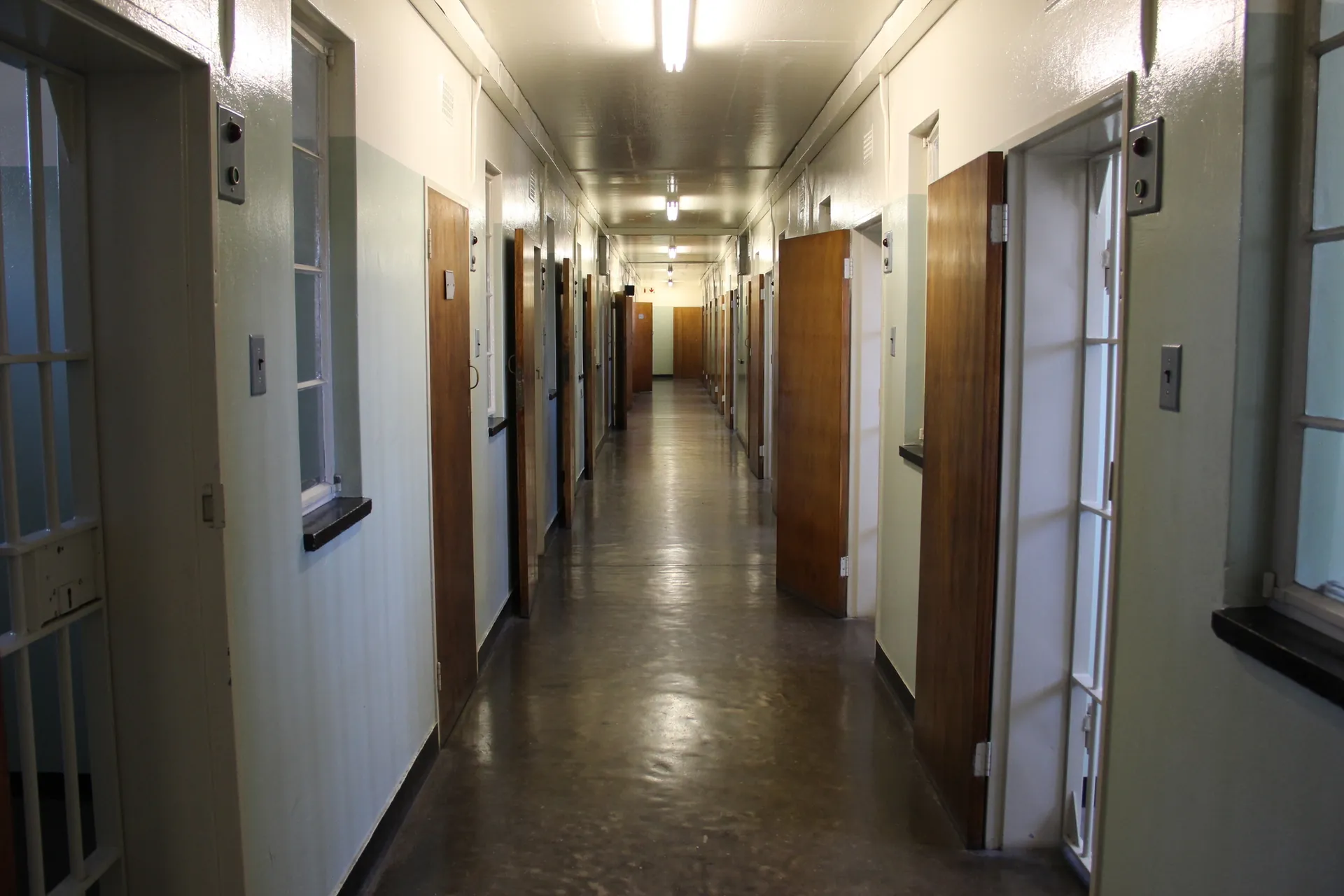 Robben Island prison
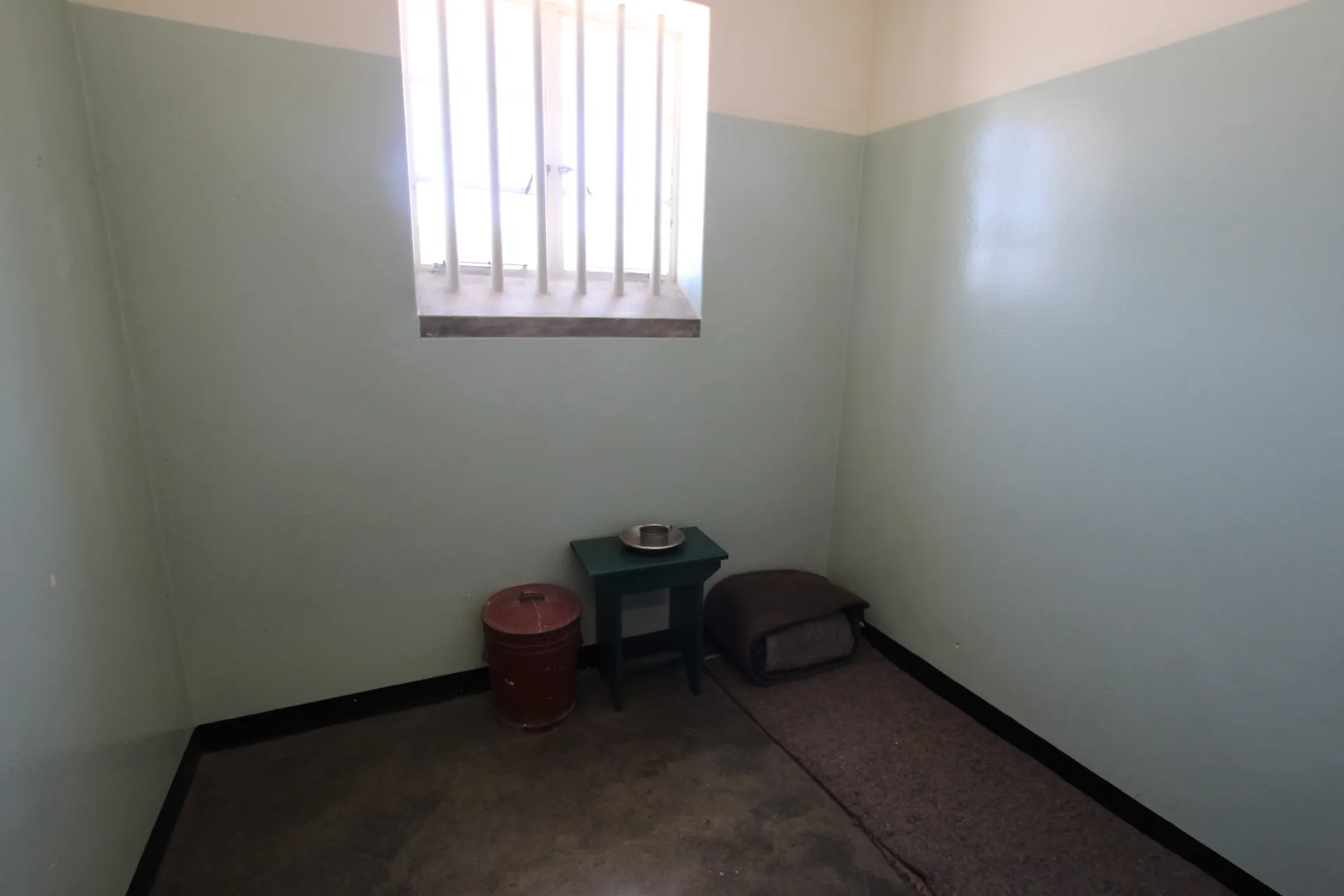 Nelson Mandela on Robben Island
 Robben Island history
.jpg)
.jpg)

.jpg)


_-_Global_Citizen_Festival_Hamburg_01.jpg)


