Robben Island History: five centuries on a small island in Table Bay
 By Andrea Semonella
Updated on 17 min read
By Andrea Semonella
Updated on 17 min read
In short
Robben Island's history runs from the first recorded landing in 1498 to today's museum. From 1615 the Dutch and then the British used it to banish prisoners, it held a leper colony from 1845 to 1931, guarded Cape Town in the Second World War and, from 1961 to 1991, was apartheid South Africa's prison for political prisoners. It became a museum in 1997 and a UNESCO World Heritage Site in 1999.
Why Robben Island is famous
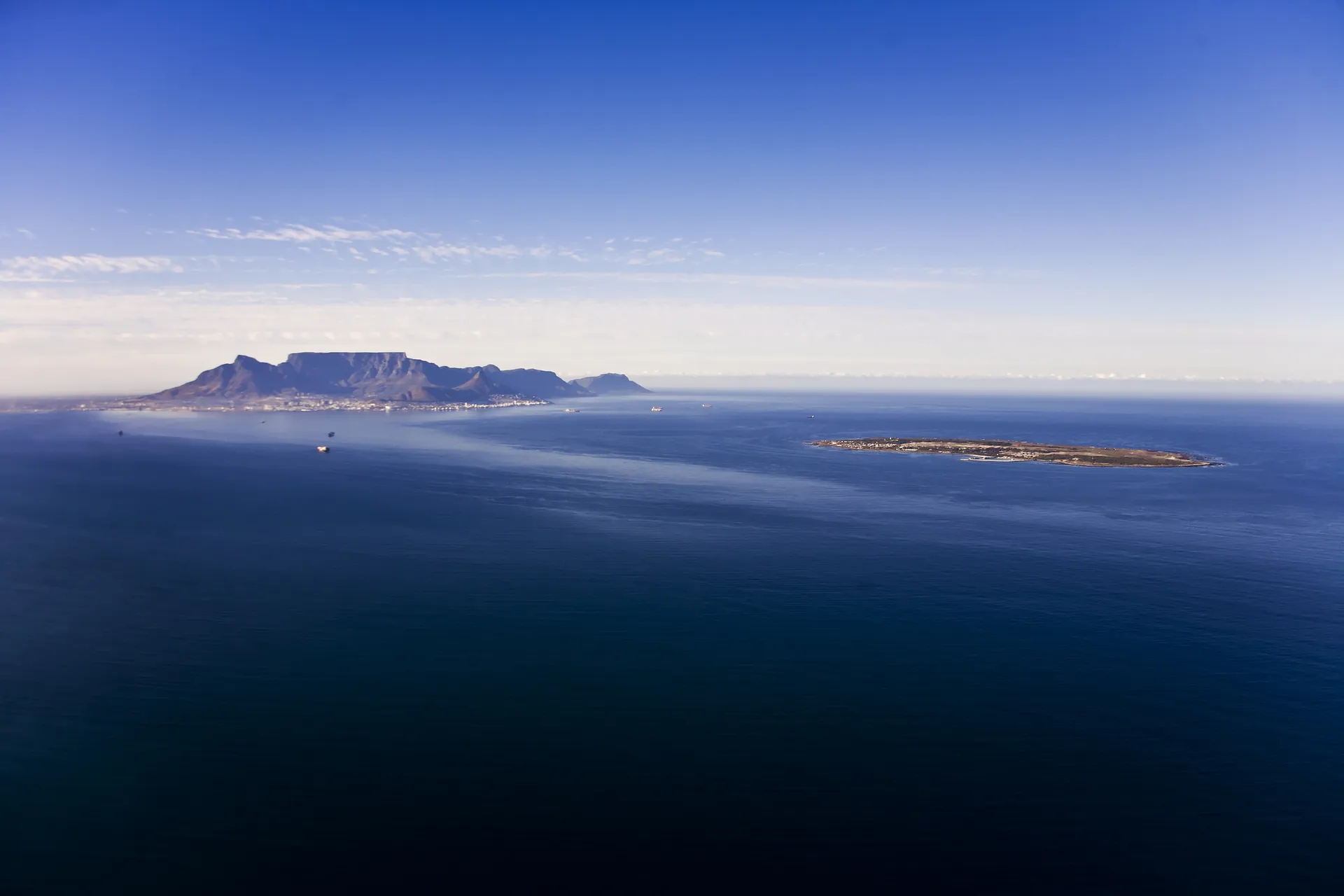
Robben Island is a flat, low island in Table Bay, just under 7 km off Bloubergstrand and about 11 km from Cape Town. Its highest point, Minto's Hill, rises only 24 metres above the sea. Seen from the V&A Waterfront it looks like a thin line on the horizon. Here it is on the map, with Cape Town across the bay:
Robben Island in Table Bay
Open in Google MapsThe island is known worldwide because of its prison. From 1961 to 1991 the apartheid government kept its political prisoners here, the men it feared most. Nelson Mandela spent 18 of his 27 years in prison on the island, and two other future presidents of South Africa, Jacob Zuma and Kgalema Motlanthe, served ten years each. The former prisoners who later became ministers, premiers or judges are in our Robben Island prisoners list.
The prison, however, is only the most recent chapter. For more than three centuries before it, the island was where the rulers of the Cape sent the people they wanted out of the way: rebels, exiles, convicts, and then the sick. That long use as a place of isolation is why it matters so much to South Africa today, and why UNESCO listed it. The chart shows how long each of the island's main uses lasted.
- Prison and place of banishment, 1615 to 1846231 years
- Infirmary and leper colony, 1845 to 193186 years
- Military reserve, 1936 to 196125 years
- Apartheid prison for political prisoners, 1961 to 199130 years
- Robben Island Museum, 1997 to today29 years so far
Sources: Robben Island Museum, UNESCO. Some periods overlap: the first leprosy patients arrived in 1845, a year before the old prison closed, and the prison for common-law prisoners stayed open until 1996.
A drowned mountain
Geologically, the island is the summit of a submerged mountain, joined to Blouberg on the mainland by an undersea saddle. Its base rocks were laid down some 800 to 900 million years ago in an ancient river delta. About 12,000 years ago the sea rose and opened the channel that cut it off from the mainland. Stone tools found west of the prison show that early toolmakers were living in the area long before any ship arrived.
Why is it called Robben Island?
The name is Dutch. Robben means seals in old Dutch, and the early sailors named the island after the seals they found on its rocks. You can still see Cape fur seals in the water during the ferry crossing.
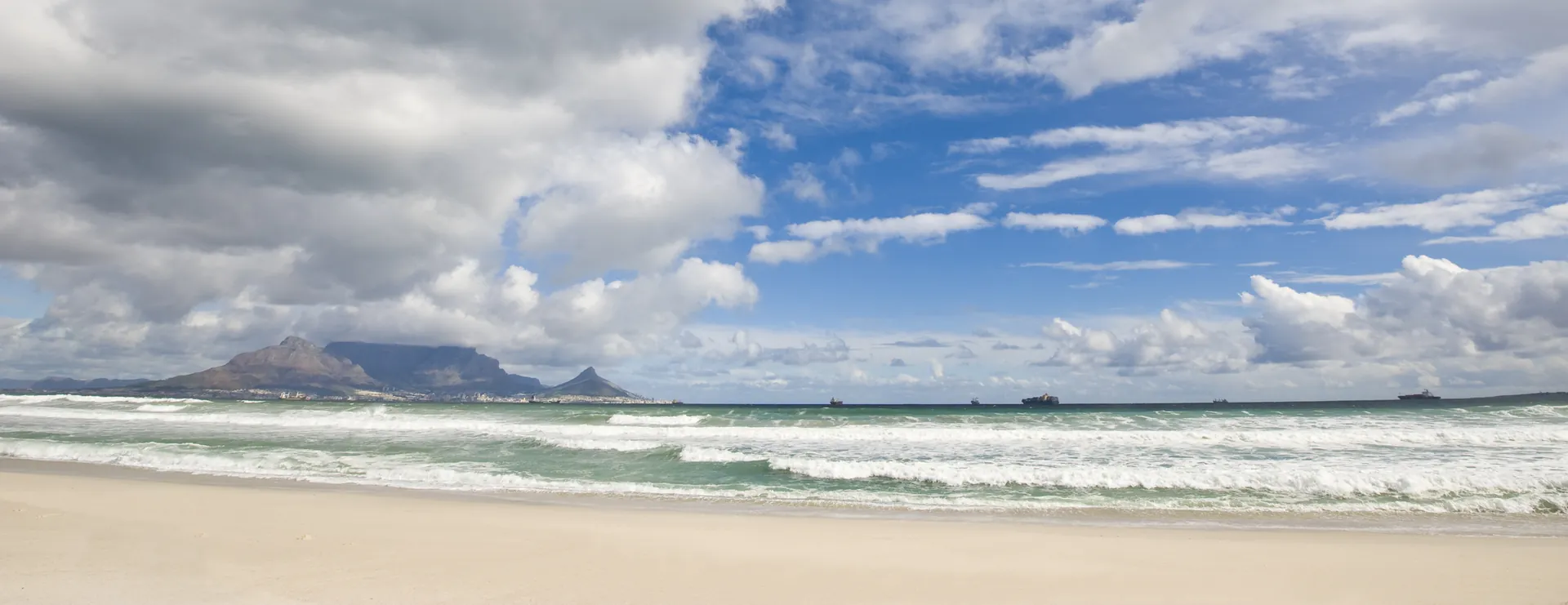
Robben Island and Table Mountain seen from Bloubergstrand beach
From Dias to the Dutch: 1488 to 1806
The island's European story is usually dated to 1488, when Bartolomeu Dias became the first explorer to round the Cape. The Robben Island Museum is cautious on this point: it is not clear whether Dias or his men ever set foot on the island. The first recorded landing came ten years later, in 1498, when a group of Portuguese sailors took refuge there, sheltered in a cave and drank from the island's spring.
A supply stop and post office for passing ships
For the next 150 years the island was a supply stop. In 1503 Antonio de Saldanha and his men feasted on its penguins, seals and tortoises. In 1601 the English captain James Lancaster left six sheep and two rams "for the relief of strangers that might come thither", and Dutch and English captains followed his example. Sailors also left letters in hidden spots on the island for the next ship to collect, so the island also served as a post office.
The first Khoikhoi on the island came by choice. In 1632 Autshumato, leader of the Strandlopers, the Khoikhoi who lived off the beaches, asked to be taken there with about 20 followers, safe from rival groups and with seals and penguins to live on. He stayed on and off until about 1640, lighting signal fires for ships that wanted to send or collect letters.
The first prisoners
The first convicts arrived in 1615: ten English prisoners, led by John Cross, who had been left at the Cape and attacked there, and who asked to be moved to the island for safety. When Jan van Riebeeck founded the Dutch station at the Cape in 1652, the island became a farm and a quarry: in March 1654 four or five men were placed there to look after sheep and a vegetable garden, and in May 1657 slaves and exiles were sent to cut its white stone. A slave woman called Eva, reportedly from Madagascar, became the first woman held there that same month.
On 10 July 1658 Autshumato was back, this time not by choice: the Dutch placed him on the island with two companions, Jan Cou and Boubo, to stop him stirring up trouble between the Khoikhoi and the settlement. The museum counts them as the island's first political prisoners. His niece Krotoa, called Eva by the Dutch and the settlement's main interpreter, was banished there in 1669 and died on the island in 1674.
Exiles from the East Indies
From 1682 the Dutch East India Company used the island for leaders who resisted it in Asia. The Prince of Macassar was the first East Indian exile, in November 1682. In 1744 the courts of Batavia sent the first Muslim religious leaders, Said Aloeurie and Hadjee Mattaram, to spend the rest of their lives there in chains. The Prince of Madura, banished in the 1740s for leading resistance to Dutch expansion, died on the island in 1754; his body was returned to his son and lies in Jakarta. The green-domed Moturu Kramat that honours him stands west of the prison; the museum says the present shrine was rebuilt by prisoners in 1967.
The most influential of these exiles was Tuan Guru, a prince from Tidore, held from 1780 to 1793. On the island he wrote a book on Islamic law that became the main reference of the Cape Muslim community in the 19th century, and after his release he became the first Chief Imam of the Cape.
The island's first prison register, from 1728, lists 42 prisoners: 26 Europeans and 16 "Indiaanen", the Dutch term for all non-white prisoners. By 1789 there were 134. No Dutch building survives intact today, but the Jan van Riebeeck Quarry, opened in 1652 for slate used to build Cape Town, was worked by forced labour for about 300 years, until 1963.
The British era: exiles, escapes and a lighthouse
Britain took the Cape in 1806 and kept using the island the same way, as a place of banishment. Between 1806 and 1808 it built a new settlement at the southern end, where the village still stands; by 1833 it had a house for the Commandant, barracks, a bakery, a smithy, workshops and room for about 200 prisoners. For a few years it also ran a whaling station there, which closed in 1820.
Most of the political prisoners of this period were African leaders who had fought colonial expansion on the frontier: Khoikhoi, Xhosa and Korana. The Khoikhoi leader David Stuurman escaped just four months after arriving, was recaptured ten years later and escaped again in 1820.
The best-known prisoner of this period is Makhanda, also called Nxele or Makana, a Xhosa war-doctor and adviser to Chief Ndlambe who led the attack on Grahamstown in 1819. After the defeat he surrendered and, in late 1819, was sent to Robben Island. Some accounts speak of a life sentence; SA History Online's biography of Makhanda notes that he never had a trial. In August 1820 he tried to escape: the boat capsized near Bloubergstrand and he drowned. The Xhosa chief Maqoma was also banished to the island with his wife, Katyi, for 21 years.
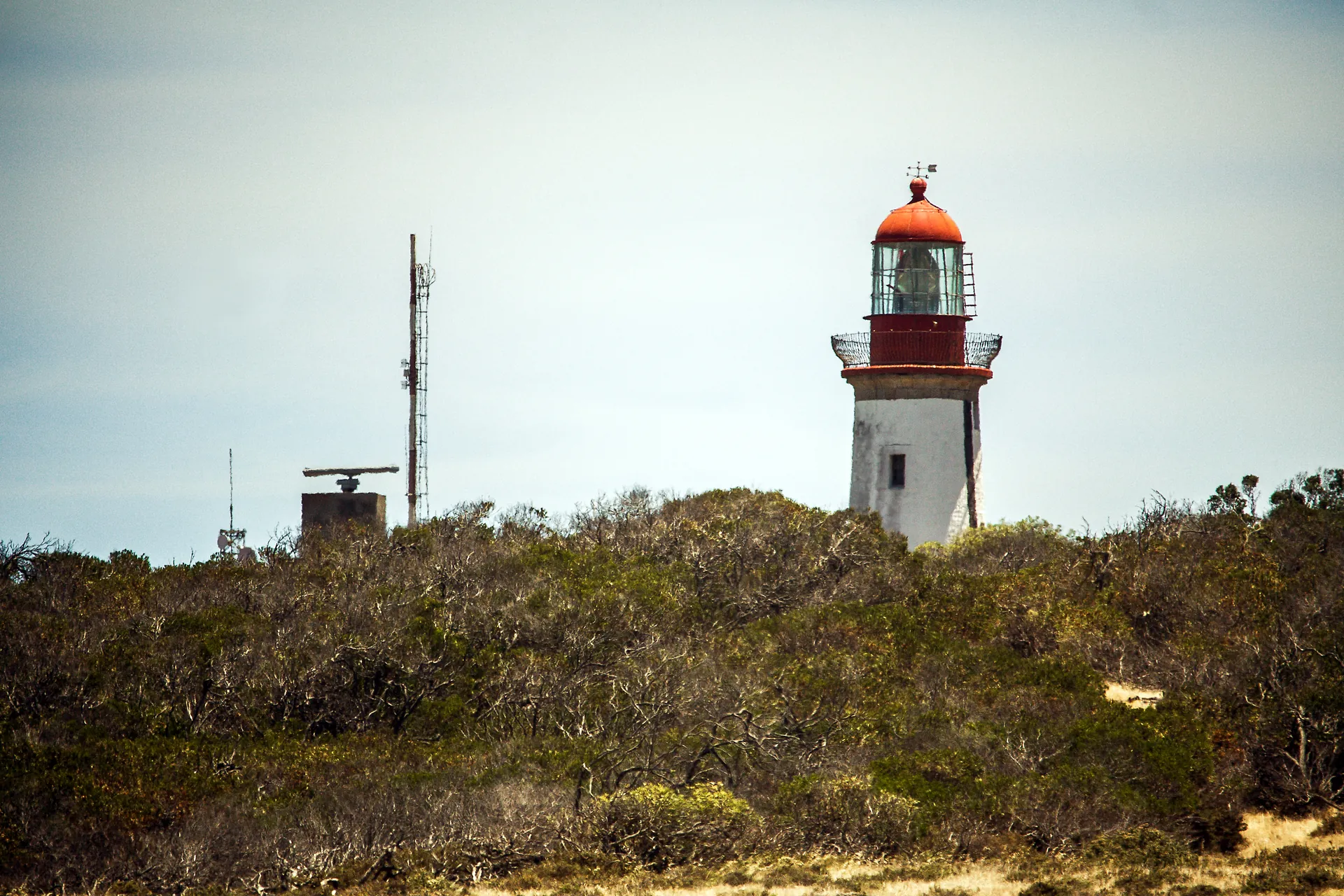
The British also left the island's landmarks. The Garrison Church in the village was built in 1841 with prison labour. The lighthouse on Minto's Hill was built in 1864, after the wreck of the Forfarshire, one of more than 70 shipwrecks recorded around the island, and lit in 1865. It is still working, and flashes every seven seconds. In 1892 a narrow tramway was laid from the boathouse to the stores, its trolleys pulled by mules.
The Robben Island leper colony, 1845 to 1931
In 1844 John Montagu, the colonial secretary, recommended moving the Cape's leper and pauper establishments and the patients of Cape Town's asylum to the island, where they would cost the public less. In 1846 the old prison closed and its buildings became a General Infirmary for three groups: people with leprosy, the chronically ill and the mentally ill. The first people with leprosy arrived from Hemel-en-Aarde, near Caledon, at the end of 1845, followed by others from Port Elizabeth in January 1846. By May 1847 there were 194 patients: 72 chronically ill, 68 mentally ill and 54 with leprosy. In its early years, in other words, the infirmary held fewer people with leprosy than with any other condition.
- Chronically ill72
- Mentally ill68
- With leprosy54
Source: Robben Island Museum. Total: 194 patients.
The museum's page on the first years of the infirmary describes it as "a place of exclusion" more than of healing. Medical care and food were poor, patients had to do much of the nursing and washing themselves, and they were segregated by race, class and gender, decades before segregation became formal policy in mainland hospitals. The hospital for the chronically ill closed in 1892, and in 1921 the mentally ill were moved off the island, leaving only people with leprosy.
The Leprosy Repression Act of 1891 made isolation compulsory. From then on, a diagnosis meant being sent to the island by law, and by 1892 it was the only leprosarium in the Cape Colony. The patients did not accept it quietly: in 1892 the men petitioned the authorities against the Act, and in 1893 the women went on strike, refusing to clean their wards or send their washing to the laundry.
The colony closed in 1931, because of the cost and because new, racially separated hospitals had opened on the mainland. According to the Robben Island Museum the remaining patients were moved to Westfort Hospital in Pretoria; SA History Online says they went to hospitals in the Cape. Of the roughly 170 buildings on the island in 1931, about 90 were leper compounds, and the wards were demolished and burned for fear of contagion.
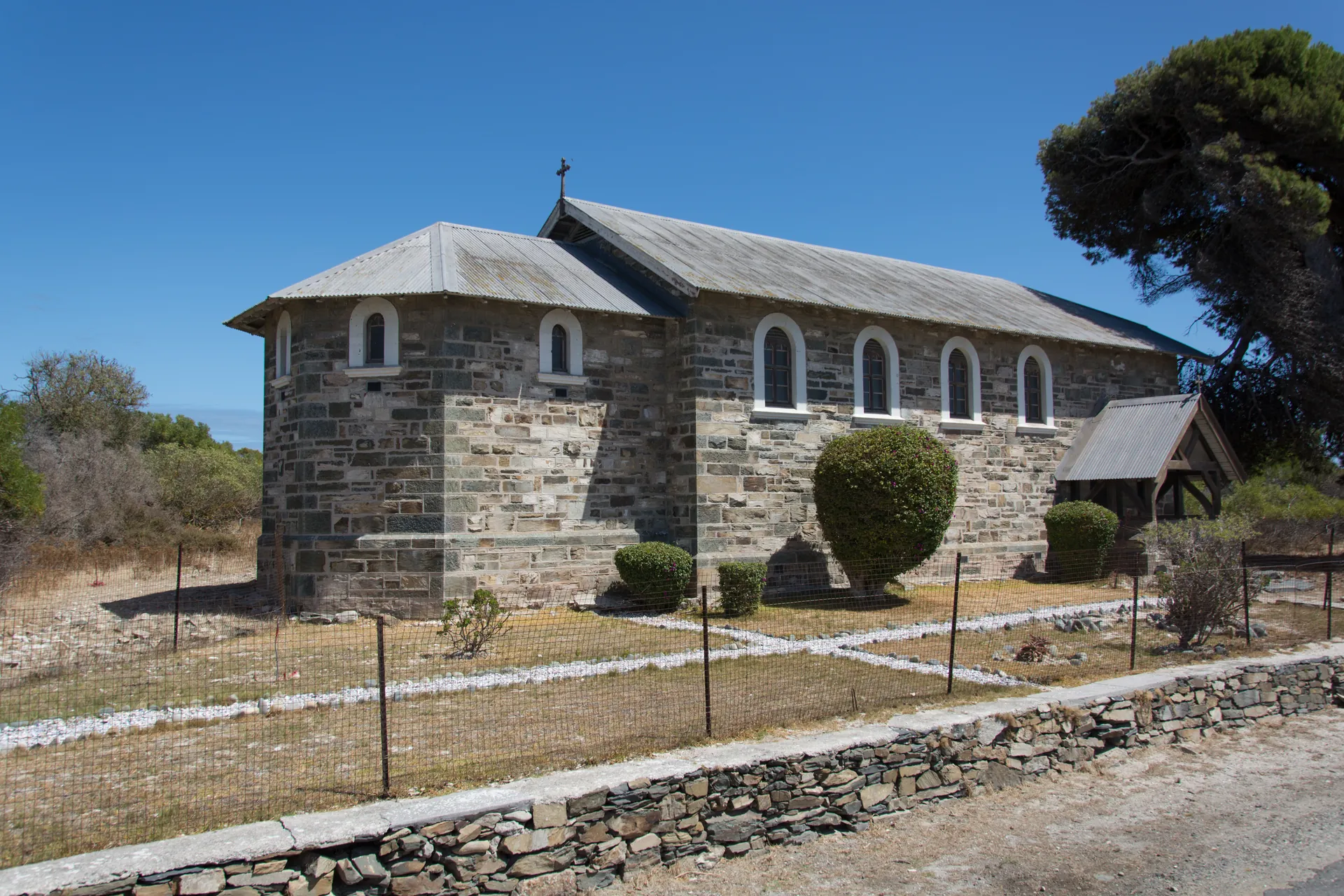
The Church of the Good Shepherd
This small stone church is the only building left from the leper colony. It was designed by Sir Herbert Baker and built in 1895 by the patients themselves. It was meant for men only, and it had no pews. Abandoned in 1931, it was re-consecrated as a naval church in 1942 and restored in 2001; it is still used for special services.
The leper graveyard
North of the church, the leper graveyard stretches almost to the walls of the Maximum Security Prison: human bones were found when the prison's trenches were dug in the 1960s. It is one of the first stops on the island bus tour, and for many visitors it is the moment they realise the island's story did not begin in 1961.
Not all the dead on the island were patients. Below Minto's Hill lies the Irish Cemetery, used until 1923 for staff and residents: after the potato famine so many Irish people settled here, working in the infirmary and the village, that the island was nicknamed "Irish Town".

The Second World War: guns over Table Bay
From 1931 to 1960 the island was not a prison, the only time in its modern history. A Government Gazette of 22 May 1936 reserved it "for military purposes", and from 1939 to 1945 it was part of the coastal defences of the Union of South Africa.
The first gun position was finished in April 1940: the 6-inch gun of the Cornelia Battery, covering the channel towards Blouberg. The De Waal Battery followed, with 9.2-inch guns installed between November 1940 and July 1941. Around them came underground bunkers and an airstrip with two 700-metre runways, built between 1940 and 1942. From June 1941 a degaussing range near the harbour protected ships against German magnetic mines: the naval teams reportedly dealt with 4,451 ships during the war. The first major works on Murray's Bay Harbour, where the ferry lands today, also date from the war.
The island was a training ground too. More than 400 women were trained at its artillery school, and about 2,000 men of the Cape Corps were trained in gunnery, out of public view, because the official line was that black men should not be armed. The guns were never fired at an enemy ship.
The bunkers are still there, and the bus tour passes them. One of the wartime buildings would later play a darker role: a former military hygiene office became the house where Robert Sobukwe was held alone. On 24 March 1961 the Department of Prisons took over the island from the army.
Named after seals, remembered for the people it held.
Robben Island during apartheid, 1961 to 1996
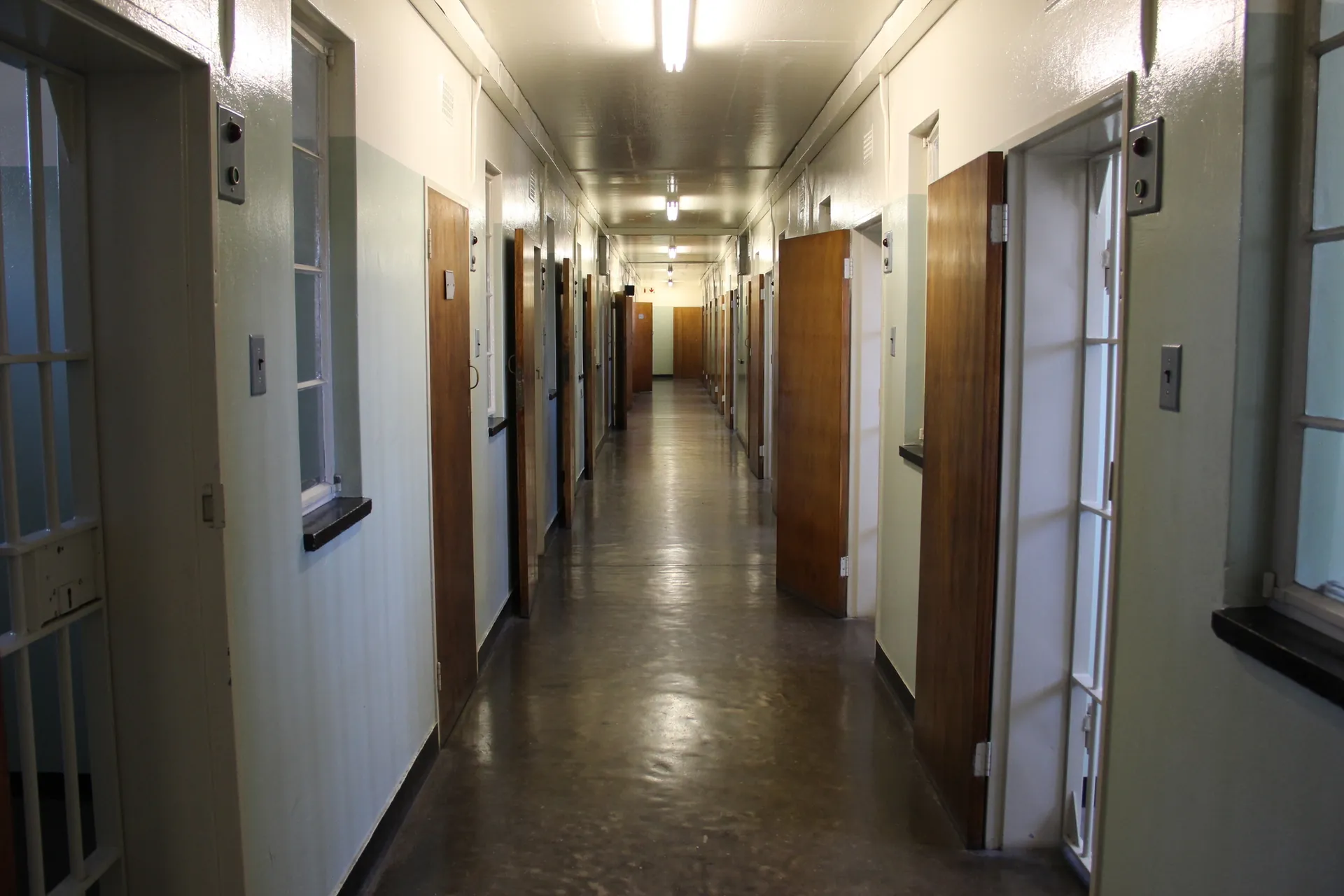
In 1961 the apartheid government turned the island back into a prison. It built a Maximum Security Prison for political prisoners and a medium security prison for common-law prisoners. The prisoners themselves were made to build it, with stone from the island's quarries.
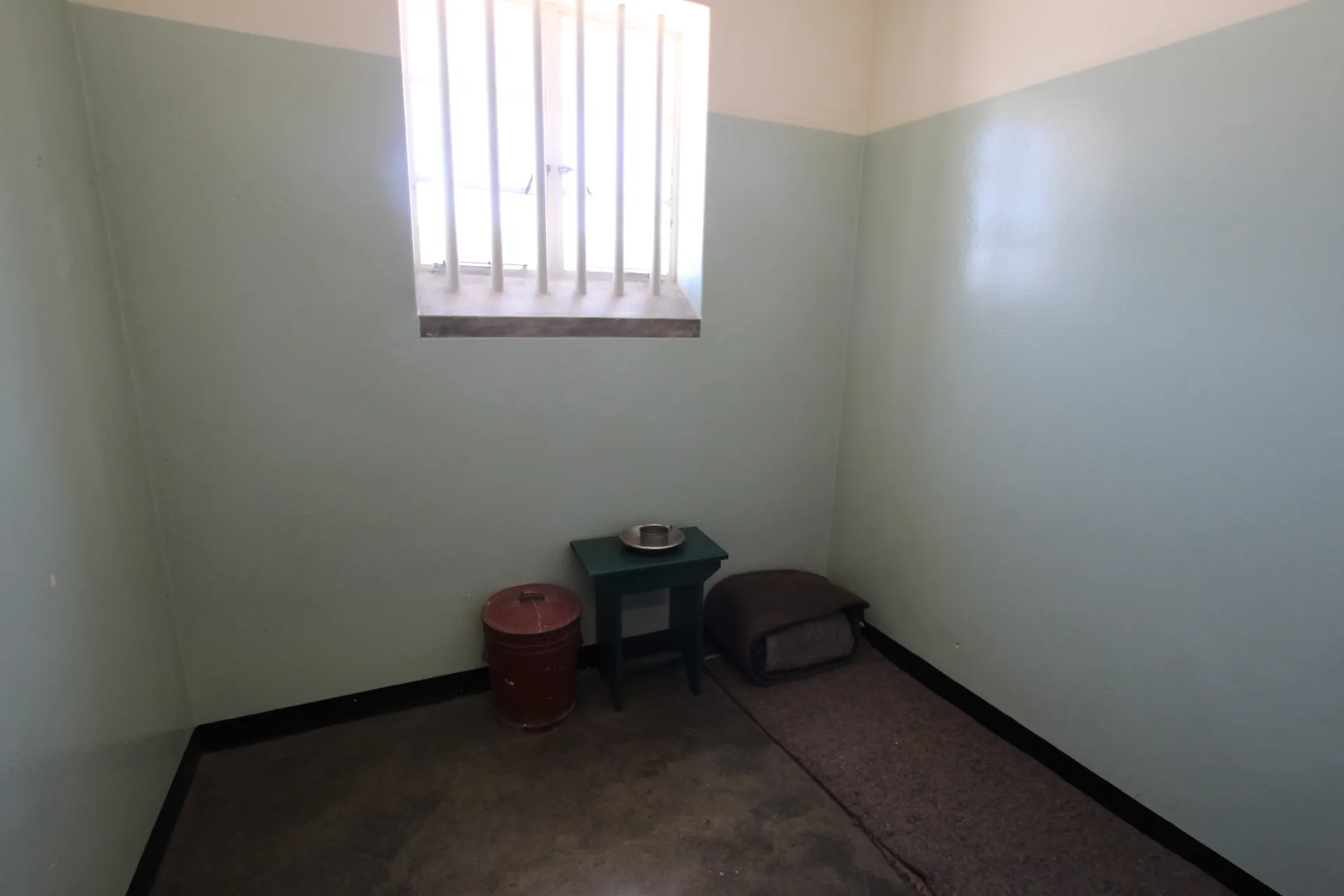
Leaders of the liberation movements were held in B Section of the isolation block. Nelson Mandela arrived on 13 June 1964, after the Rivonia Trial, with Walter Sisulu, Ahmed Kathrada and the other Rivonia trialists. He stayed until 31 March 1982. The B Section prisoners worked in the Lime Quarry, and the first draft of his autobiography, Long Walk to Freedom, was hidden in the B Section garden.
Robert Sobukwe, leader of the Pan Africanist Congress, was kept apart from all of them: from 1963 to 1969 he lived alone in a house away from the prison, forbidden to speak to anyone. His detention was renewed every year under a provision known as the Sobukwe Clause.
Conditions were brutal in the early years: forced labour in the quarries, food rationed by race, short trousers for African prisoners, letters censored and visits held behind glass. They began to improve only after about a thousand prisoners went on a mass hunger strike in 1966. After the Soweto uprising of June 1976, a new wave of young, radicalised prisoners arrived. Namibian prisoners of SWAPO, fighting South Africa's occupation of their country, were held on the island from 1968 until their release in 1984.
The last political prisoners left in May 1991. The prison for common-law prisoners closed in 1996. In 1982 Indres Naidoo published Island in Chains, the first memoir of life in the prison.
If you want the full story of the cells, the sections and the daily routine, read our guide to Robben Island prison. For Mandela's eighteen years, from his prison number to his cell, see Nelson Mandela on Robben Island.
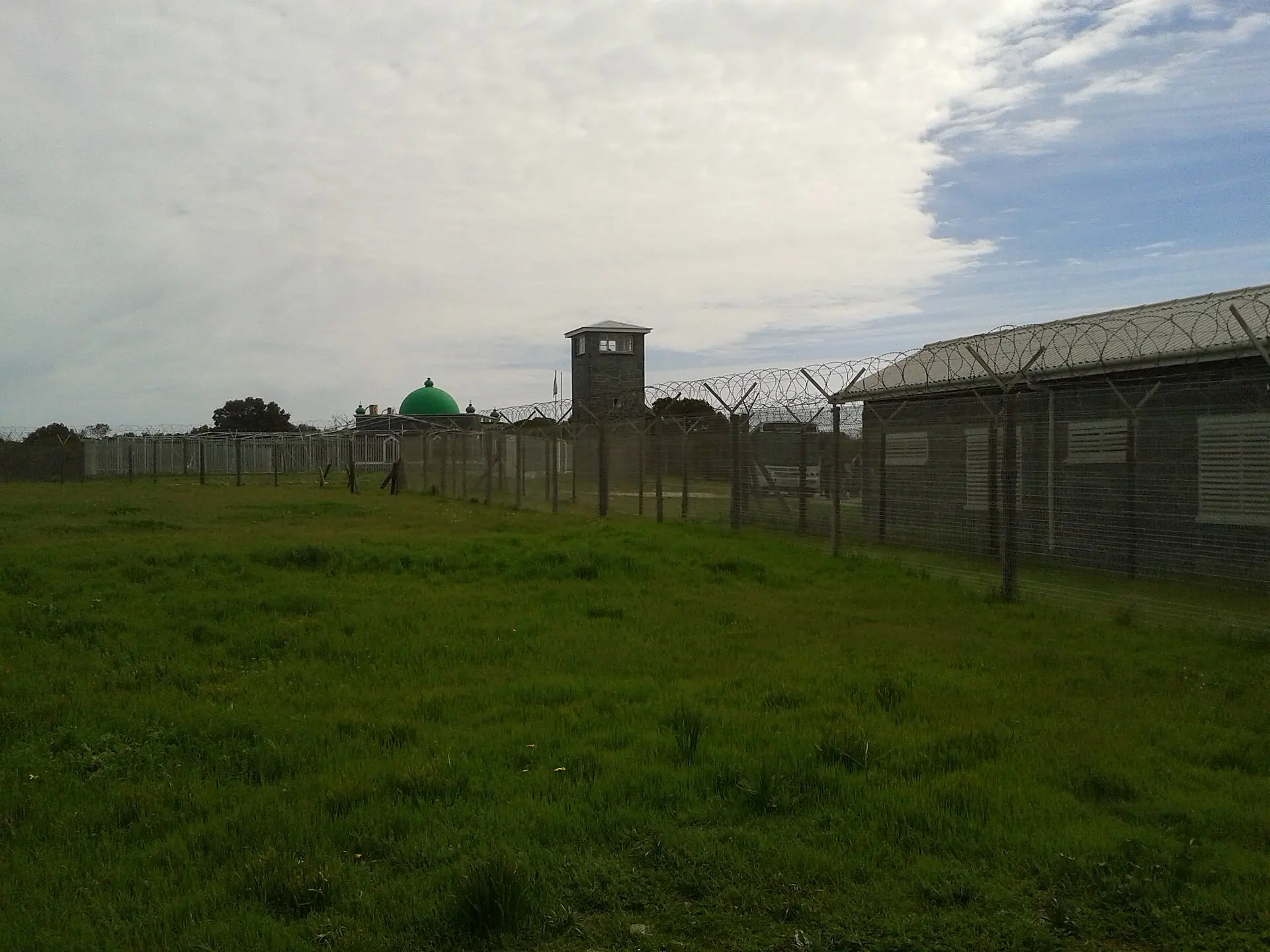
Barbed wire and a watchtower, with the Moturu Kramat dome behind
Museum in 1997, UNESCO in 1999
In 1995, four years after the last political prisoners had left, former prisoners led by Mandela returned to the island for a reunion. At the entrance to the Lime Quarry they built a pile of stones, the isisivane, in memory of their lives and forced labour in prison. It is still there.
In 1997 the island was declared a national monument and became the Robben Island Museum, which has managed it ever since. Two years later, in December 1999, at the 23rd session of the World Heritage Committee, UNESCO inscribed it on the World Heritage List as site number 916. It was the first site South Africa put forward.
Why was Robben Island declared a World Heritage Site?
UNESCO listed it under two cultural criteria, (iii) and (vi), and the World Heritage Committee's decision explains both. Under criterion (iii), the island's buildings "bear eloquent witness to its sombre history". Under criterion (vi), Robben Island and its prison buildings "symbolize the triumph of the human spirit, of freedom, and of democracy over oppression". In practice, the island qualified for two reasons. Its buildings tell more than three centuries of banishment, isolation and imprisonment in one place. It is also tied, more than any other site, to the struggle against apartheid and to the people who ended it.
This also explains why Robben Island is protected today. It is preserved as evidence rather than as a ruin, and much of that evidence is given in person, often by former political prisoners who now guide visitors through the prison.
Robben Island today
Today the island is a museum, a refuge for wildlife and a small village at the same time. The Village Precinct near the harbour has a clubhouse, a pool, a playground and the old Governor's House; the 1895 Guest House, once the Commissioner's residence, is now used for conferences. The school built in 1894 is closed.
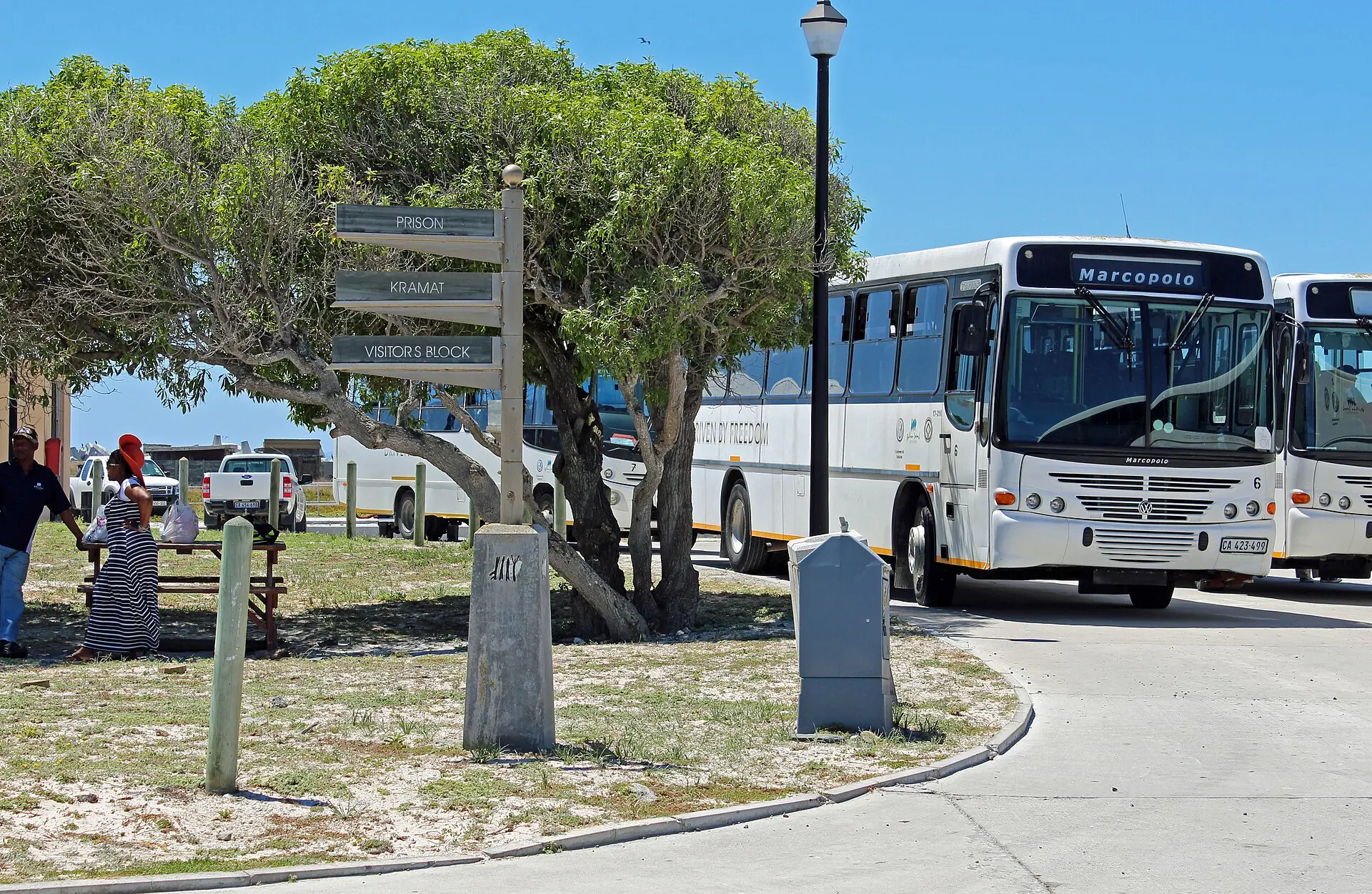
Visitors arrive only on museum ferries from the Nelson Mandela Gateway at the V&A Waterfront, landing at Murray's Bay Harbour. There is no independent visit: you see the island on a guided bus tour and then walk through the prison. The whole visit, ferries included, takes about 3.5 to 4 hours, and you can book the ferry and museum tour on Tiqets. Our page on the Robben Island tour explains what happens stop by stop.
Wildlife has returned too. African penguins have bred here again since the 1980s, alongside seabirds and small antelope, which you can read about in our guide to Robben Island penguins and wildlife.
Robben Island history at a glance
- 1488
Bartolomeu Dias rounds the Cape; the first recorded landing on the island follows in 1498.
- 1615
Ten English convicts become the island's first prisoners.
- 1652
Jan van Riebeeck founds the Dutch station at the Cape.
- 1658
Autshumato and two companions become the first political prisoners.
- 1682
The first exile from the East Indies, the Prince of Macassar, arrives.
- 1754
The Prince of Madura dies on the island; the Moturu Kramat remembers him.
- 1806
The British take the Cape and keep the island as a place of banishment.
- 1819
Makhanda is sent to the island; he drowns trying to escape in 1820.
- 1845
The first people with leprosy arrive from Hemel-en-Aarde.
- 1865
The Minto's Hill lighthouse is lit.
- 1891
The Leprosy Repression Act makes isolation compulsory.
- 1895
Leprosy patients build the Church of the Good Shepherd.
- 1931
The leper colony closes; the island stops being a prison until 1961.
- 1939-1945
Gun batteries turn the island into part of Cape Town's coastal defences.
- 1961
On 24 March the Department of Prisons takes over the island.
- 1964
Nelson Mandela arrives on 13 June; he leaves on 31 March 1982.
- 1966
About a thousand prisoners go on a mass hunger strike.
- 1991
The last political prisoners leave in May.
- 1996
The prison for common-law prisoners closes.
- 1997
The island becomes a national monument and the Robben Island Museum.
- 1999
UNESCO inscribes Robben Island on the World Heritage List.
- 1615First prisoners sent to the island
- 70+Shipwrecks recorded around the island
- 20Quarries on the island
- 24 mHighest point, Minto's Hill
Robben Island facts
Some details the tour rarely mentions.
- Size: about 5 square kilometres, an oval roughly 3.3 km long and 1.9 km wide. Sources give slightly different figures for the area.
- Height: the whole island is flat. Minto's Hill, the highest point, is 24 metres above sea level.
- Weather: the museum notes stronger winds and greater temperature extremes than in Cape Town.
- Three presidents: Nelson Mandela, Kgalema Motlanthe and Jacob Zuma were all prisoners on the island.
- The cairn: the isisivane at the Lime Quarry was built stone by stone by former prisoners at their 1995 reunion.
- Wildlife: about 132 bird species have been recorded on the island.
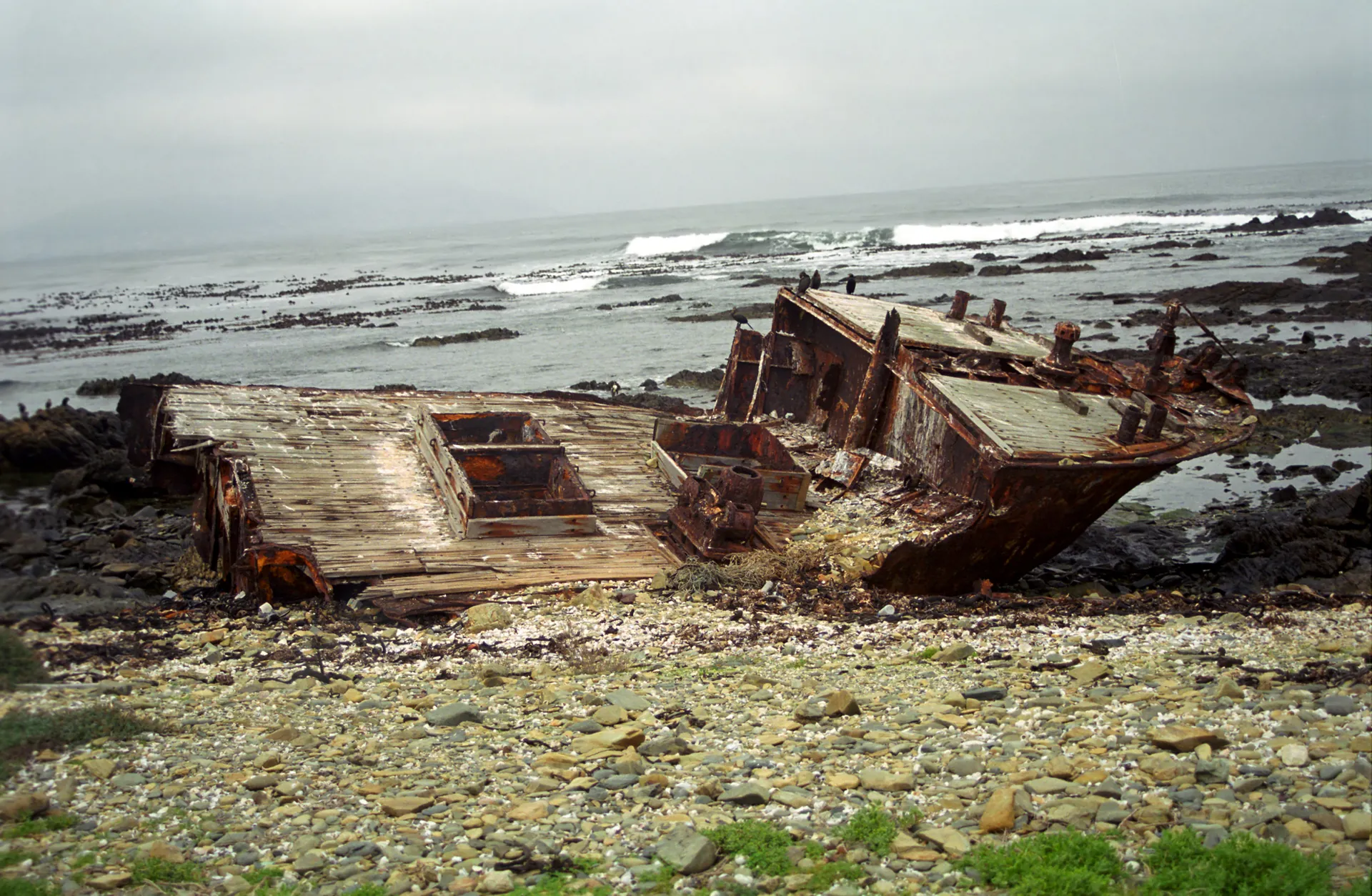
- Shipwrecks: the first recorded wreck was in 1611. The iron-ore carrier Daeyang Family went onto the reef in 1986, and a trawler and a salvage vessel that ran aground in 1998 are still visible on the shore.
- Quarries: the island's site register lists 20 quarries, but only the history of the three largest, Jan van Riebeeck, Bluestone and Lime, is known.
To see these places for yourself, book the ferry and prison tour on Tiqets, from €42.50, or as a flexible ticket at €65 with free cancellation up to 24 hours before. The other options and their prices are on our Robben Island tickets page.
Robben Island history: FAQ
What is the history of Robben Island in short?
After the first recorded landing in 1498, passing ships used the island as a supply stop. From 1615 the Dutch, and later the British, sent convicts, rebels and exiles there; from 1845 to 1931 it was a leper colony; in the Second World War it defended Cape Town; from 1961 to 1991 it held apartheid's political prisoners. It has been a museum since 1997.
Why is Robben Island famous?
Because Nelson Mandela spent 18 of his 27 years in prison there, together with many of the leaders who fought apartheid. Two other future presidents, Jacob Zuma and Kgalema Motlanthe, were also held on the island.
Why is it called Robben Island?
The name comes from the old Dutch word robben, which means seals. The island was named after the seals that sailors found on its shores.
When did Robben Island become a World Heritage Site?
In December 1999, at the 23rd session of the World Heritage Committee, under criteria (iii) and (vi). It was the first site South Africa put forward for the list, two years after the island became a museum.
Was Robben Island a leper colony?
Yes. From 1845 people with leprosy were sent to the island, along with poor people and people with mental illness. The Leprosy Repression Act of 1891 made isolation compulsory, and the colony closed in 1931. The Church of the Good Shepherd and the leper graveyard are what remains.
What happened to the leprosy patients when the colony closed?
In 1931 the remaining patients were moved off the island and the wards were demolished and burned. The Robben Island Museum says the patients went to Westfort Hospital in Pretoria, while SA History Online writes that they went to hospitals in the Cape, so the sources do not fully agree.
Who was the first prisoner on Robben Island?
According to the Robben Island Museum, the first prisoners were ten English convicts sent there in 1615. The first political prisoners were the Khoikhoi leader Autshumato and two companions, Jan Cou and Boubo, placed on the island by the Dutch on 10 July 1658.
Why is Robben Island important to South Africa?
Because for almost four centuries it was where those in power sent the people who resisted them, from Khoikhoi and Xhosa leaders to the men who fought apartheid. In the words of UNESCO, its prison buildings symbolize the triumph of the human spirit, of freedom and of democracy over oppression.
Does anyone live on Robben Island today?
Yes, a small community lives in the village near the harbour, which has its own clubhouse, pool and playground. The museum does not publish an official number of residents.
How can I visit Robben Island?
Only on the museum's guided tour, by ferry from the Nelson Mandela Gateway at the V&A Waterfront, with a bus tour of the island and a walk through the prison. You can book it on Tiqets from €42.50.
Andrea SemonellaBorn and raised in Genoa, Italy. Co-founder of Benicool, which publishes independent guides to cultural sites. He has travelled to every continent and writes about how to visit them without wasting time or money.
 Robben Island prison
 Nelson Mandela on Robben Island
 The Robben Island tour