
Robben Island Tour: what happens, hour by hour
 By Andrea Semonella
Updated on 14 min read
By Andrea Semonella
Updated on 14 min read
In short
Every Robben Island tour follows the same route: a ferry from the Nelson Mandela Gateway at the V&A Waterfront, a guided bus tour of the island, then a walk through the Maximum Security Prison that ends at Nelson Mandela's cell. It takes about 3.5 to 4 hours, and you cannot visit the island on your own.
How the Robben Island tour works
There is one way onto Robben Island: the Robben Island Museum tour, the guided visit run by the museum itself. Whether you book the ferry and prison tour on Tiqets or a day tour that picks you up at your hotel, the visit on the island is the same. You board a ferry at the Nelson Mandela Gateway, in the Clock Tower Precinct of the V&A Waterfront, cross Table Bay to Murray's Bay Harbour, tour the island by bus and finish inside the prison.
Tours run every day, weather and demand permitting. From 1 September to 30 April ferries leave at 09:00, 11:00, 13:00 and 15:00; from May to August at 09:00, 11:00 and 13:00. You come back on the ferry with your group, so plan on half a day: about 3.5 to 4 hours from departure to return at the Waterfront. Pick your ferry below to see when you will be free again.
When will I be back at the Waterfront?
Choose your ferry departure:
Pick a time to see when you will be back.
Estimate based on a visit of 3.5 to 4 hours. High-season departures, weather permitting.
This is also how Robben Island differs from most museums. You cannot wander: you follow a group and a guide, in a fixed order. In return, the story is told where it happened, often by someone who lived through it.
Your trip to Robben Island, hour by hour
This is how a visit on the 09:00 ferry runs. Later departures follow the same pattern, two, four or six hours later. Crossing times depend on the boat, so the times on the island are approximate.
- 08:30
Arrive at the Nelson Mandela Gateway with your ticket and a passport, ID card or driving licence. The museum asks you to be there at least 30 minutes before departure.
- 08:50
The gates close, 10 minutes before the ferry leaves. If you are late, you lose your seat.
- 09:00
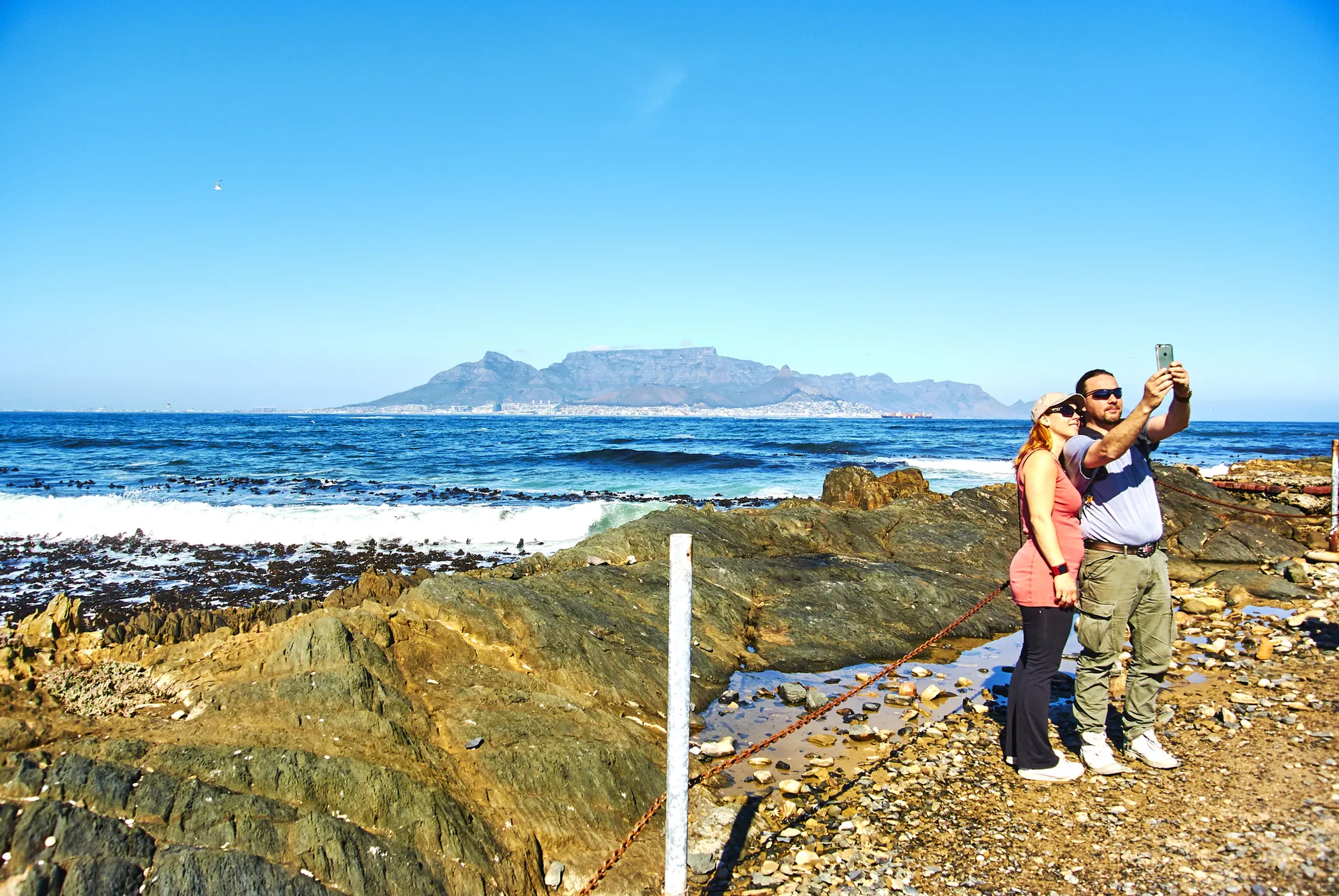
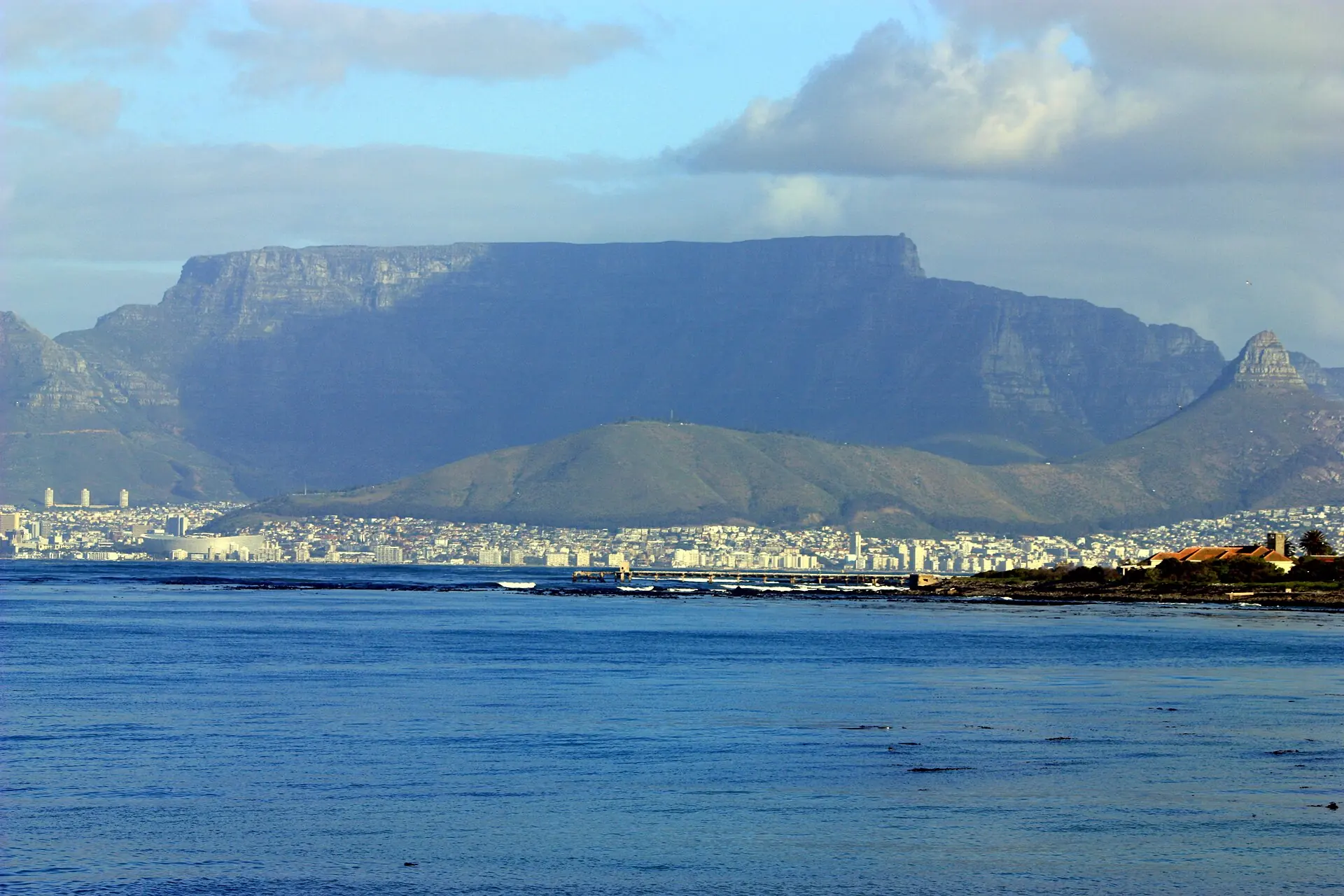
The ferry leaves the Waterfront. Table Mountain is behind you on the way out: the best view comes on the return.
- 09:30 to 10:00
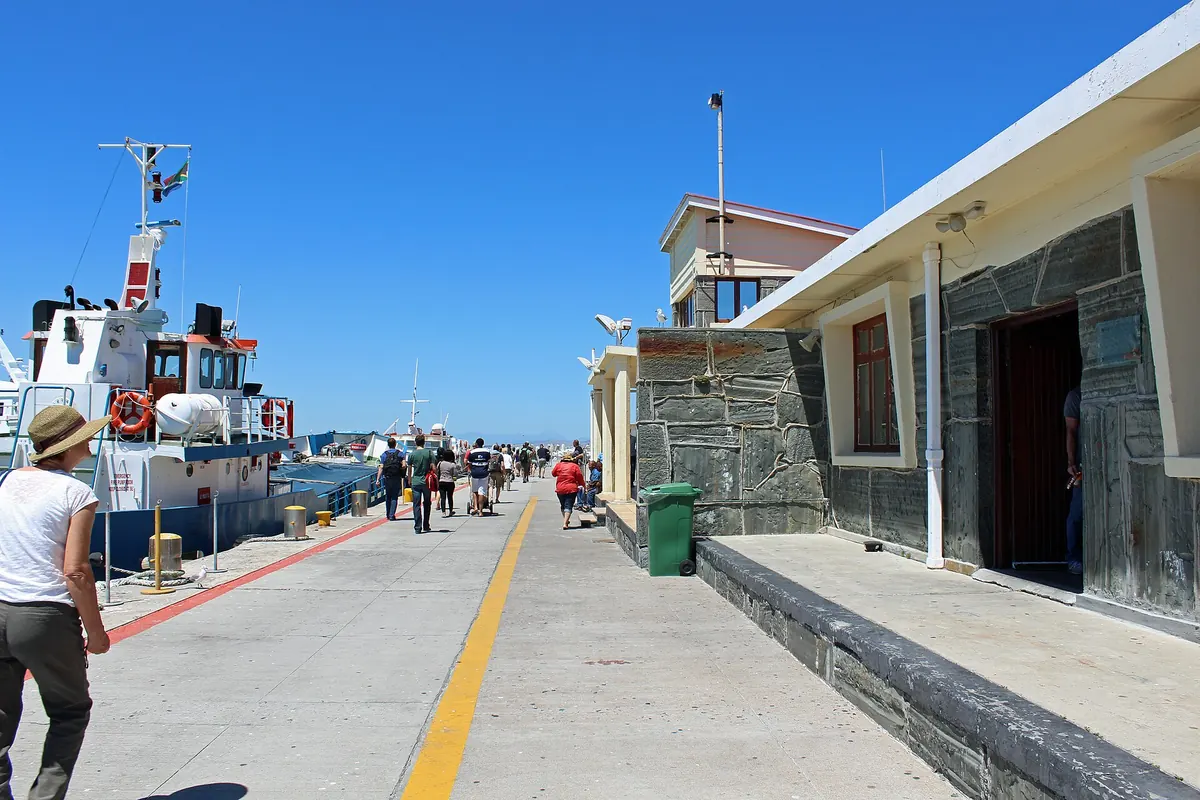
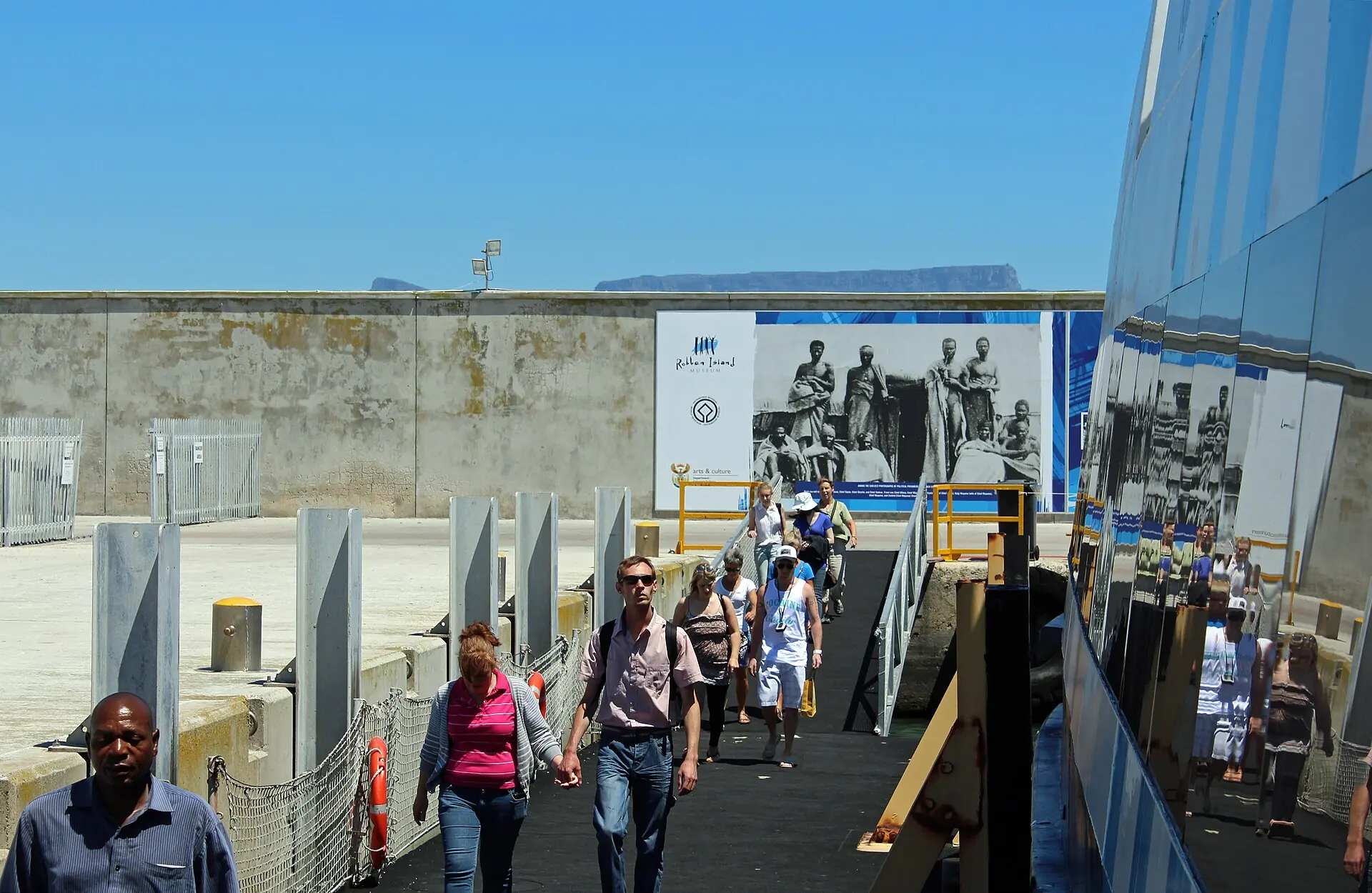
You land at Murray's Bay Harbour and walk a short way to the buses, past the high wall and the 1960s buildings where families and lawyers came to visit.
- Next
The bus tour with a museum guide: the leper graveyard, the Lime Quarry, Robert Sobukwe's house, the Bluestone Quarry and the wartime bunkers.
- Then
The walk through the Maximum Security Prison, often led by a former political prisoner, ending in B Section at Mandela's cell.
- 12:30 to 13:00
Back at the Gateway after the return crossing, with the city and the mountain in front of you the whole way.
Check-in at the Nelson Mandela Gateway
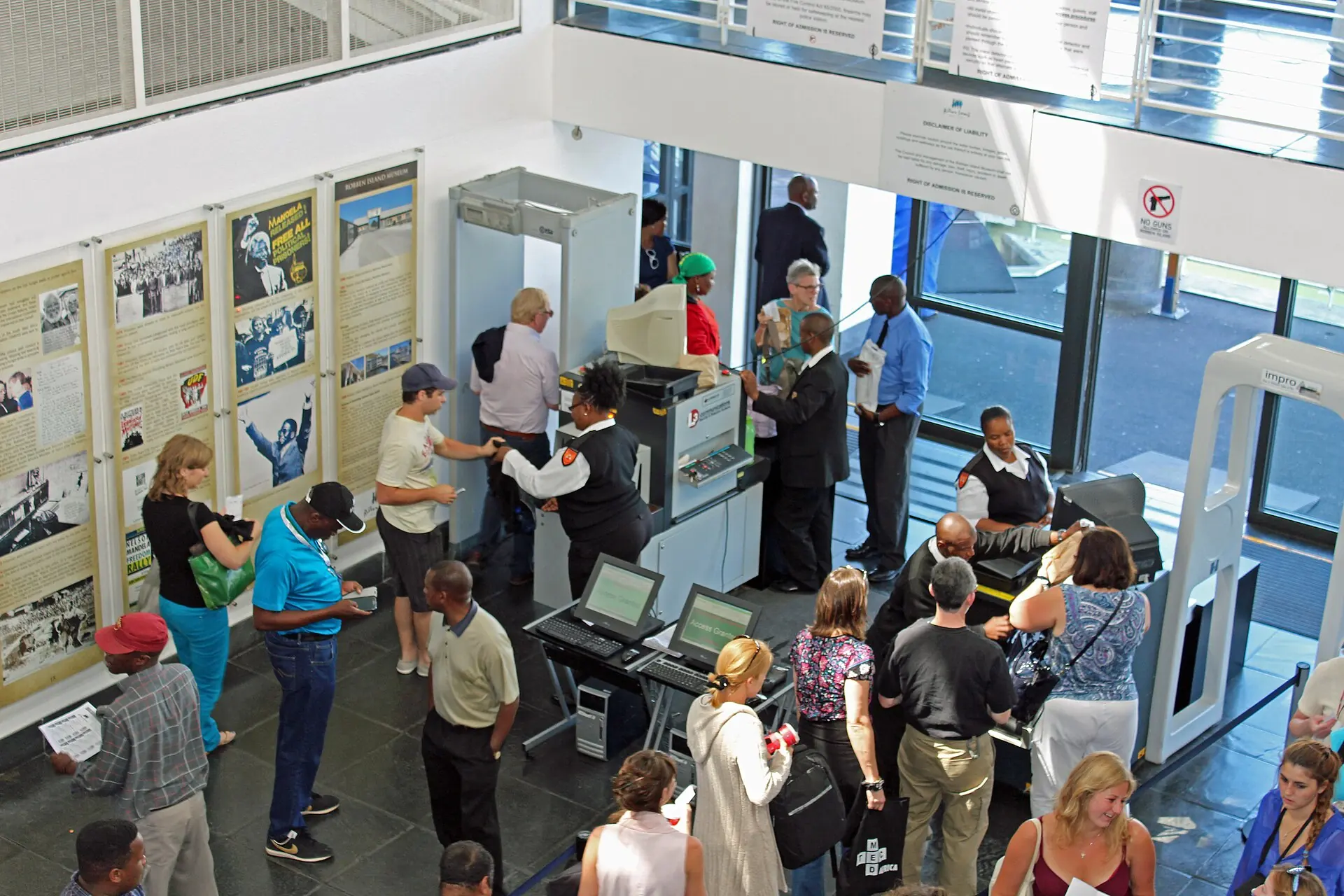
All tours leave from the same building, next to the Clock Tower, shown on the map below. While you wait, the Gateway has a free exhibition on Mandela's life with photographs, personal objects and oral histories. Printed and digital tickets are both accepted, but the ID document is compulsory: without it you cannot board. The guide to the Nelson Mandela Gateway explains what is inside, and how to get to Robben Island covers buses, parking and taxis.
Nelson Mandela Gateway, where every tour starts
Open in Google MapsThe crossing
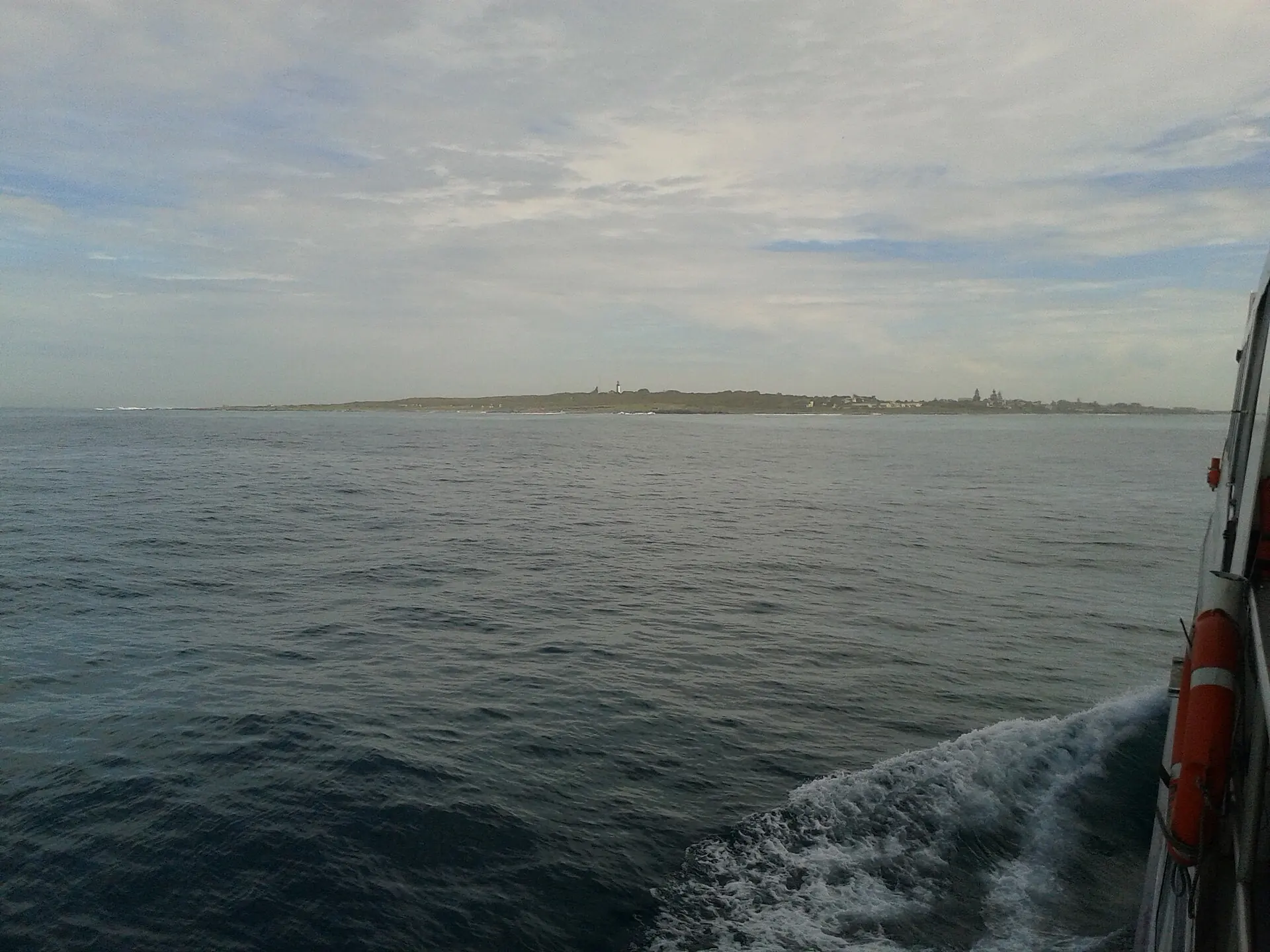
The museum runs its own ferries, the Krotoa and the Sikhululekile. The island lies about 11 km out in Table Bay, just under 7 km off the beaches of Bloubergstrand, but the ferry only sails from the Waterfront. The crossing takes 30 to 60 minutes each way depending on the boat: about half an hour on the Krotoa, longer on the others. On a calm day it is a pleasant half hour on the water; on a windy one it can be rough. Times, boats and cancellations are covered in our page on the Robben Island ferry.
The bus tour: what you see on the island
From the harbour you board a bus with a museum guide, who talks you through the centuries when the island was a place of banishment. The museum lists these stops on the standard route.
The leper graveyard
Rows of graves of the people with leprosy sent to the island between 1845 and 1931. The graveyard runs from the Church of the Good Shepherd, built by the patients themselves in 1895, to the walls of the prison.
The Lime Quarry
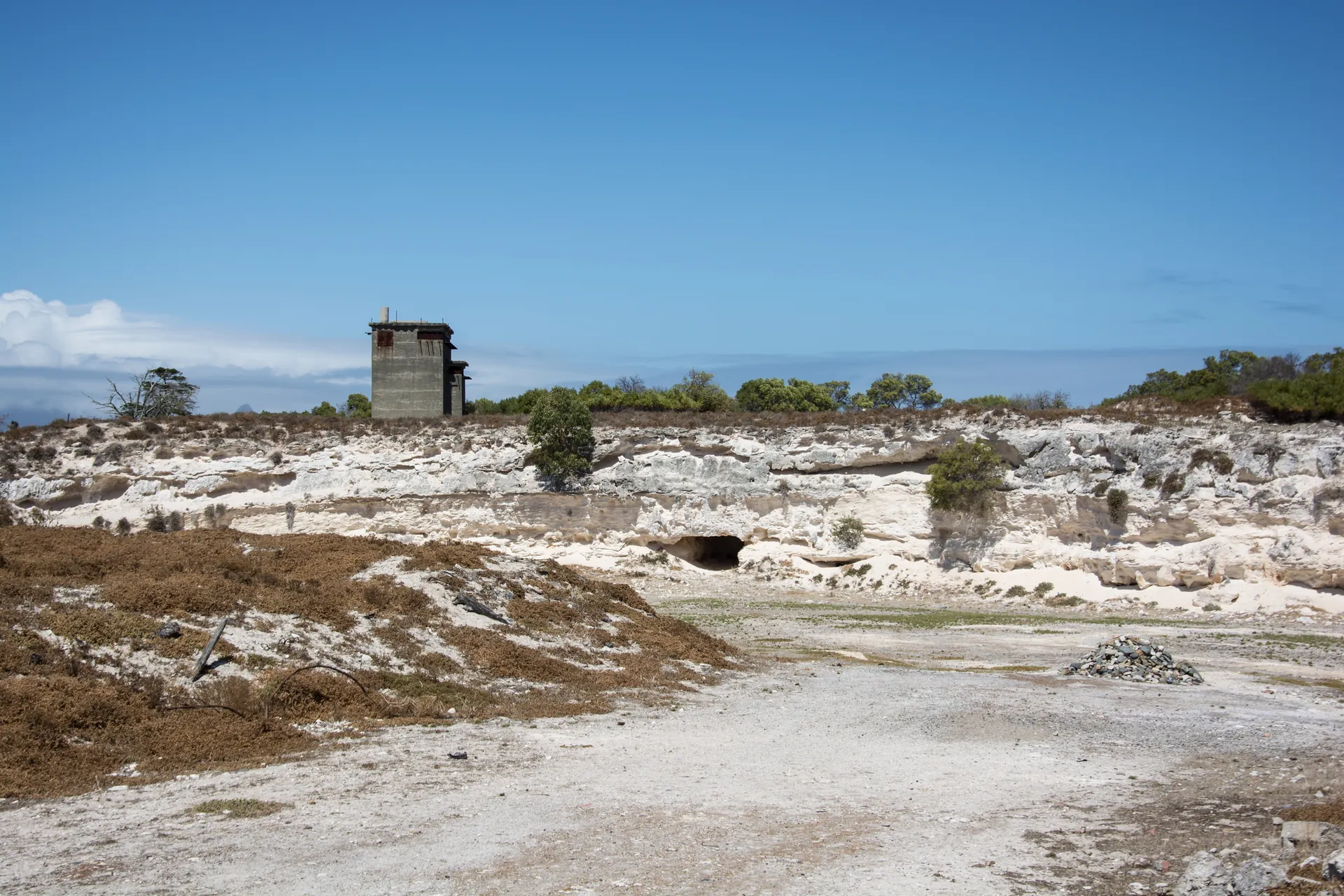
Political prisoners, including the leaders of B Section, dug lime here, mostly to resurface the island's roads. At the entrance is a pile of stones, the isisivane, left by former prisoners led by Mandela when they returned in 1995.
Robert Sobukwe House
The leader of the Pan Africanist Congress was held here alone from 1963 to 1969, away from the other prisoners. He was not allowed to speak to anyone, not even the guards.
The Bluestone Quarry and the wartime bunkers
The quarry where prisoners from the general sections worked, and the army and navy bunkers built when the island defended Cape Town during the Second World War.
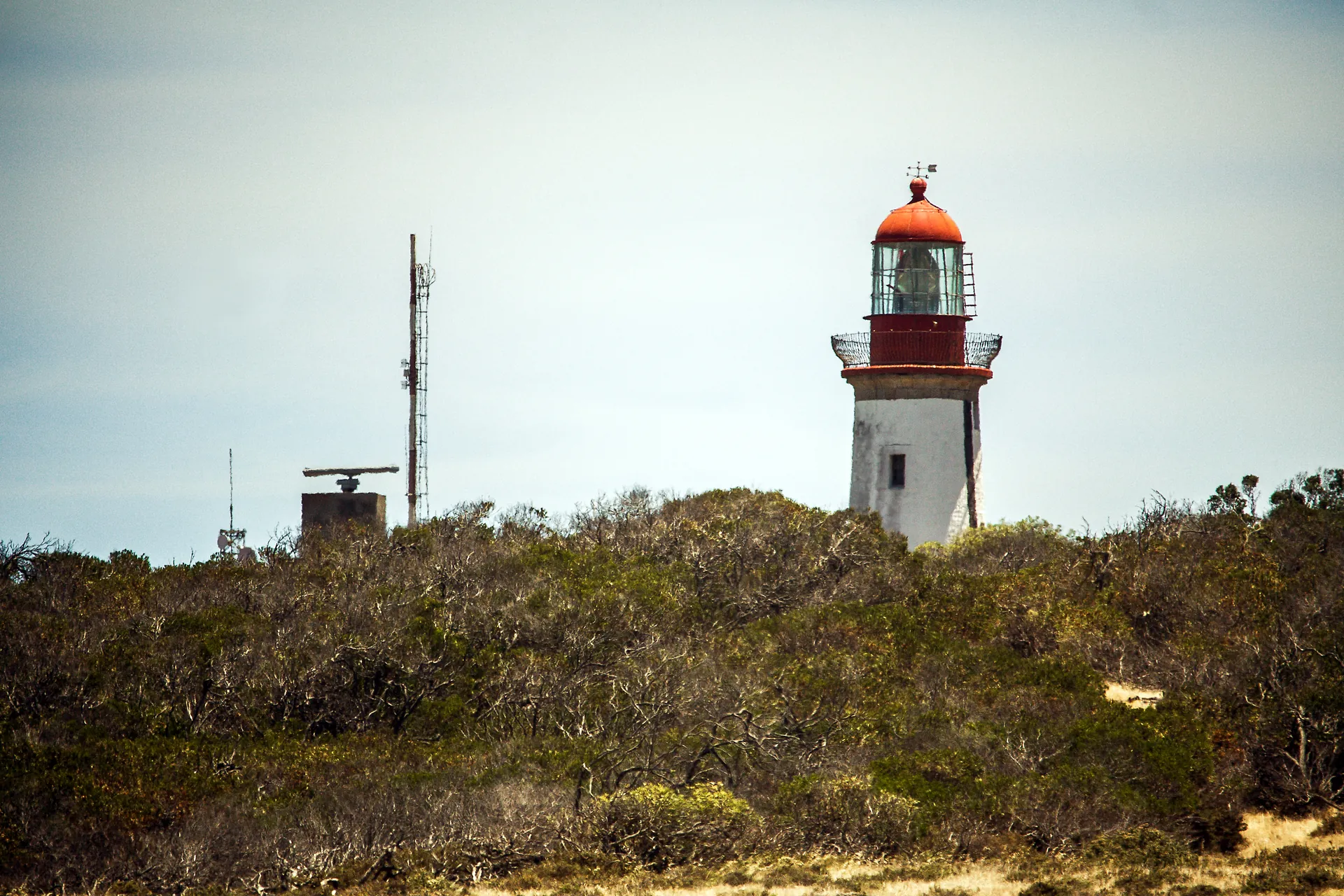
Along the way you may also pass the village, the Moturu Kramat and the Minto Hill lighthouse, lit in 1865. African penguins nest near the harbour, where the museum has a boardwalk, but it is not on the museum's list of tour stops, so do not count on seeing it. Our page on Robben Island penguins and wildlife has more.
The prison tour with former political prisoners
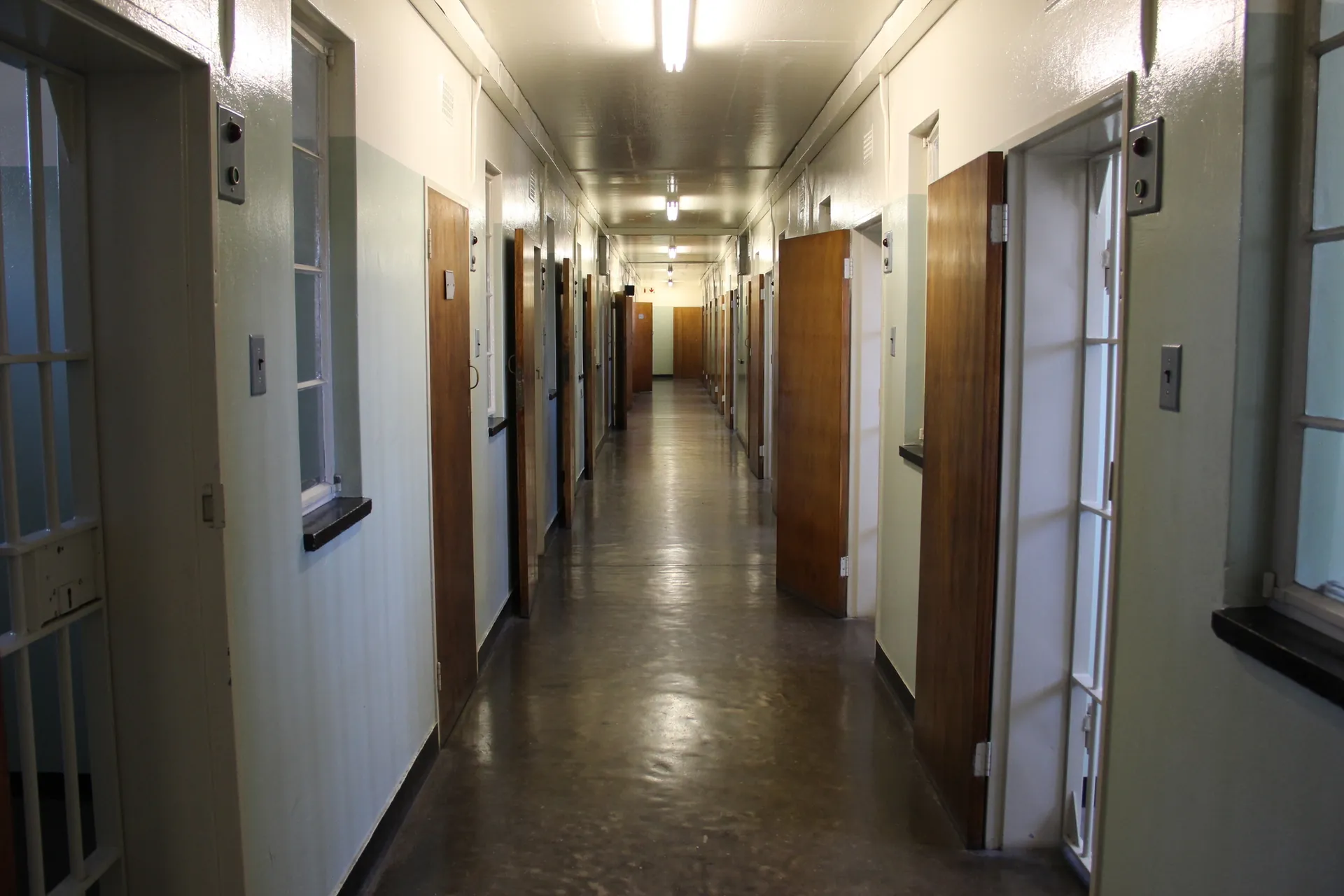
The bus leaves you at the Maximum Security Prison, built in the early 1960s by prisoners with stone from the island's quarries. This is the part of the Robben Island prison tour that most visitors remember. The guide here is often a former political prisoner, who walks you through the communal cells and the courtyards and tells you, in the first person, how the prison worked.
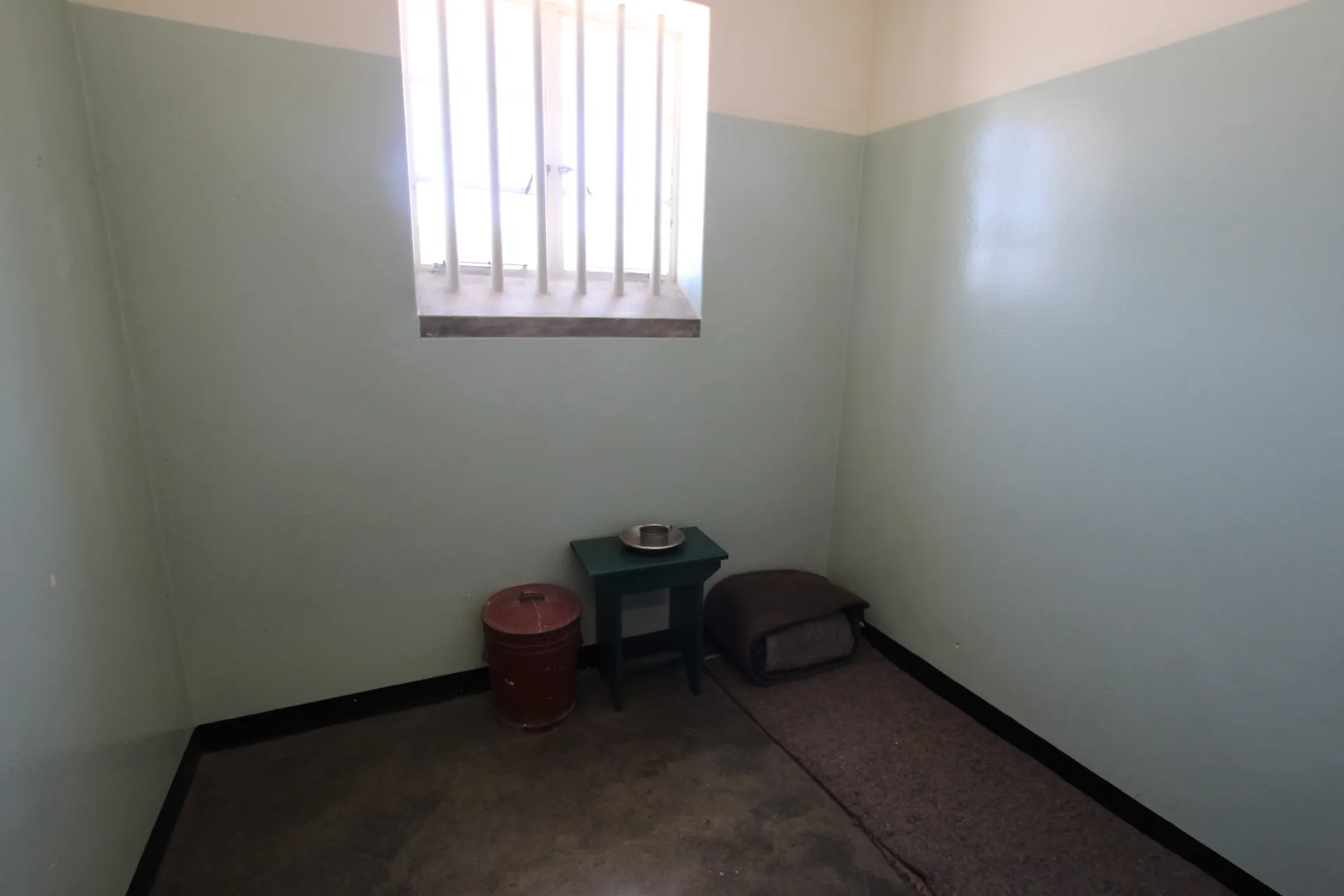
Nelson Mandela's cell in B Section: a bedroll, a small table and a bucket
One caveat. The men who were held here are now elderly, and not every group gets one of them; some tours are led by museum staff. Recent reviews mention guides who were not former prisoners, and there is no way to choose your guide when you book.
Language of the tour
According to the museum's frequently asked questions, there are no tours in other languages: the bus commentary and the prison walk are in English. If someone in your group needs a translation, you may bring your own interpreter. Sign language interpreters are arranged through DeafSA Western Cape, and the museum asks you to organise this before your visit.
Nelson Mandela's cell
The visit ends in B Section, the Leadership Section, in front of the cell where Mandela slept from 1964 to 1982: a bedroll, a small table and a bucket on a bare floor. For the full story of his 18 years on the island, read Nelson Mandela on Robben Island, and for the sections, the cells and the other prisoners, Robben Island prison.
The guide who shows you the cells is often a former prisoner, who spent years in a cell just like these.
Which Robben Island tour to choose
The visit on the island is identical in all the standard options. The options differ in how you reach the Waterfront, whether you can change the date and what else you see that day. Start by comparing how long each one takes.
- Standard tour3.5 to 4 h
- Museum walking tourabout 5 h
- Full-day combo toursabout 8 h
Sources: Robben Island Museum; full-day combos from operators' listings
The standard tour
Ferry, bus tour and prison, starting and ending at the Gateway. It is the right choice if you are staying at the Waterfront, in the city centre or along the Atlantic seaboard and can get to the Clock Tower on your own. Book it as the Ferry Ticket & Prison Museum Tour on Tiqets: it starts at €42.50 and the ticket arrives on your phone in minutes. If you want to keep your plans open, the flexible version costs €65 and can be cancelled or changed for free up to 24 hours before.
The guided tour with transfer
The guided tour with return transfer is the same visit with pick-up and drop-off at your accommodation, in groups of up to 45, with free cancellation up to 72 hours before. Choose it if you are staying further out or do not want to deal with parking at the Waterfront.
Full-day combos
Several Robben Island tours from Cape Town pair the island with something else in about 8 hours, with hotel pick-up: Table Mountain and the city, the Long Walk to Freedom exhibition, or the Groot Constantia wine estate. A smaller-group tour built around the stories of Mandela's former warder and chef is also available. These suit you if you only have one free day, but read what is excluded: the Table Mountain cable car, for example, is paid separately.
The museum's walking tour
Robben Island Museum also runs a walking tour on Fridays, Saturdays and Sundays, starting at 09:00. It is a guided route of about 5 km on foot that lasts about 5 hours and takes in the Visitors Centre, the Maximum Security Prison, Sobukwe House and the Lime Quarry. It costs more than the standard tour, comes with a cap and a water bottle, and is sold by the museum, not on Tiqets: its prices are in the museum's price list at the end of our tickets page. There are limits: the museum says it is only for people who are fit and able to walk long distances, and the ferry is just as dependent on the weather as on any other tour. The museum's own pages also give slightly different end times, so confirm the schedule when you book.
Private and school tours
The museum also offers private, VIP and protocol tours on any day, from 3.5 to about 8 hours, on request, and subsidised educational tours for schools from Monday to Friday between 2 May and 31 October. Prices for these are given on request. Some specialised tours, protocol tours in particular, travel to the island by air; for every other visitor, the only way across is the ferry.
Robben Island tour prices in brief
On Tiqets the ferry and prison tour starts at €42.50 per adult, with the ticket on your phone in minutes and payment by card in your own currency. The flexible version, which you can cancel or move for free up to 24 hours before, costs €65, and the full-day tours with hotel pick-up start at about €107. Every option is on the Robben Island tickets page.
How to book a Robben Island tour
The easiest way is online, before you leave home. On Tiqets you book the ferry and prison tour in a few minutes, pay by card in your own currency and get the ticket on your phone; with the flexible ticket you can also cancel or change the date for free up to 24 hours before. Day tours from your hotel include the ticket in the package. The ticket office at the Gateway sells any seats left on the day, in rand or by card, but in high season there may be none.
You need a passport, ID card or driving licence to board. The museum does not say how far ahead tours sell out, only that seats depend on availability and that early booking is recommended. Our advice is to book your visit as soon as your Cape Town dates are fixed, and to aim for one of your first days in the city. All the options, with prices, are on the tickets page.
Prefer to be picked up at your hotel?
The guided tour with return transfer includes the ferry, the bus tour and the prison, and you can cancel for free up to 72 hours before. From €64.50.
- 3.5 to 4 hLength of the standard tour
- 4Ferries a day from September to April
- 30 minArrive before your ferry
- 5 kmDistance of the walking tour
Is a trip to Robben Island worth it?
Yes, if you want to understand South Africa rather than only see Cape Town. In half a day you see the quarry where the leaders of the liberation movements did forced labour, the house where Sobukwe was kept in silence from 1963 to 1969 and the cell where Mandela spent 18 of his 27 years in prison. Robben Island has been a UNESCO World Heritage Site since 1999.
It is less worth it if you expect to explore freely. The tour is structured, you move with a busload of visitors and the time at each stop is set by the guide. You cannot control the sea or choose your guide, but you can control the timing: book the visit early in your stay, so that a cancelled ferry does not cost you the visit.
Best time to visit Robben Island
From 1 September to 30 April there are four departures a day, and December to February, the southern summer, is the busiest time. It is also the windiest stretch: the south-easter blows hardest in the afternoon, and in our Robben Island weather analysis January has the most strong-wind days during ferry hours. From May to August there are three departures, fewer visitors and less strong wind, but the winter cold fronts can bring a heavy sea even on a fairly calm day. The museum can cancel a sailing in any season, and it does not publish how often it does.
Two practical tips. Book the 09:00 or 11:00 ferry if you can: if the weather turns later in the day, you have a better chance of crossing. Also schedule the visit for your first days in Cape Town, so that a cancelled sailing leaves you time to rebook. In September and October the island's veld is in flower, something to look out for from the bus.
Robben Island with children
Children under 2 travel free: ask for their ticket at the Gateway and bring a birth certificate or passport. Under 18s pay the child rate. The standard tour is mostly seated, on the ferry and the bus, so it works with school-age children. The 5 km walking tour is too long for young children. If you are pregnant, the museum asks you to consult your doctor and sign an indemnity form before travelling.
Accessibility
Robben Island is only partly accessible. The museum asks visitors with a disability or a chronic illness to inform it before booking, so that staff can plan support, and it can be reached on +27 21 413 4200. Wheelchair users who have made the trip describe staff helping them on board, buses with a lift, steep ramps and uneven ground in parts of the prison, and ferries that differ from one another. For Deaf visitors, sign language interpreters are arranged through DeafSA Western Cape.
What to bring on the tour
- Your passport, ID card or driving licence: you need it to board.
- Comfortable shoes, a hat, sunglasses and sunscreen, as the museum recommends.
- A windproof jacket, even in summer: the island is windier than the city.
- Seasickness tablets, if you need them, taken an hour before boarding.
- Water and a snack: there is no restaurant on the island, only a small shop. Alcohol is not allowed.
Personal photos are welcome; drones and tripods are not.
Robben Island virtual tour
If you cannot make the trip, or want to prepare for it, the museum has a virtual tour of the main places on the island on its website. For the museum as an institution and the other tours it runs, see Robben Island Museum; for the island's four centuries of history, Robben Island history.
Robben Island tour: FAQ
How long is the Robben Island tour?
About 3.5 to 4 hours from departure to return to the Waterfront, including two ferry crossings of 30 to 60 minutes each. Full-day tours that add Table Mountain or the Winelands take about 8 hours.
Can you visit Robben Island without a tour?
No. The island can only be visited on a guided tour that starts and ends at the Nelson Mandela Gateway, with the return ferry included in the ticket.
Who are the tour guides on Robben Island?
A museum guide leads the bus tour of the island. Inside the prison the story is often told by a former political prisoner, but not on every tour: the men who were held here are now elderly, and some groups are guided by museum staff.
How much does a trip to Robben Island cost?
On Tiqets the ferry and prison tour starts at €42.50 per adult and covers the return ferry, the bus tour of the island and the prison visit. If you want to be able to cancel or change the date for free up to 24 hours before, the flexible ticket costs €65. Full-day tours with hotel pick-up start at about €107.
Do you need to book a tour to Robben Island?
Yes, and early if you can. Unsold seats are sold at the Gateway on the day, but the museum gives no guarantee and recommends booking in advance, especially from September to April. You can book the ferry and prison tour on Tiqets from €42.50; if your plans could still change, the flexible ticket lets you cancel for free up to 24 hours before.
When is the best time to visit Robben Island?
From September to April there are four departures a day instead of three, and December to February is the busiest period. It is also the windiest: the summer south-easter picks up in the afternoon, so a morning ferry is the safer choice. Winter is quieter and, in our wind data, less windy, though a cold front can still raise a heavy sea. The museum can cancel a sailing in any season, so leave yourself a spare day.
Can physically disabled tourists visit Robben Island?
Partly. Visitors who use wheelchairs report steep ramps and uneven ground in parts of the prison, and each ferry is different. The museum asks visitors with a disability to contact it before booking, on +27 21 413 4200.
Is Robben Island suitable for children?
Yes. Children under 2 travel free with a birth certificate or passport, and under 18s pay the child rate. The standard tour is mostly by bus, so it suits families better than the 5 km walking tour.
Is the Robben Island tour available in other languages?
No. The museum does not run tours in other languages, so guiding is in English. You may bring your own interpreter, and sign language interpreters are arranged through DeafSA Western Cape.
Andrea SemonellaBorn and raised in Genoa, Italy. Co-founder of Benicool, which publishes independent guides to cultural sites. He has travelled to every continent and writes about how to visit them without wasting time or money.
 Robben Island tickets
 The Robben Island ferry
 Robben Island prison