Nelson Mandela on Robben Island: 18 years in a single cell in B Section
 By Andrea Semonella
Updated on 11 min read
By Andrea Semonella
Updated on 11 min read
In short
Nelson Mandela was held on Robben Island for 18 of his 27 years in prison, from 13 June 1964 to 31 March 1982, as prisoner 466/64. He was sent there with a life sentence after the Rivonia Trial, slept in a single cell in B Section and worked in the Lime Quarry. You can see his cell at the end of the Robben Island Museum tour, which you can book on Tiqets.
Why Mandela was sent to Robben Island
When the Rivonia Trial began, Mandela was already a prisoner. He was serving a five-year sentence for leaving South Africa without a passport and for inciting workers to strike. On 27 May 1963 he was transferred to Robben Island for the first time, and on 12 June 1963 he was taken back to Pretoria: a first stay of about two weeks.
A few weeks later police raided Liliesleaf Farm in Rivonia and arrested several of his closest comrades. On 9 October 1963 Mandela went on trial with ten others, charged with sabotage. They faced the death penalty.
The Rivonia Trial and the speech from the dock
On 20 April 1964 Mandela opened the defence case with a statement from the dock. The Nelson Mandela Foundation, in its biography of Mandela, still quotes its most famous line: "it is an ideal for which I am prepared to die".
On 11 June 1964 he and seven others were convicted. The next day, 12 June, they were sentenced not to death but to life imprisonment. The state reserved Robben Island for the political prisoners it considered most dangerous, and that is where they were sent. The prison itself, its sections and its other prisoners have their own page: Robben Island prison.
13 June 1964: prisoner 466/64
Hours after the sentence, the men were flown to Robben Island around midnight, so the date of arrival is 13 June 1964. Six men arrived with Mandela: Walter Sisulu, Ahmed Kathrada, Govan Mbeki, Raymond Mhlaba, Elias Motsoaledi and Andrew Mlangeni. The eighth man sentenced, Denis Goldberg, was separated from the group because he was white and was sent to serve his sentence in Pretoria.
The isolation block was not quite finished. According to the Robben Island Museum, Mandela and six of his co-accused spent their first two weeks in the Ou Tronk, the old jail near the harbour, before moving to their single cells.
Mandela became prisoner 466/64: the 466th prisoner to arrive on Robben Island in 1964. Decades later the number became the name of his 46664 campaign.
He later explained his approach to prison life in words published by the Nelson Mandela Foundation: "I believe the way in which you will be treated by the prison authorities depends on your demeanour".
Mandela's cell in B Section
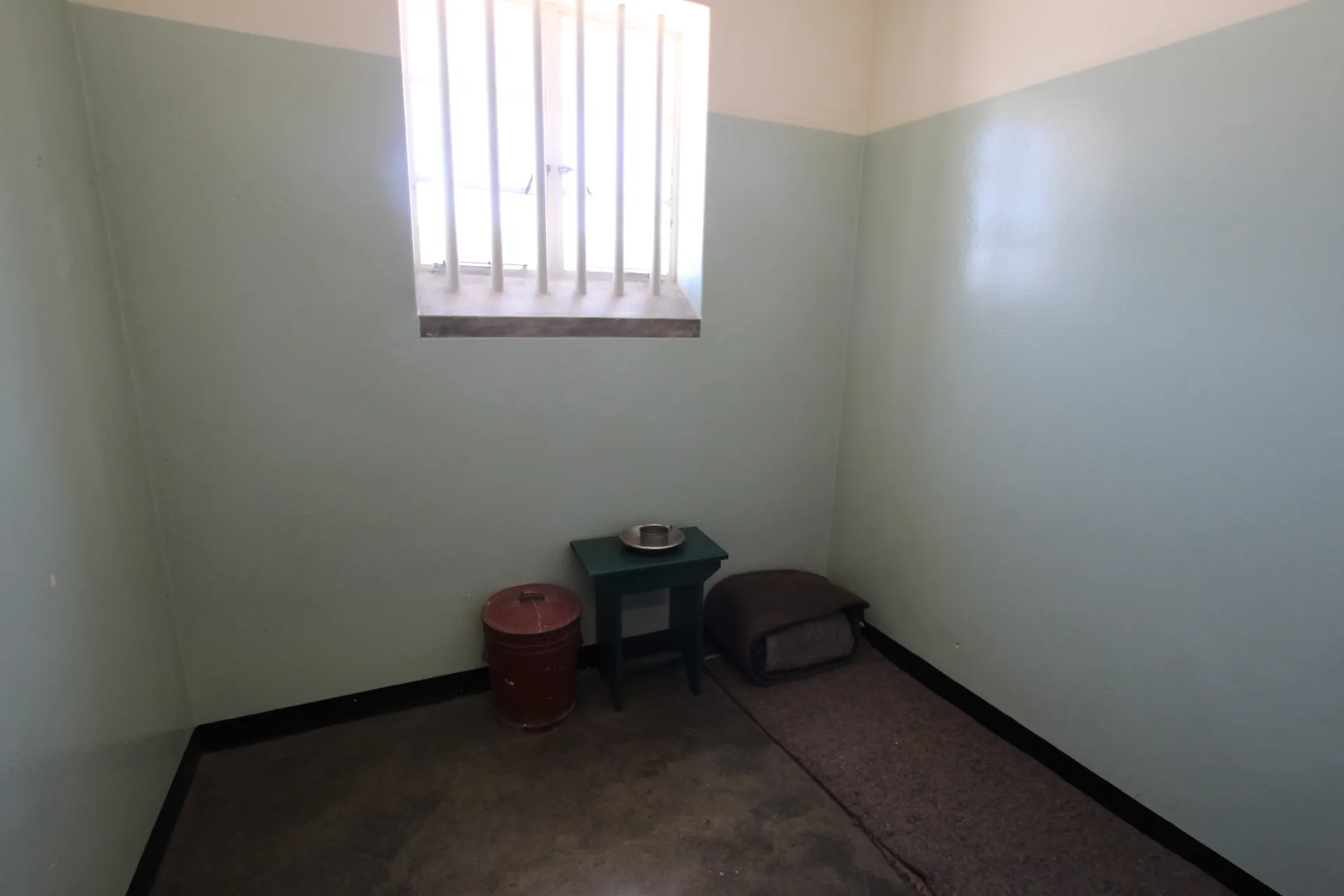
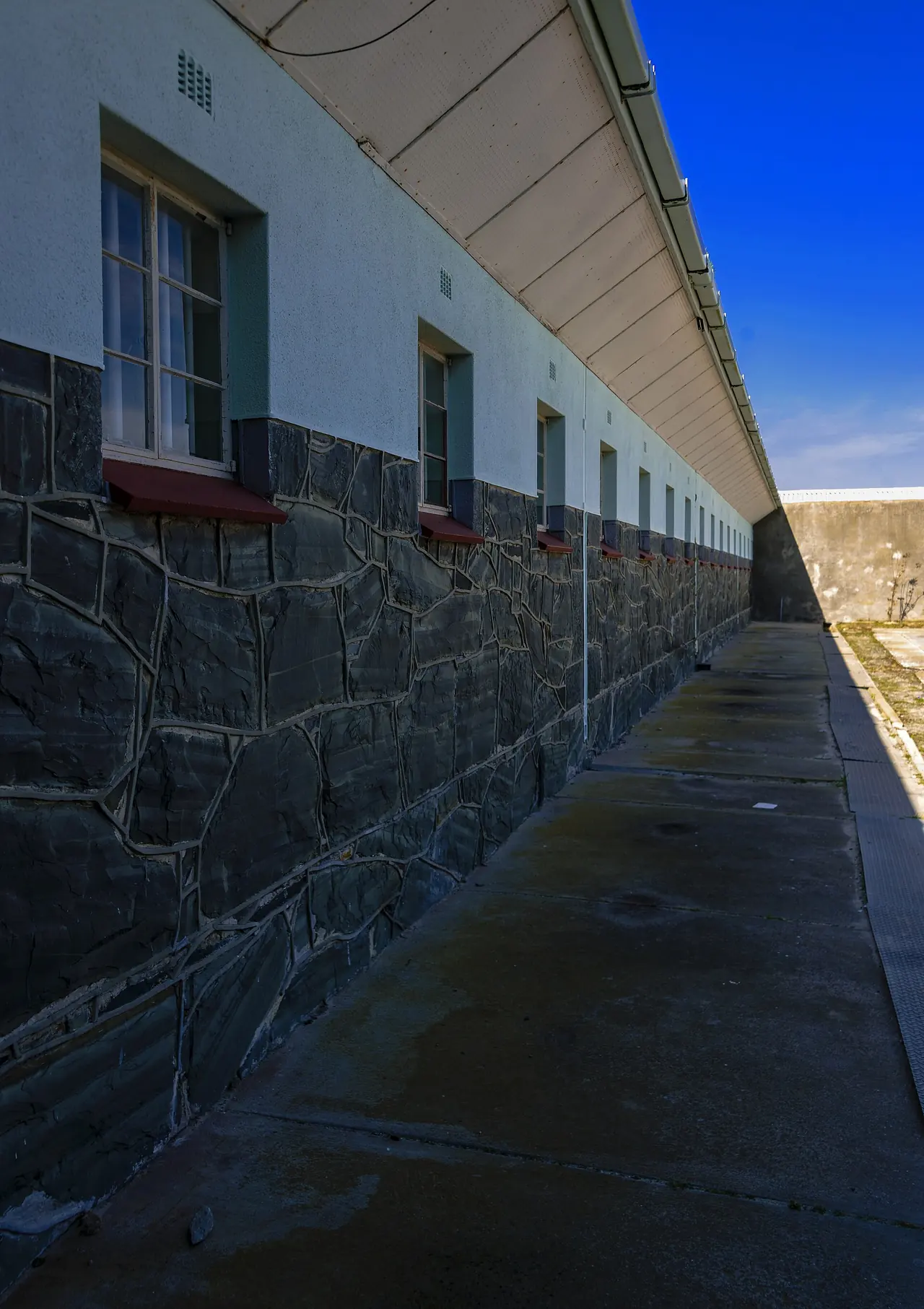
Mandela was not held in the communal cells of the general sections, where up to 52 men shared a room. He was kept in the isolation block, a U-shaped building with about 90 single cells. In the mid-1970s the block was divided into three sections, and his wing, the east wing, became B Section, known as the Leadership Section: the place where the leaders of the liberation movements were held, apart from the other prisoners.
How big was Mandela's cell?
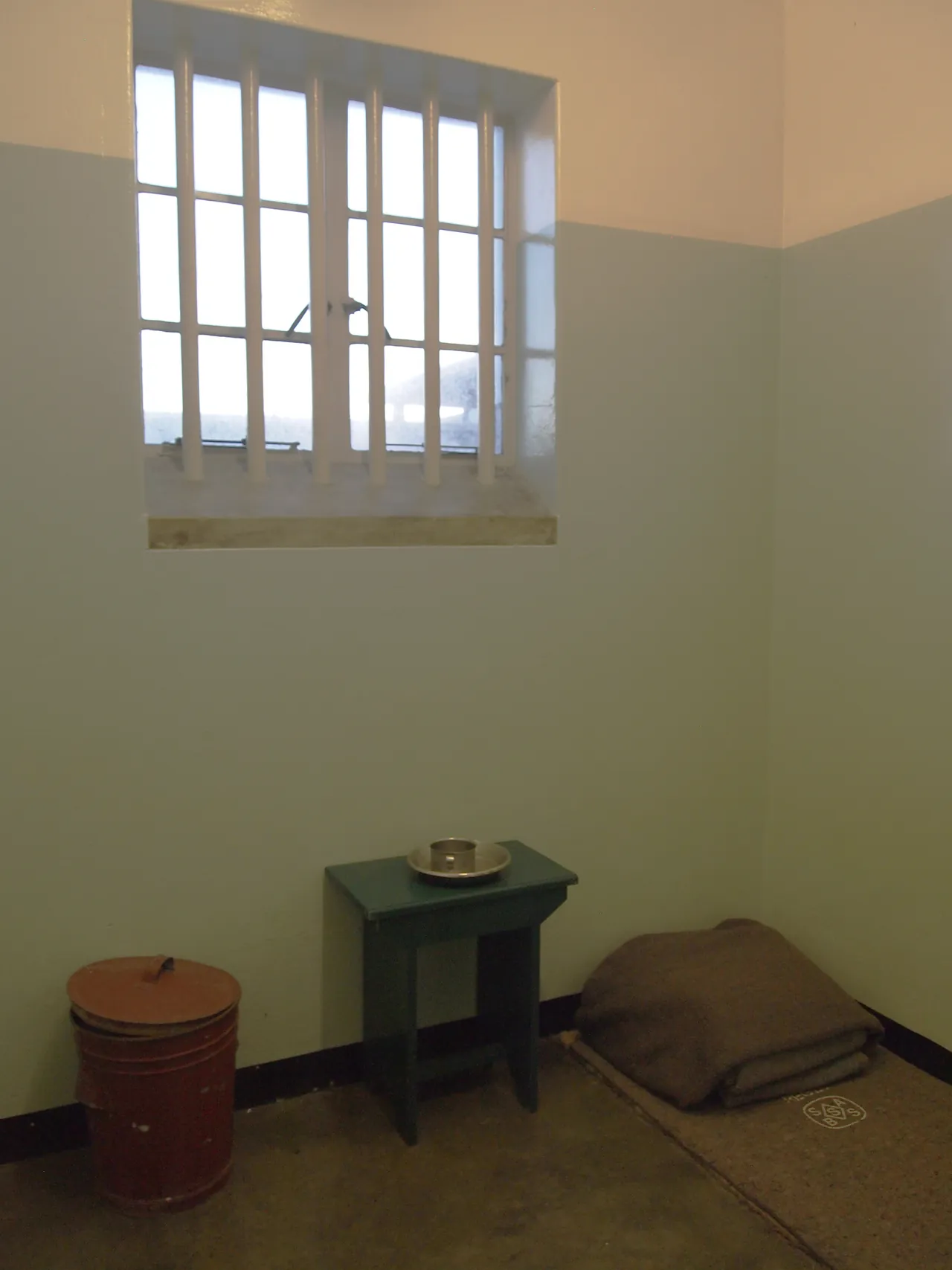
The museum's own online exhibition on the prison, made with the Nelson Mandela Foundation, gives the cell as about 2 by 2 metres. Other political prisoners' cells were similar. In the cell today you see a bedroll on the floor, a small table and a bucket, nothing more. Until 1979 prisoners on Robben Island slept on mats on the floor; beds arrived only that year.
A press photograph from the late 1970s, kept by the museum, shows the cell with bookshelves. They were made by a fellow prisoner, Jeff Masemola. With a desk and shelves in the cell, there was barely room to lie down, and the bedding had to be rolled out at night and rolled up again in the morning.
You will find a cell number in many guides, but not the same one. The Robben Island Museum does not publish it, and secondary sources disagree, so we do not give one. On the tour the guide takes you to the right door.
How long was Mandela on Robben Island?
Eighteen years, from 13 June 1964 to 31 March 1982. That is two thirds of the 27 years he spent in prison. No other prison held him for as long, and he had already spent two weeks on the island in 1963.
The chart shows how the time between his life sentence and his release was divided between the three prisons that held him.
- Robben Island18 years (June 1964 to March 1982)
- Pollsmoor Prison, Cape Town6 years 8 months (March 1982 to December 1988)
- Victor Verster Prison, near Paarl14 months (December 1988 to February 1990)
Dates from the Nelson Mandela Foundation. The 27 years in total also include the time he spent in prison before the Rivonia Trial sentence of 12 June 1964.
- 18Years on Robben Island
- 27Years in prison in total
- 466/64His prisoner number
- 1964-1982From arrival to transfer
Life on the island: the Lime Quarry and B Section
Work in the Lime Quarry
Forced labour was part of the sentence. Like every African prisoner, Mandela was issued short trousers, not long ones. The Lime Quarry, inland from Murray's Bay Harbour, had been dug since Dutch times. From 1963 prisoners of the general sections worked there; later the B Section leaders, Mandela among them, were sent to the quarry and the general sections moved to the Bluestone Quarry. The lime they dug was used mostly to resurface the island's roads. The museum's exhibition notes that Mandela, like many other prisoners, suffered permanent eye damage from the glare of the white stone.
The courtyard
Life in B Section centred on the courtyard you cross on the tour. A photograph of Mandela talking with Walter Sisulu there, apparently taken in 1965 by a British journalist, was used by the prison authorities to suggest that political prisoners lived a "dignified" life. In 1977 the government organised a press visit to the island. For the occasion, prisoners who normally worked in the quarry in shorts were moved to garden work and given long trousers, and Mandela was photographed gardening with Herman Toivo ja Toivo of SWAPO and Justice Mpanza. On 19 May 1977 he wrote to the head of the prison to protest that journalists had photographed prisoners without their permission.
Study, news and resistance
The prisoners turned the island into a place of learning. They ran classes for each other, set out to make sure no man left the island unable to read or write, and won the right to study in a 1973 court challenge. Mandela himself began studying again by correspondence through the University of London, a degree he did not complete; he finally earned his LLB in 1989, from the University of South Africa, while still in prison. News from outside was forbidden, so they gathered it in secret and passed it along. Hunger strikes and petitions slowly forced better conditions: gardens, sport and, in 1979, beds.
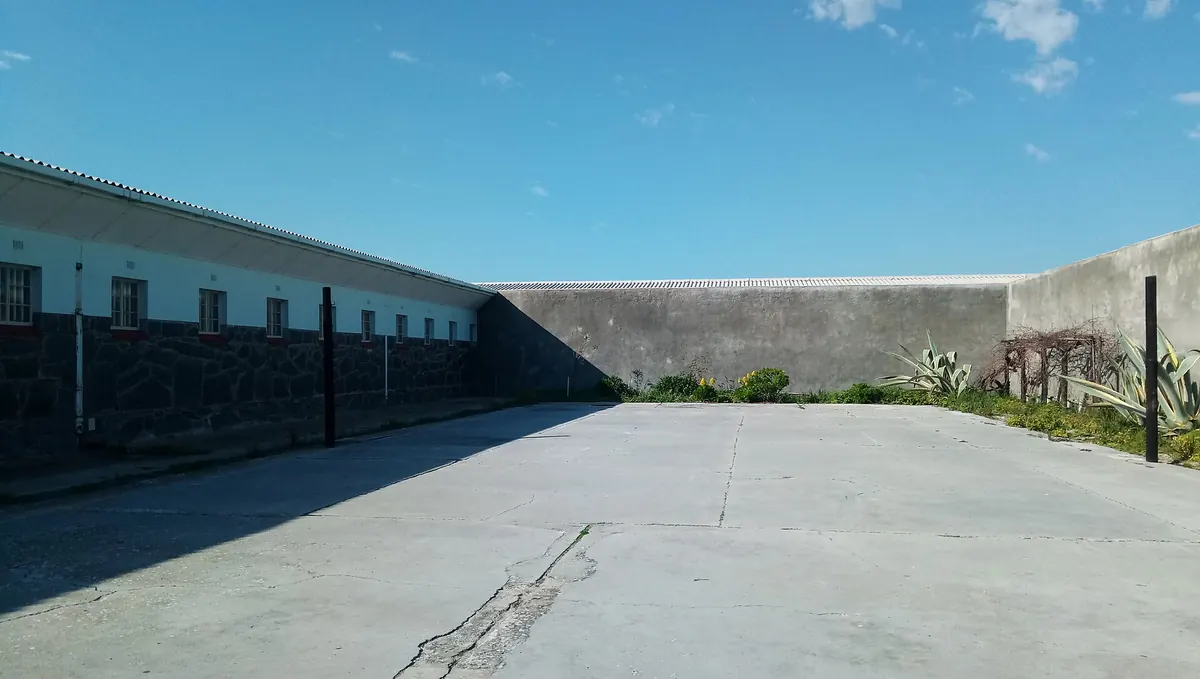
The B Section courtyard, where Mandela and the other leaders were held
Letters, visits and the funerals he could not attend
Contact with his family was one of the hardest parts of the sentence. Every letter went through the prison censors, who blacked out or cut away whatever they judged undesirable. Visits took place in the Visitors Centre by the harbour, which you pass on the tour: prisoner and visitor sat on opposite sides of a plate glass window and spoke through a sound system, with no physical contact. From 1975 only first-degree relatives were allowed to visit.
In 1968 Mandela's mother died. In 1969 his eldest son, Thembi, died. He was not allowed to attend either funeral, and could respond only by letter.
Even reading needed permission. On 2 October 1979, the Nelson Mandela Foundation records, he wrote to the head of the prison asking for permission to buy the book "Vorster - The Man" by D'Oliveira.
Long Walk to Freedom, hidden in the garden
After a long struggle, prisoners won permission to plant gardens in some courtyards, B Section included. That garden had a second use. The first draft of Mandela's autobiography, Long Walk to Freedom, was written on Robben Island and hidden in the B Section garden.
The manuscript did not always match the published book. The Nelson Mandela Foundation notes one example: the original manuscript says his father died in 1930, when Mandela was 12, while the published autobiography says he was nine.
The book the world read began as a draft buried in a prison garden.
Mandela's comrades on Robben Island
Mandela was never alone in B Section. Walter Sisulu, his fellow accused, and Ahmed Kathrada, Govan Mbeki, Raymond Mhlaba, Elias Motsoaledi and Andrew Mlangeni all served their life sentences there with him.
Others were on the island at the same time. Robert Sobukwe, founder of the Pan Africanist Congress, was kept alone in a house away from the prison from 1963 to 1969. Jacob Zuma was a prisoner from 1963 to 1973 and Kgalema Motlanthe from 1977 to 1987: both later became presidents of South Africa, as Mandela did. Many others went on to become ministers, premiers or judges, and our Robben Island prisoners list follows them name by name. Namibian leaders of SWAPO, such as Herman Toivo ja Toivo, were held there too.
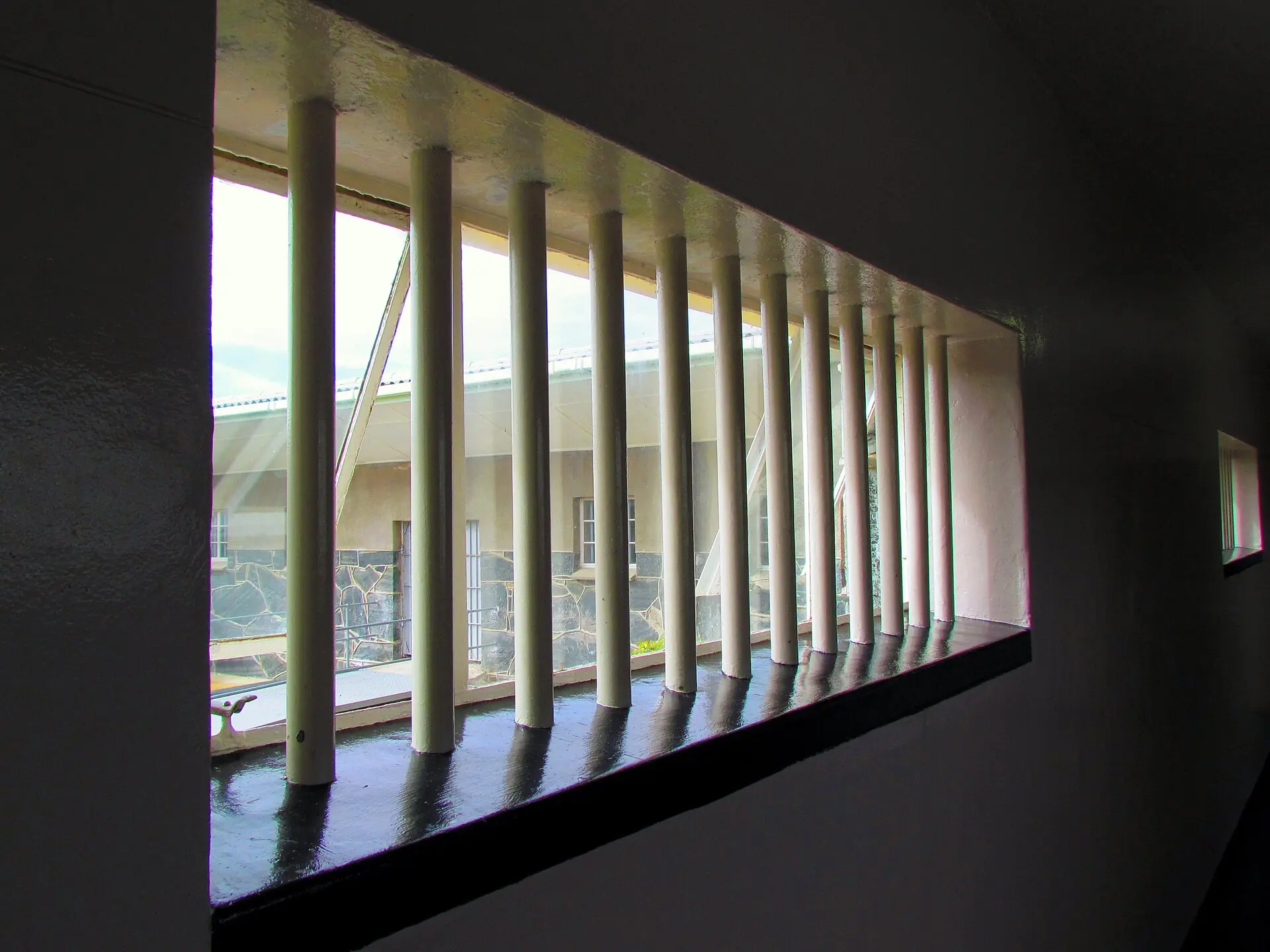
Light through the barred windows of the prison
Leaving the island: Pollsmoor, 1982
On 31 March 1982 Mandela was moved off the island to Pollsmoor Prison in Cape Town, together with Walter Sisulu, Raymond Mhlaba and Andrew Mlangeni. Ahmed Kathrada joined them in October. After prostate surgery in November 1985 Mandela was held alone. On 7 December 1988 he was moved to a house at Victor Verster Prison near Paarl.
He walked out of Victor Verster on Sunday 11 February 1990, nine days after the ANC and the PAC were unbanned. On 10 May 1994 he was inaugurated as South Africa's first democratically elected president. The last political prisoners left Robben Island in May 1991.
- 27 May 1963
First transfer to Robben Island, for about two weeks.
- 9 October 1963
The Rivonia Trial begins.
- 20 April 1964
Mandela's statement from the dock.
- 12 June 1964
Sentenced to life imprisonment.
- 13 June 1964
Arrives on Robben Island as prisoner 466/64.
- 31 March 1982
Moved to Pollsmoor Prison.
- 7 December 1988
Moved to a house at Victor Verster Prison.
- 11 February 1990
Released from Victor Verster Prison.
- 10 May 1994
Inaugurated as president of South Africa.
- 1995
Leads the reunion of former prisoners on the island.
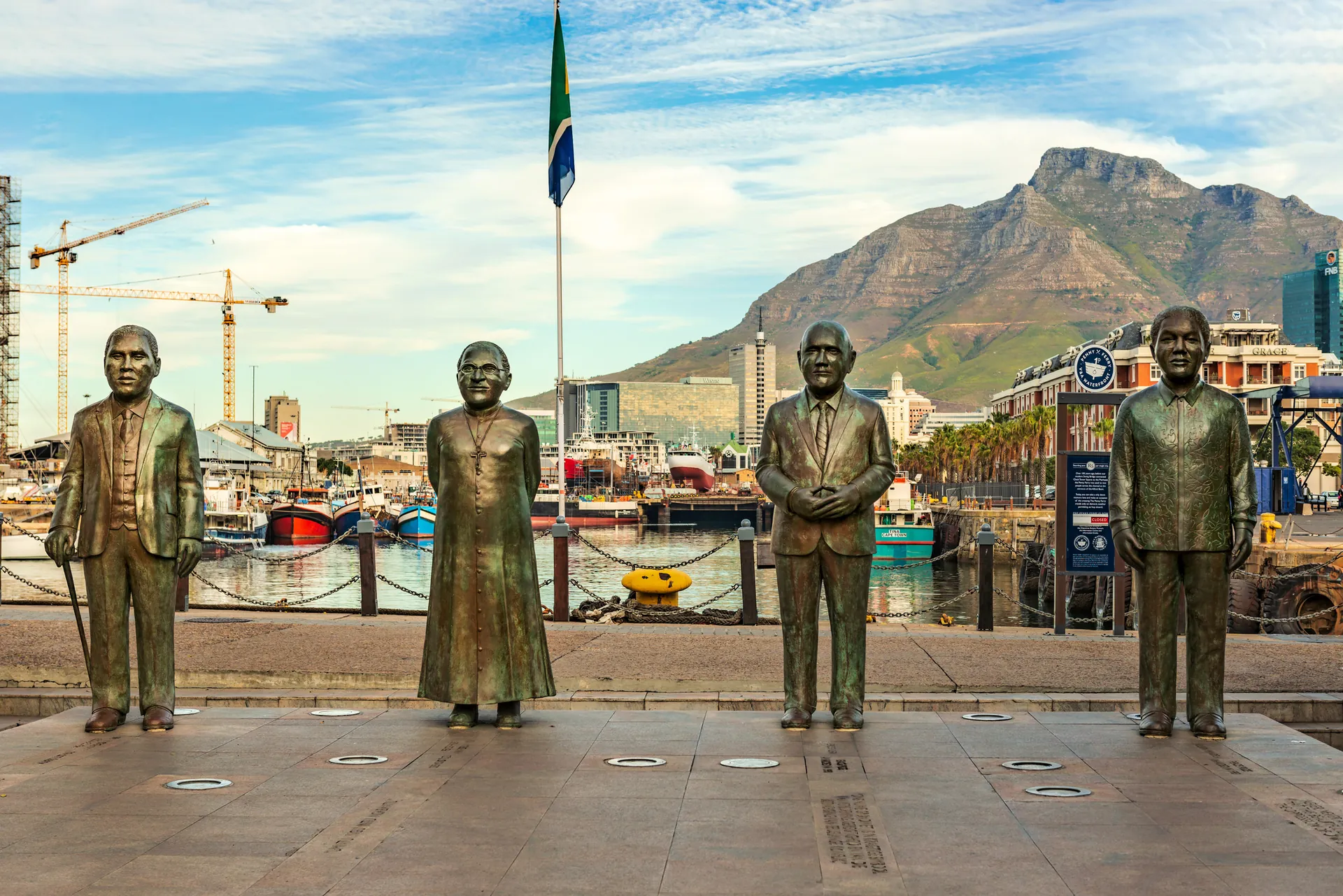
Nobel Square at the Waterfront: South Africa's four Nobel Peace Prize winners
The 1995 return and the isisivane
In 1995 Mandela came back to Robben Island, this time as president, to lead a reunion of former political prisoners. At the entrance to the Lime Quarry, where he and his comrades had dug for years, they built a pile of stones called the isisivane, in memory of their life and forced labour in the prison.
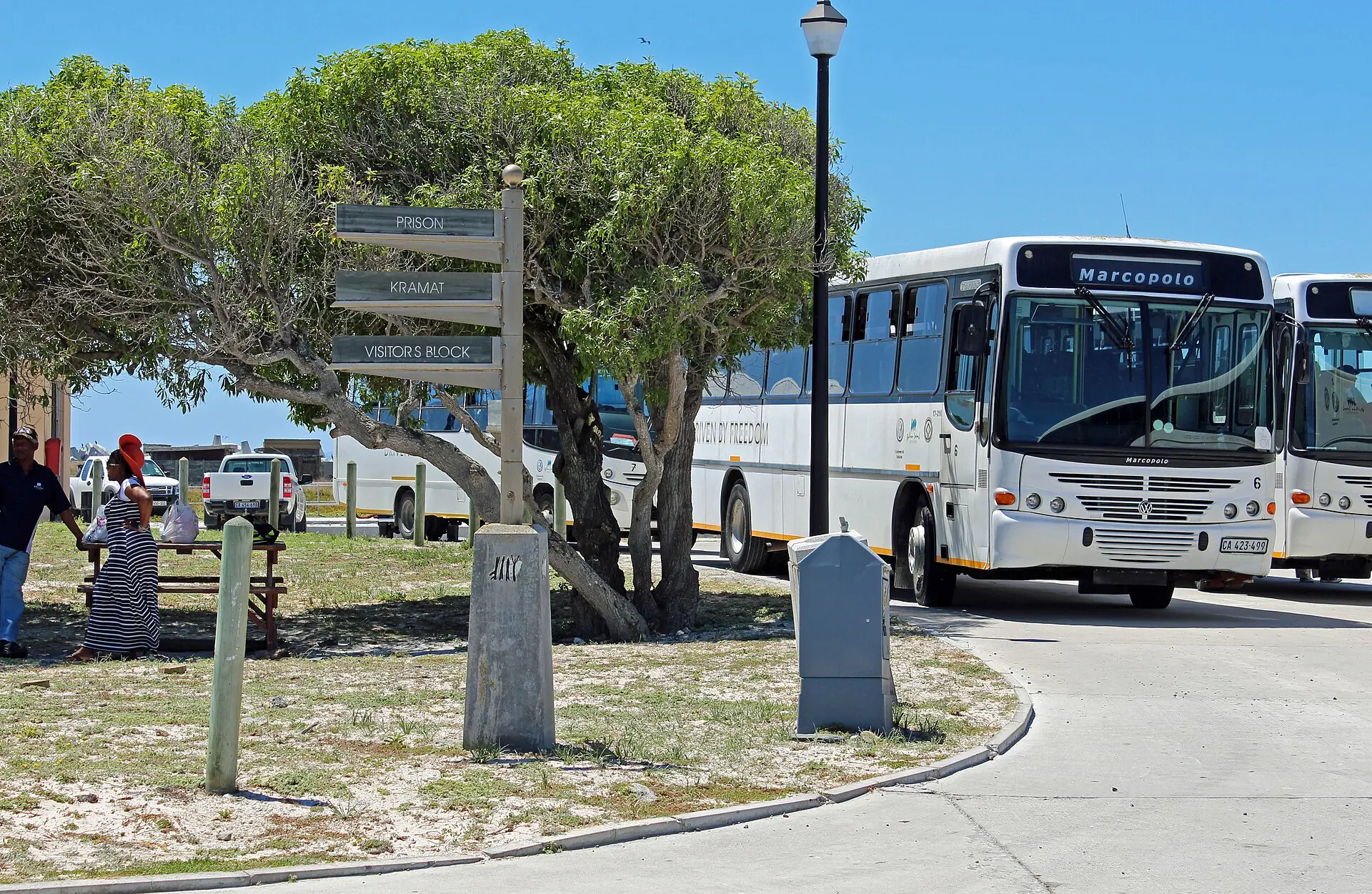
The pile is still there. The tour bus passes the Lime Quarry: look for the stones at the entrance.
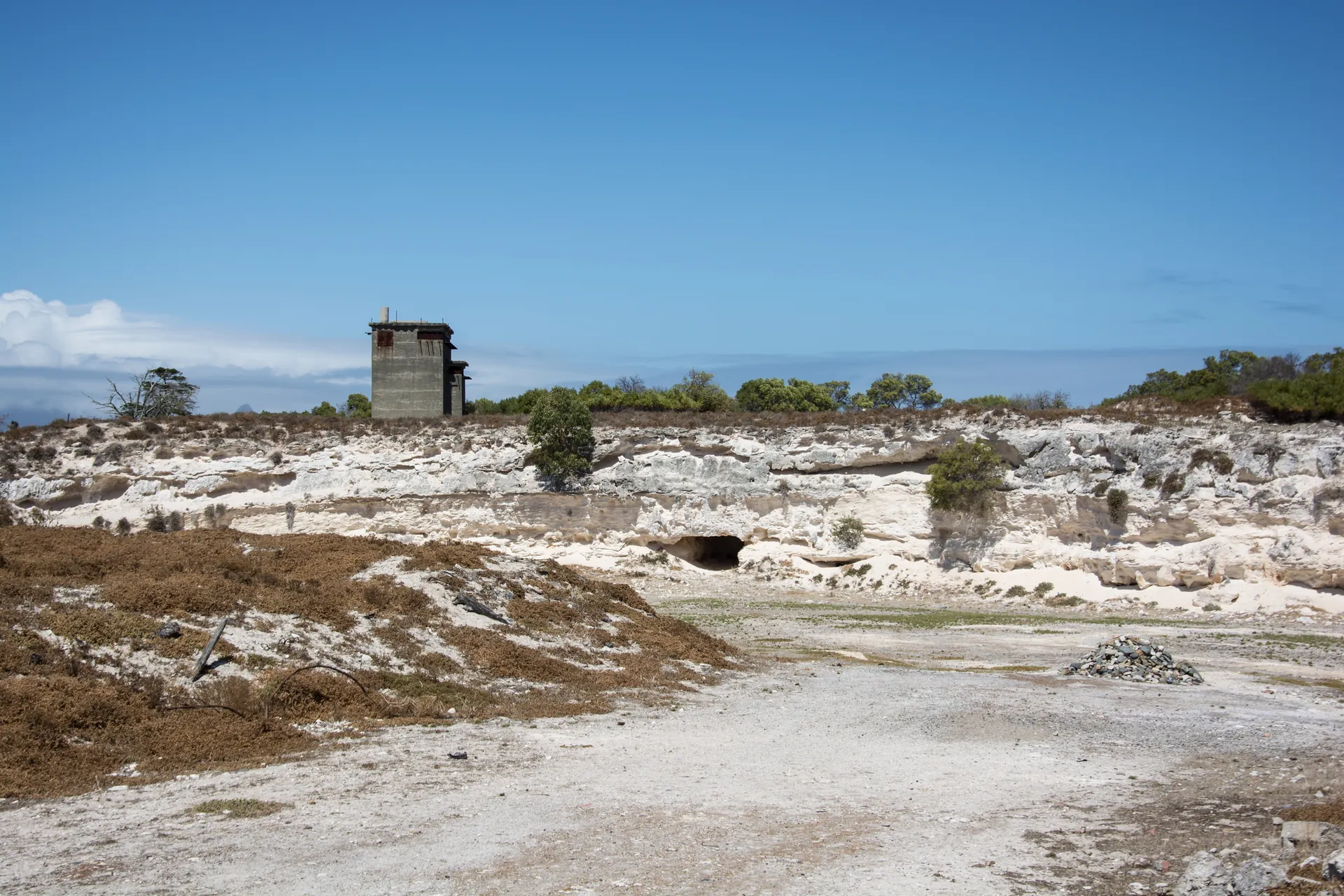
The Lime Quarry, where Mandela and the B Section prisoners were sent to work
Seeing Mandela's cell today
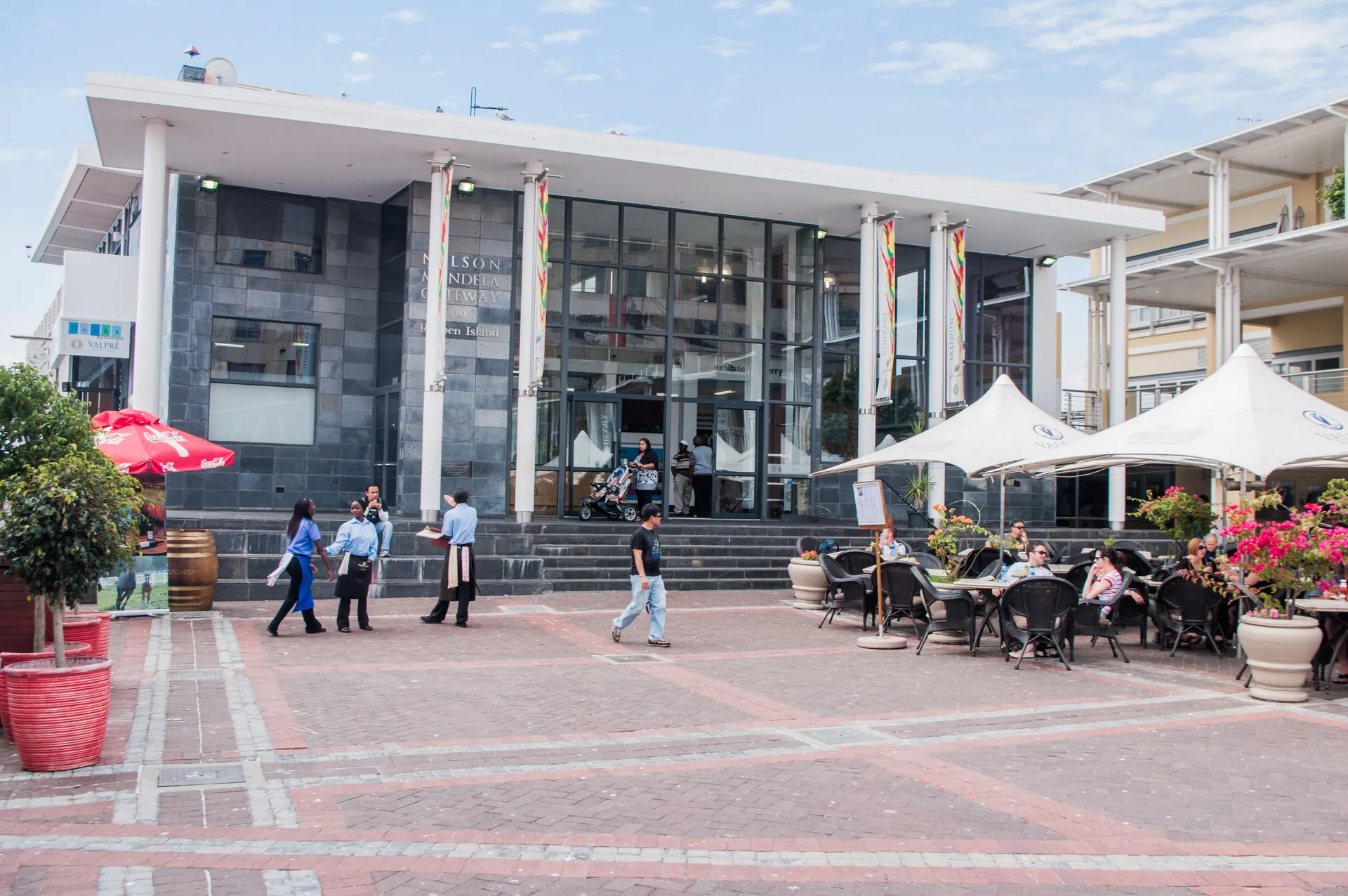
The only way to see the cell is the guided tour of the Robben Island Museum. The ferry leaves from the Nelson Mandela Gateway at the V&A Waterfront, a building named after him, with an exhibition on his life that you can see while you wait to board (find out more about the Nelson Mandela Gateway). On the island, buses take you past the Lime Quarry and Robert Sobukwe's house; then you walk through the Maximum Security Prison, often with a former political prisoner as your guide. The tour ends in B Section with a viewing of Mandela's cell.
The Gateway is in the Clock Tower Precinct of the V&A Waterfront. This is where you check in and board:
Nelson Mandela Gateway, where the ferry to Mandela's island leaves
Open in Google MapsThe whole visit takes about 3.5 to 4 hours, ferries included. You can book the ferry and prison tour on Tiqets from €42.50, or the flexible ticket from €65 if you want free cancellation and date changes up to 24 hours before. The other ways to visit are on our Robben Island tickets page, and our Robben Island tour guide takes you through the visit hour by hour. For the island's whole story, from the first convicts of 1615 to the museum, read our Robben Island history.
Nelson Mandela and Robben Island: FAQ
How long was Nelson Mandela on Robben Island?
18 years, from 13 June 1964 to 31 March 1982. In total he spent 27 years in prison: after Robben Island he was held at Pollsmoor Prison and finally at Victor Verster Prison, from which he was released on 11 February 1990.
Why was Mandela imprisoned on Robben Island?
Because at the end of the Rivonia Trial, on 12 June 1964, he was sentenced to life imprisonment for sabotage, together with seven co-accused. Robben Island was where the apartheid government sent its most important political prisoners.
What was Mandela's prisoner number?
466/64. It meant he was the 466th prisoner to arrive on Robben Island in 1964. The number later gave its name to the 46664 campaign.
What was Nelson Mandela's cell number on Robben Island?
The number you see everywhere, 466/64, was his prisoner number, not his cell number: he was the 466th prisoner to arrive on the island in 1964. His cell was a single cell in B Section, the Leadership Section of the isolation block. The Robben Island Museum does not publish a cell number and other sources disagree, so we do not give one: on the tour, your guide shows you the cell.
Can you go inside Mandela's cell?
The museum describes the end of the tour as a viewing of Mandela's cell. Expect to see it from the corridor through the door, not to walk around inside it; your guide will tell you what is possible on the day.
Where is the island where Mandela was imprisoned?
Robben Island lies in Table Bay, about 11 km from Cape Town and just under 7 km off Bloubergstrand. Museum ferries leave from the Nelson Mandela Gateway at the V&A Waterfront.
How big was Mandela's cell on Robben Island?
About 2 by 2 metres, according to the online exhibition made by the Robben Island Museum with the Nelson Mandela Foundation. With a desk and shelves inside, he had to roll out his bedding on the floor at night.
What work did Mandela do on Robben Island?
Forced labour in the Lime Quarry, digging lime that was used to resurface the island's roads. The museum notes that the glare of the white stone left Mandela, like many other prisoners, with permanent eye damage. Hard labour on the island ended in the mid-1970s.
Did Mandela ever go back to Robben Island?
Yes. In 1995 he led a reunion of former political prisoners on the island. At the entrance to the Lime Quarry they left a pile of stones, the isisivane, which you can still see from the tour bus.
How can I visit Mandela's cell?
On the standard Robben Island tour, which ends in B Section in front of the cell. You can book the ferry and prison tour on Tiqets from €42.50, or as a flexible ticket from €65 that you can cancel or move for free up to 24 hours before.
Andrea SemonellaBorn and raised in Genoa, Italy. Co-founder of Benicool, which publishes independent guides to cultural sites. He has travelled to every continent and writes about how to visit them without wasting time or money.
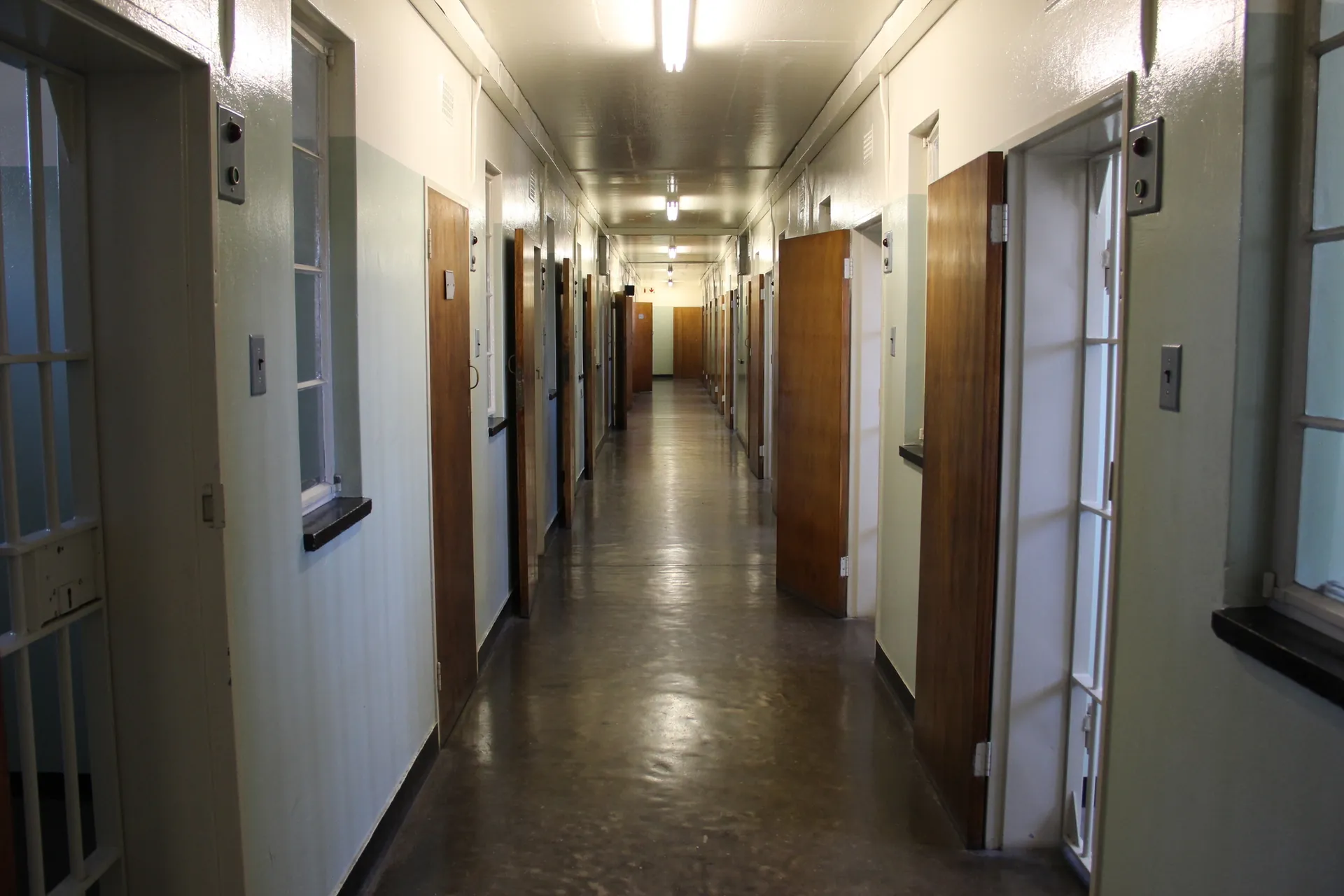 Robben Island prison
 Robben Island tickets
 The Robben Island tour