
Robben Island Museum: the institution that runs the island
 By Andrea Semonella
Updated on 13 min read
By Andrea Semonella
Updated on 13 min read
In short
The Robben Island Museum is the public institution that has run Robben Island since 1997: the former prison, the historic sites, the ferries from the Nelson Mandela Gateway at the V&A Waterfront and the tours. You can only see the museum on a guided tour, which takes about 3.5 to 4 hours with the ferries, and you can book the ferry and prison tour on Tiqets from €42.50. This is an independent guide, not the museum's website.
What the Robben Island Museum is
The Robben Island Museum, often shortened to RIM, is not a building you walk into. It is the public institution that has managed the whole of Robben Island since 1997, when the island stopped being a prison and became a museum. It looks after the Maximum Security Prison, the historic sites, the ferries, the guides and the tours. In 1999 UNESCO listed the island as a World Heritage Site.
Who runs it
The museum was set up in 1997 by what was then the Department of Arts and Culture. According to its own archive, it was the first national cultural institution created by South Africa's new democracy. It is a public entity governed by a council: in October 2026 the museum's website lists Prof. Saths Cooper as chairperson of the council, Dr Jonty Tshipa as Chief Operating Officer and Ayanda Woji as Acting Chief Heritage Officer.
Its stated vision is to preserve and promote Robben Island as "an inspirational national treasure and World Heritage Site that symbolises the triumph of the human spirit over extreme adversity and injustice". In practice it has three jobs: conserving the island's buildings and nature, telling its history, and running the tours that pay for much of that work.
To be clear: this website is not the museum. Robben Island Guide is an independent guide. The museum's official website is robben-island.org.za, and that is where you find its own announcements, schedules and changes.
Where is the Robben Island Museum?
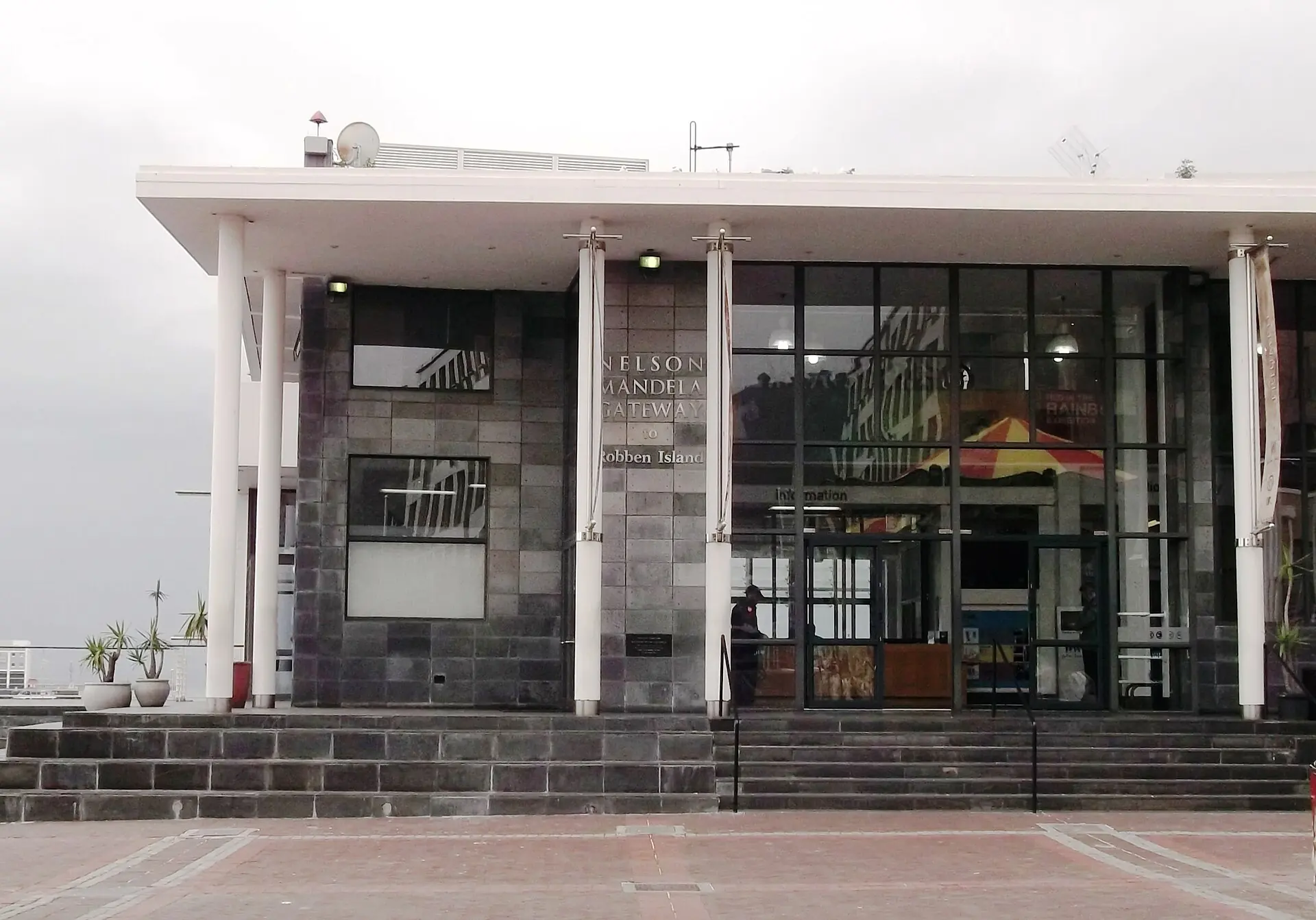
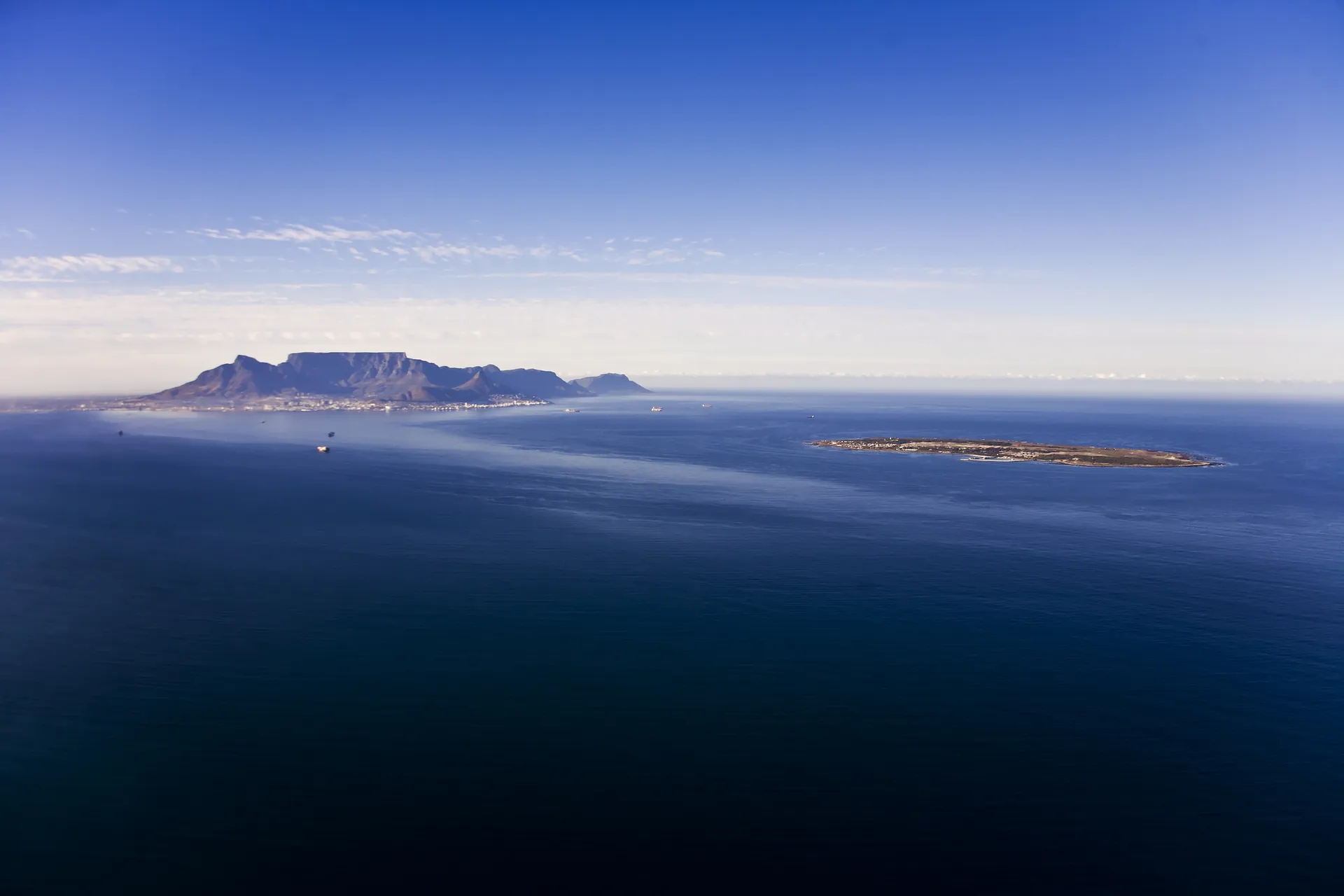
In two places. The museum itself is the island, in Table Bay, about 11 km from Cape Town. Its mainland base is the Nelson Mandela Gateway, in the Clock Tower Precinct of the V&A Waterfront: this is where you check in and where every tour ferry departs. The museum does not publish a street address, only a postal one, so search for the Gateway by name:
Nelson Mandela Gateway, the museum's departure point
Open in Google MapsHow old is it?
The museum opened in 1997, so in 2026 it is 29 years old. What it protects is much older: the island was used as a place of banishment and imprisonment from the 1600s until 1996. Our page on Robben Island history tells that story from 1488 to today.
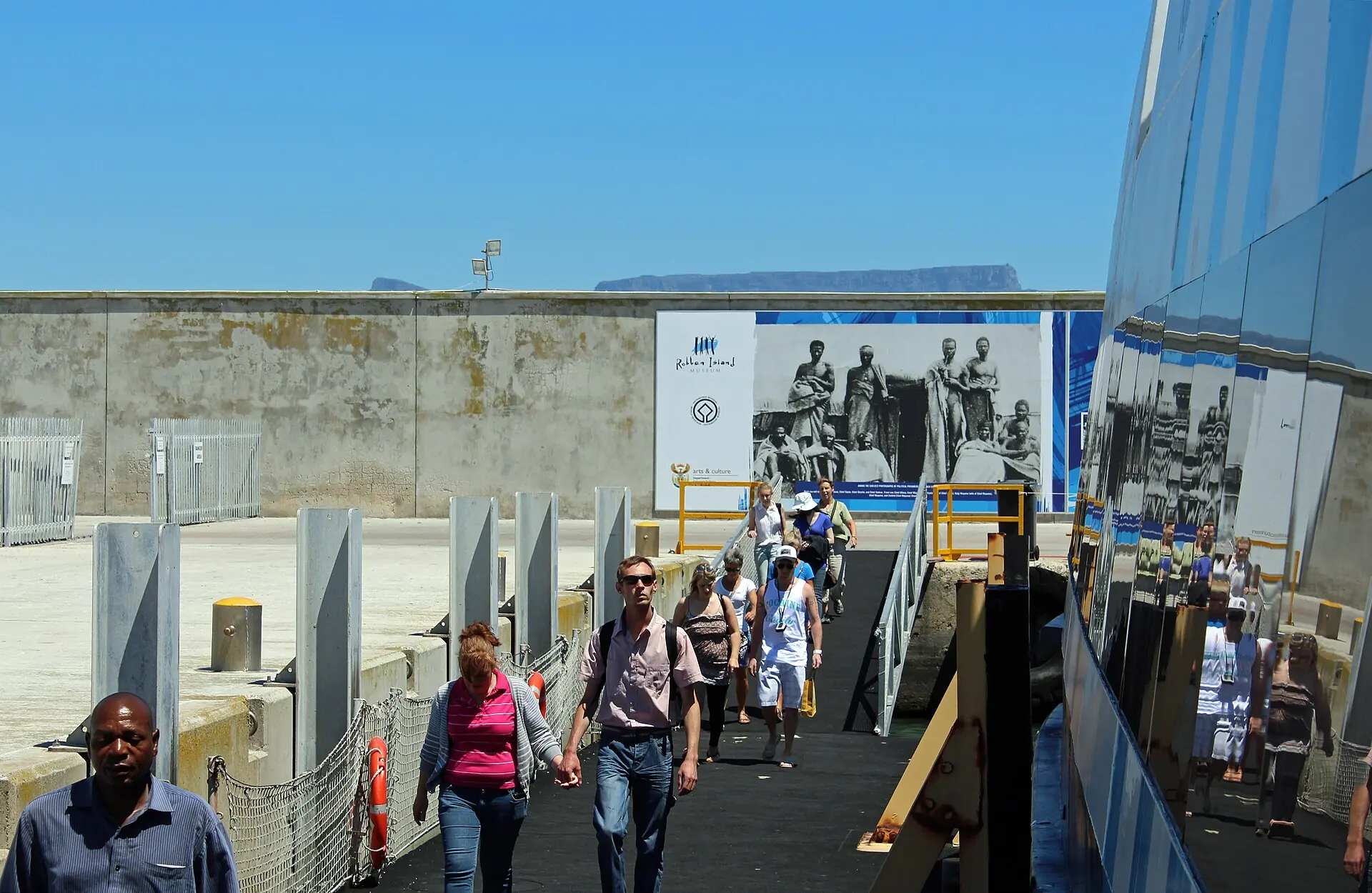
Visitors walking off the ferry under a Robben Island Museum banner
What the museum looks after
The museum's own list of what it manages is longer than most visitors expect: the Maximum and Medium Security Prison complexes, Robert Sobukwe's house, the curio and village shops, the Mayibuye Archives on the mainland and the three ferries that carry people to the island. Here is what that means for your visit.
The Maximum Security Prison
The heart of the museum is the prison where the apartheid government held its political prisoners from 1961 to 1991. The visit ends in B Section, in front of the cell where Nelson Mandela slept for 18 years. The full story is in our guide to Robben Island prison.
Who guides you through it is changing. For years the prison was shown by former political prisoners, and Wesgro's page on the museum still says that "former prisoners guide visitors through the prison". The museum's own page on its tour types now says that the prison tour is conducted by a Robben Island Tour Guide, as part of what it calls an integrated tour model. The men who were held here are now elderly, so the prison part is often, but not always, led by one of them. A Tiqets ticket for the standard visit puts you on the same museum ferry and the same museum tour as one bought from the museum, so if an online listing promises a former prisoner, read it as a likelihood, not a guarantee.
The sites across the island
The museum also manages everything outside the prison walls. The standard tour passes the leper graveyard, the Lime Quarry, Robert Sobukwe's house, the Bluestone Quarry and the army and navy bunkers of the Second World War. Elsewhere on the island are the Church of the Good Shepherd, built in 1895 by people with leprosy, the Moturu Kramat, the Minto's Hill lighthouse and the village with its Guest House and school.
The exhibition at the Nelson Mandela Gateway
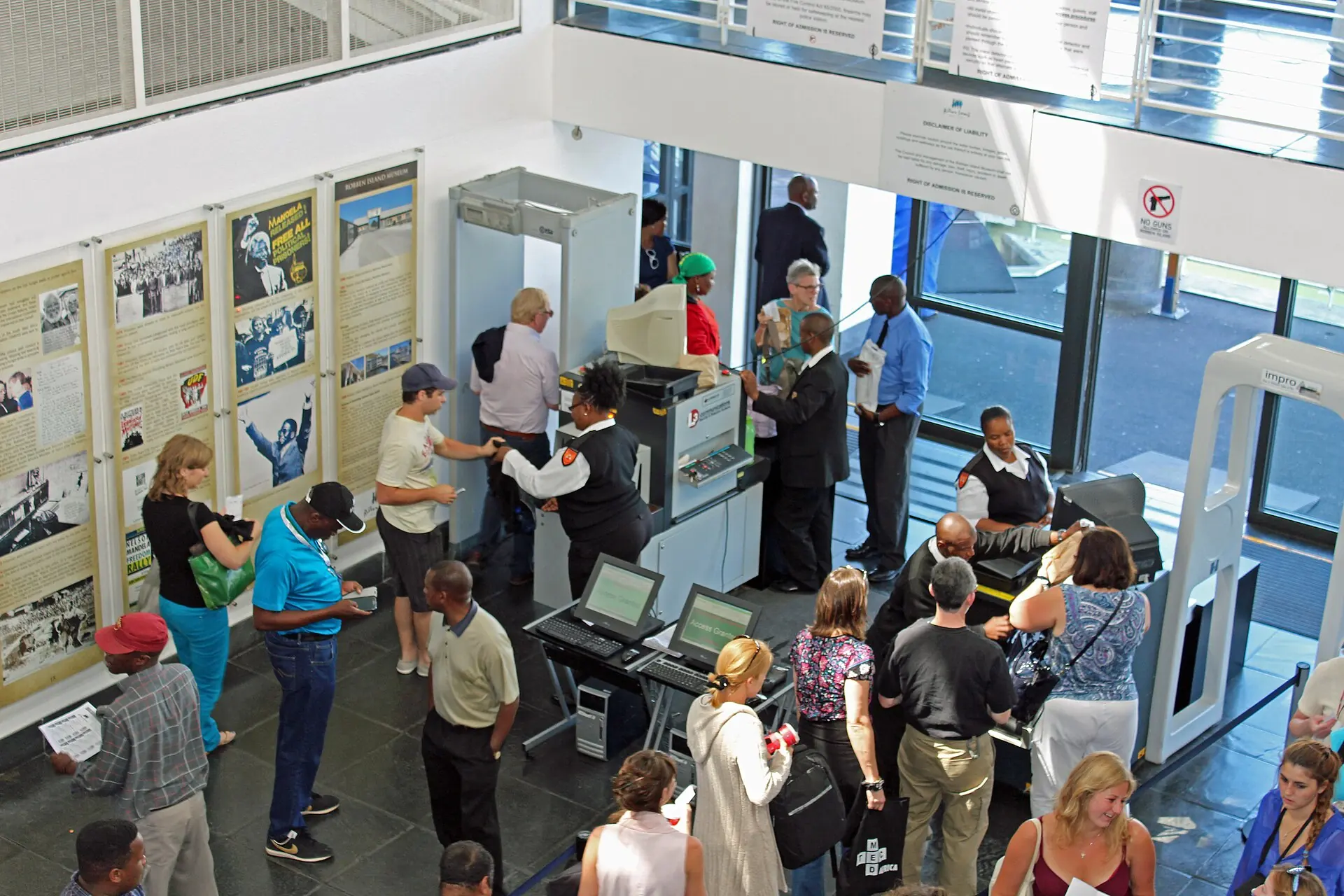
The Gateway is more than a ticket hall. According to the V&A Waterfront it holds interactive exhibitions, personal objects, photographs and oral histories about Mandela's life, and entry is free even if you are not taking the tour. Wesgro, the Western Cape tourism agency, also mentions a shop and a restaurant. It is worth arriving a little early to see it.
The museum shops
If you are looking for the Robben Island Museum gift shop, there are two kinds. On the mainland, the museum shop is inside the Nelson Mandela Gateway, so you can browse it before you board or after you land, without a ticket. On the island, the museum runs curio and village shops; the one most visitors use is small and sells snacks and drinks, as there are no restaurants on Robben Island. If you want to take something home, the Gateway is the easier place to shop, since your time on the island is tied to the bus.
Jetty 1
Jetty 1, in the Waterfront harbour, is the old embarkation point from which prisoners were taken to the island. The museum notes that the building kept its red brick front, iron doors and barbed wire until the late 1990s, and that the first tour ferries left from here when the museum opened in 1997. Wesgro describes a free multimedia exhibition there, with testimonies from former prisoners, warders and their families. We could not confirm whether Jetty 1 is open to visitors in 2026 or at what times, so check with the museum before you plan around it.
The tours the museum runs
All visits to the island are guided and all of them start from the Nelson Mandela Gateway. The museum offers four kinds of tour.
The standard tour
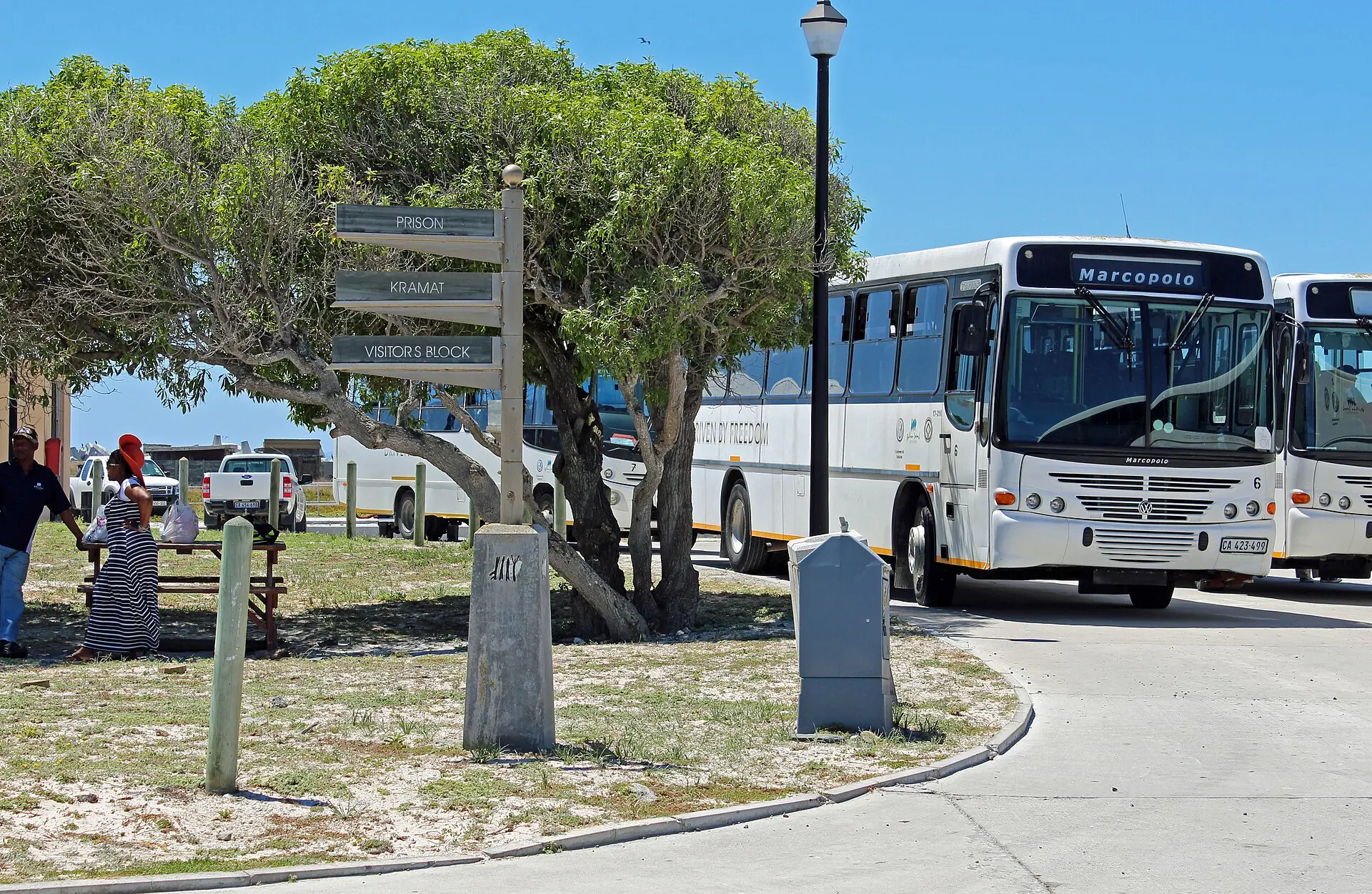
This is the visit almost everyone takes. The museum's ferries, the Krotoa (280 passengers) and the Sikhululekile (260), cross to Murray's Bay Harbour in 30 to 60 minutes, depending on the boat. A museum guide then takes you round the island by bus, and the visit ends with the walk through the prison and Mandela's cell. With the ferries, it takes about 3.5 to 4 hours.
From 1 September to 30 April ferries leave at 09:00, 11:00, 13:00 and 15:00. From 1 May to the end of August there are three departures, at 09:00, 11:00 and 13:00, although one part of the museum's own site also lists a 15:00 ferry in winter. All tours run weather and demand permitting. On Tiqets the standard tour starts at €42.50, and the ticket reaches your phone a few minutes after booking. Our Robben Island tour page explains what happens hour by hour.
Pick a departure to see roughly when the standard tour brings you back to the Waterfront:
When will I be back at the Waterfront?
Choose your ferry departure:
Pick a time to see when you will be back.
Estimate based on a visit of 3.5 to 4 hours. High-season departures, weather permitting.
The Walking Tour
On Fridays, Saturdays and Sundays the museum runs a longer Walking Tour. It leaves at 09:00 and lasts about five hours, with a guided walk of about 5 km that includes the Visitors Centre, the Maximum Security Prison, Sobukwe House and the Lime Quarry. The museum says it is only suitable for people who are fit. It is sold only by the museum and costs more than the standard tour: its prices are in the museum's price list at the end of our tickets page.
Educational tours
For schools, the museum runs Educational Tours from Monday to Friday, between 2 May and 31 October.
Specialised tours
Private, VIP and Protocol tours can be arranged on any day and last from 3.5 to 8 hours, with prices on request. If what you want is a private day with your own driver-guide, Tiqets sells a private tour of the island, Table Mountain and the city.
Side by side, this is how much of your day each kind of visit takes:
- Standard tour, ferries included3.5 to 4 hours
- Walking Tour, Friday to Sundayabout 5 hours
- Specialised tours, private, VIP and Protocol3.5 to 8 hours
Durations published by the Robben Island Museum. Bars show the longest duration.
The virtual tour
If you cannot travel to Cape Town, or want to prepare before you go, the museum has a free virtual tour on its website. It has pages on individual sites, among them the Maximum Security Prison, the Lime Quarry, Robert Sobukwe House, the Church of the Good Shepherd, the leper graveyard, the Moturu Kramat, the lighthouse, Murray's Bay Harbour, the wartime gun positions and the Penguin Boardwalk. Several of these places are only seen from the bus on the real tour, so the virtual pages help you understand what you are looking at.
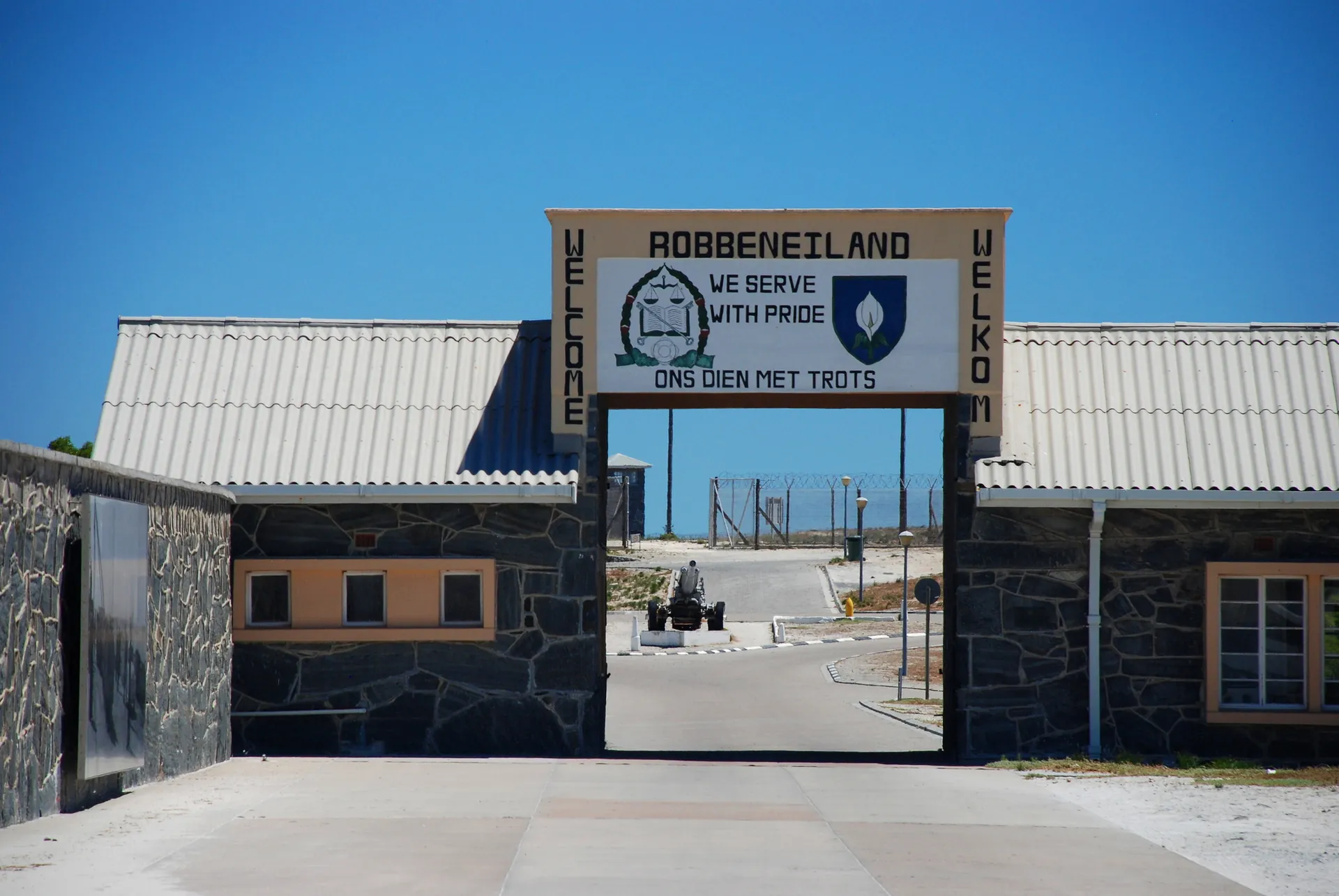
The prison entrance gate, now part of the museum, with its old sign
The Mayibuye Archives: the museum's collections
Much of what the museum holds is not on the island at all. Its collections are kept by the UWC Robben Island Mayibuye Archives, on the campus of the University of the Western Cape in Bellville, on the edge of Cape Town. They cover the struggle against apartheid from the 1940s to the early 1990s.
The archive is older than the museum. In the late 1980s Prof. Jakes Gerwel, then rector of the university, set up a committee to explore a museum of the struggle, and the Mayibuye Centre for History and Culture was created in 1990 and 1991. In 1992 it received the records of the International Defence and Aid Fund, a London-based anti-apartheid organisation that closed after 1990, and these became its core collection. In 1996 the South African Cabinet recommended that the Mayibuye collections form the core of the new Robben Island Museum, and in 2000 the centre was formally incorporated into the museum as its collections unit.
The material is organised in four sections: historical papers and books, photographs, audio-visual recordings, and art and artefacts. The sound and oral history collection holds interviews with activists, exiles and former political prisoners.
- Who can use it: researchers from South Africa and abroad, by appointment.
- Where: UWC Main Library, Robert Sobukwe Road, Bellville.
- Contact: +27 (0)21 959 2935, mayibuye@uwc.ac.za. Selected collections can be explored online on the archive's website.
The museum is also building a database of former political prisoners and their families, and asks relatives and comrades to send in contact details through its website. If someone in your family was held on Robben Island, that page is the place to start.
The prison is now a museum, and some of its guides were once its prisoners.
Opening hours, address and contact details
These are the details the museum publishes on its own website.
- Opening hours: Monday to Sunday, 08:00 to 17:00. The first ferry leaves at 09:00, and the Gateway is open before then.
- Phone: +27 (0)21 413 4200
- Email: info@robben-island.org.za or infow@robben-island.org.za (the museum uses both); for refunds, refunds@robben-island.org.za; compliments and complaints, customerfeedback@robben-island.org.za
- Address: the museum gives no street address. Its postal addresses are PO Box 51806, V&A Waterfront, Cape Town, 8002, and Private Bag, Robben Island, Cape Town, 7400
- Departure point: Nelson Mandela Gateway, Clock Tower Precinct, V&A Waterfront
- Website: robben-island.org.za
Contacts by department
- Educational tours: +27 (0)21 409 5146
- School concessions: +27 (0)21 413 4201, concessionbookings@robben-island.org.za
- Private and special tours, events: +27 (0)21 413 4225 or 4267, privatetours@robben-island.org.za
- Venue hire: +27 (0)21 413 4226
If you are driving, the Clock Tower and Silo garages are the closest to the Gateway; parking rates change, so check them on site. The other options, from the MyCiTi bus to taxis, are in our guide on how to get to Robben Island.
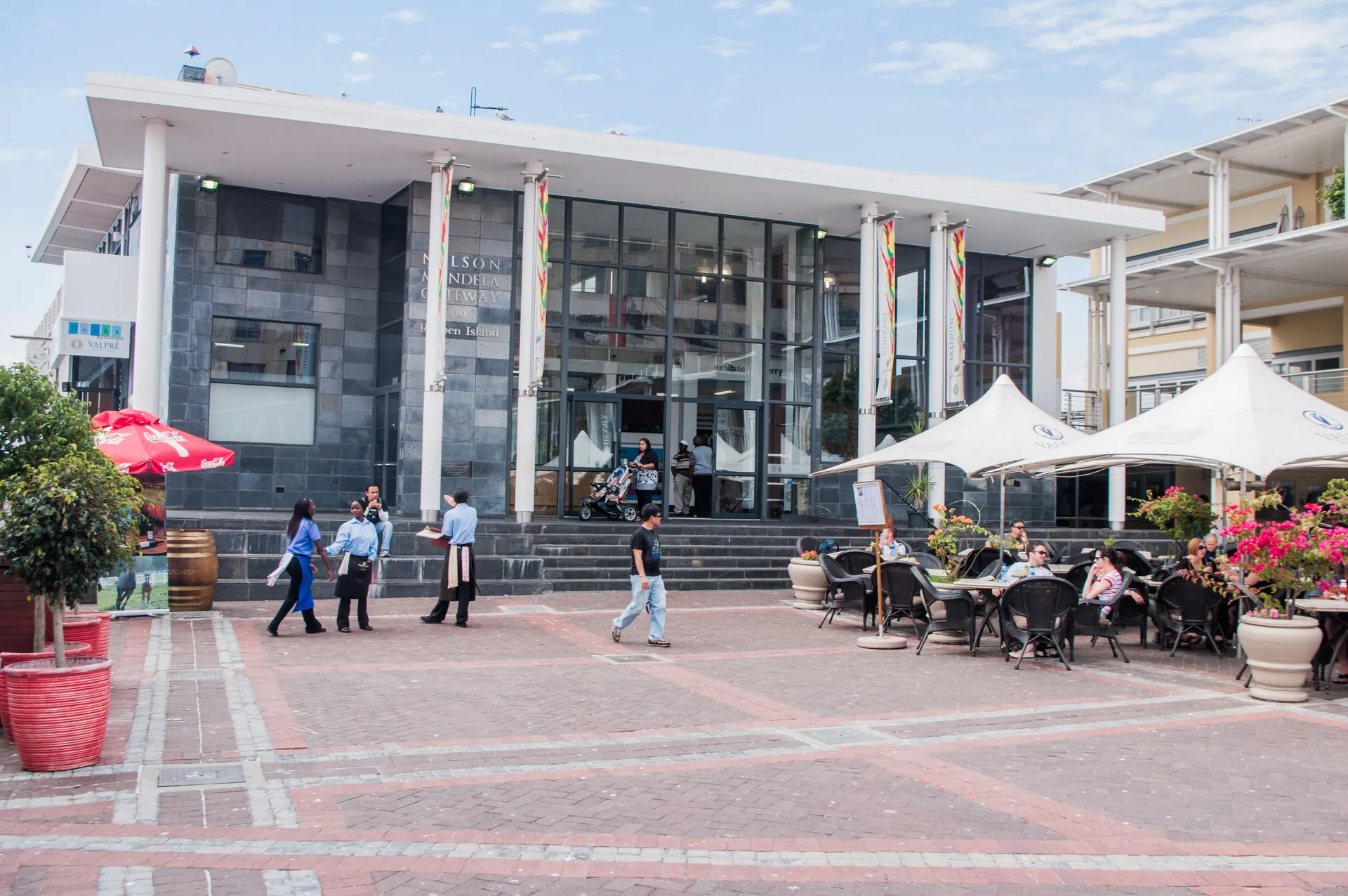
The Nelson Mandela Gateway, the museum's mainland base at the Waterfront
How to book the museum tour
The standard visit, ferry, island bus tour and prison included, is bookable on Tiqets from €42.50. If you want to be able to cancel or change the date for free up to 24 hours before, which helps on an island where the weather decides the sailings, choose the flexible ticket at €65. The ticket arrives on your phone a few minutes after booking, you pay by card in your own currency, and the site and customer service speak your language. The museum's own prices and the other options, from the tour with hotel transfer to full days with Table Mountain, are on our Robben Island tickets page.
What visitors say
On Tiqets the Robben Island Museum scores 3.8 out of 5 from 374 reviews. Bear the format of the visit in mind: you are on a guided schedule from start to finish, you cannot choose how long to stay at each stop, and the museum can cancel or change sailings in bad weather. Go for the place and its history, and leave some slack in the rest of your day.
Book the ferry and museum tour
Return ferry, bus tour of the island and the prison visit. From €42.50 on Tiqets, with the ticket on your phone in minutes.
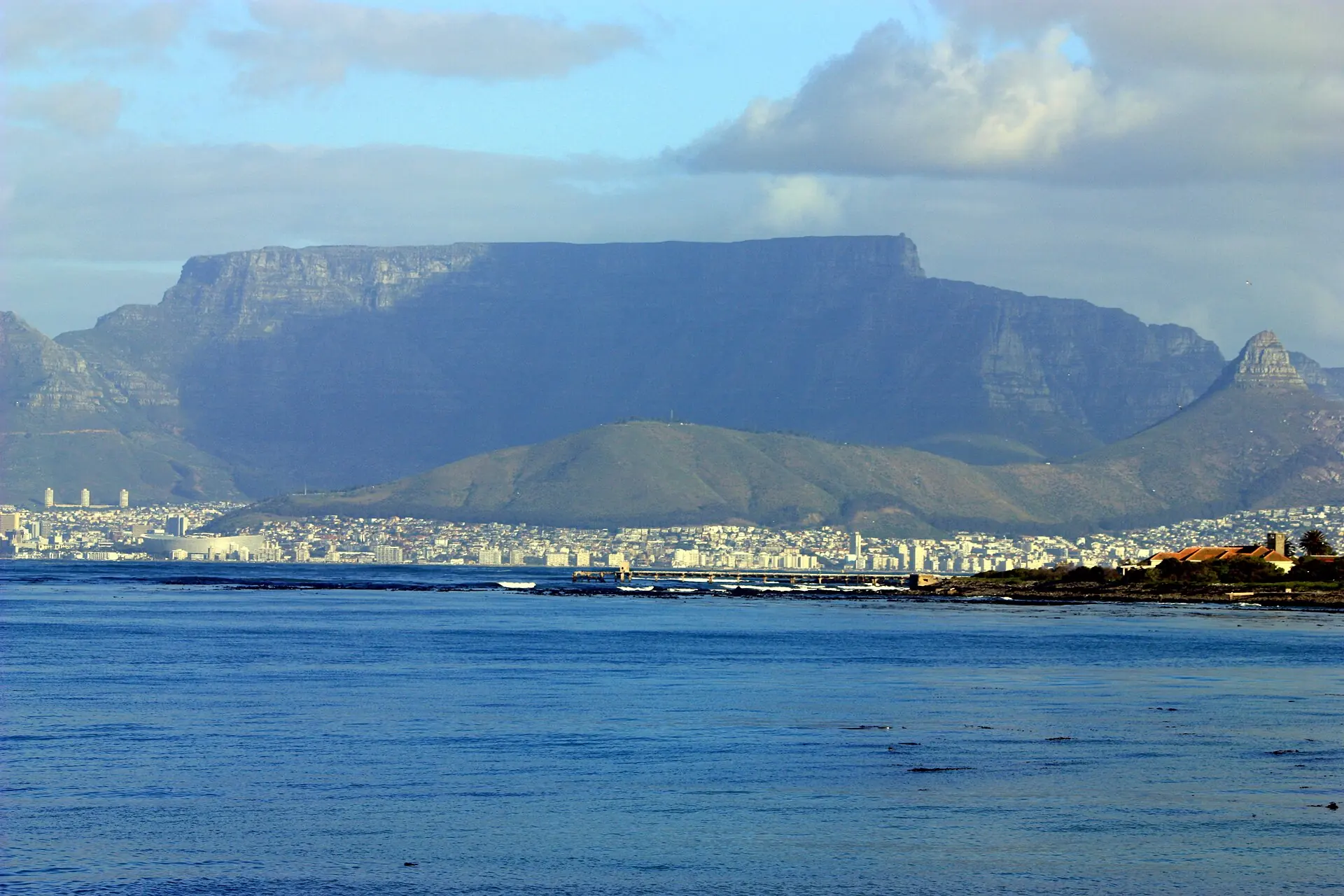
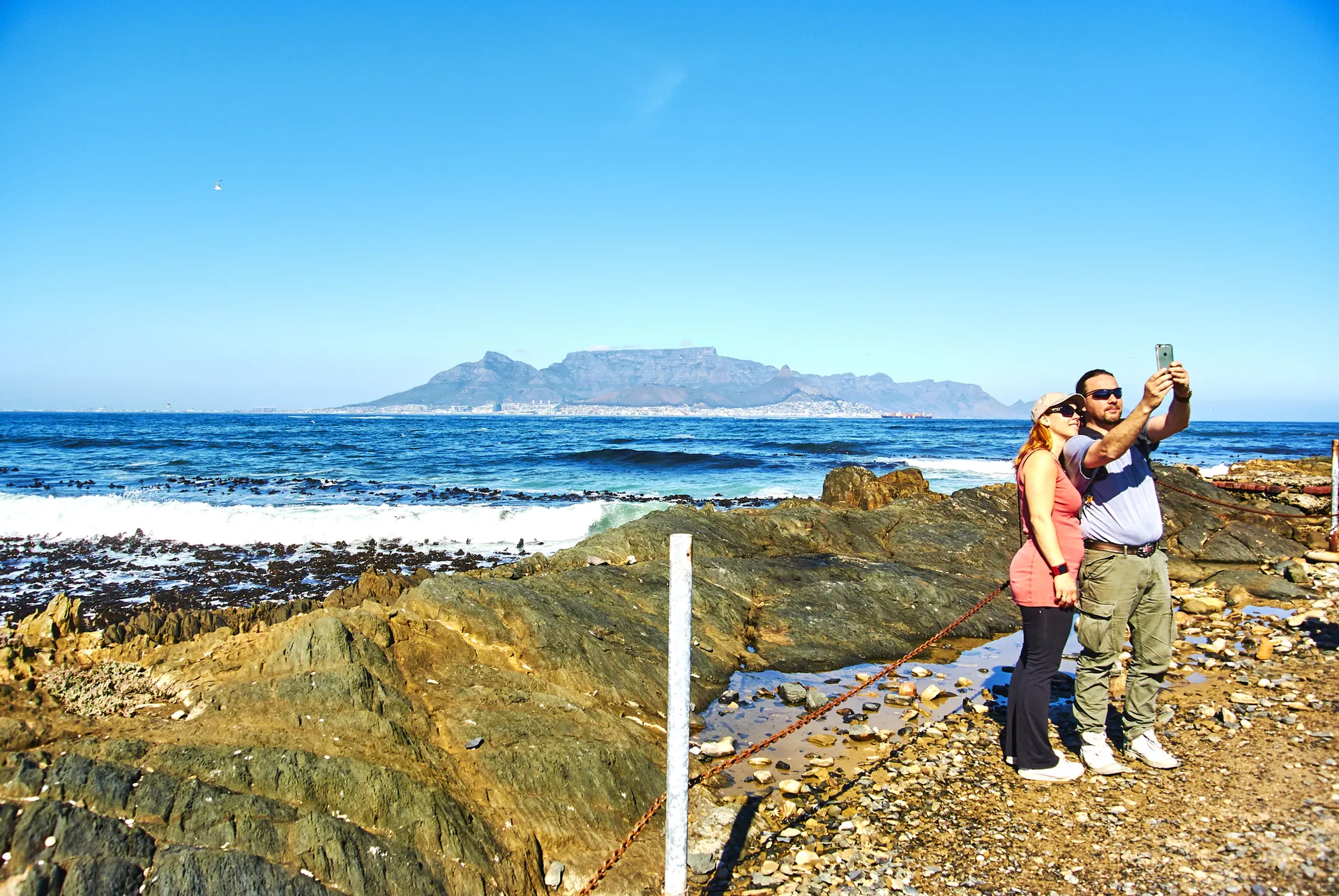
Visitors taking photos on the shore, with Table Mountain across the bay
Museum rules worth knowing
Bring a document: you need a passport, ID or driving licence to board. Arrive at least 30 minutes before departure: the gates close 10 minutes before the ferry leaves.
Photos are fine, drones are not. You can take photos for personal use, but drones and tripods are not allowed, and commercial photography needs the museum's permission.
Food: there are no restaurants on the island, only a small shop with snacks and drinks. You can bring your own food, but alcohol is not allowed.
Accessibility: the museum asks visitors with a disability or a chronic illness to contact it before booking, so that it can arrange safety and support. The museum does not publish details on wheelchair access, and visitor reviews mention steep ramps in places, so ask about your specific needs.
Weather: the museum can cancel or change sailings without notice, and refunds trips cancelled for bad weather or ferry problems. On a ticket bought from the museum, changing the date needs 48 hours' notice and an admin fee; on Tiqets, the flexible ferry and prison tour can be moved or cancelled for free up to 24 hours before, while the standard €42.50 ticket is non-refundable.
Robben Island Museum: FAQ
Where is the Robben Island Museum?
The museum is the island itself, in Table Bay. Its mainland base is the Nelson Mandela Gateway in the Clock Tower Precinct of the V&A Waterfront in Cape Town, where you check in and board the ferry.
How old is the Robben Island Museum?
The museum was established in 1997, the year after the last prison on the island closed. UNESCO added Robben Island to the World Heritage List in 1999.
What are the Robben Island Museum opening hours?
The museum lists its hours as Monday to Sunday, 08:00 to 17:00. Ferries leave at 09:00, 11:00, 13:00 and, from September to April, also at 15:00, weather permitting.
What is the Robben Island Museum contact number?
The museum's phone number is +27 (0)21 413 4200, and its general email is info@robben-island.org.za. For refunds there is a separate address, refunds@robben-island.org.za.
Is this the official Robben Island Museum website?
No. Robben Island Guide is an independent guide published by Benicool. The museum's official website is robben-island.org.za, where it publishes its news, rules and schedule changes.
How do I book a Robben Island Museum tour?
The standard visit, with the return ferry, the bus tour of the island and the prison, is on Tiqets from €42.50. The ticket reaches your phone within minutes and you pay by card in your own currency.
Can I cancel or change a Robben Island Museum ticket?
Not the standard ferry and prison tour on Tiqets: at €42.50 it is non-refundable and the date cannot be changed. The flexible version, at €65, can be cancelled or changed for free up to 24 hours before. With a ticket bought from the museum, you get a refund when the museum cancels the sailing, and changing the date needs 48 hours' notice and an admin fee.
Can you visit the Robben Island Museum without a tour?
No. There is no independent visit: you reach the island on a museum ferry and see it on a guided tour, by bus and on foot through the prison.
Who runs the Robben Island Museum?
It is a public entity set up in 1997 by what was then the Department of Arts and Culture, and governed by a council. In October 2026 its website lists Prof. Saths Cooper as council chairperson and Dr Jonty Tshipa as Chief Operating Officer.
Where are the Robben Island Museum archives?
At the UWC Robben Island Mayibuye Archives, in the Main Library of the University of the Western Cape in Bellville. Researchers can consult the collections by appointment on +27 (0)21 959 2935.
Is there a virtual tour of Robben Island?
Yes. The museum's website has a free virtual tour, with pages on the prison, the Lime Quarry, Robert Sobukwe's house, the church and the other sites.
Andrea SemonellaBorn and raised in Genoa, Italy. Co-founder of Benicool, which publishes independent guides to cultural sites. He has travelled to every continent and writes about how to visit them without wasting time or money.
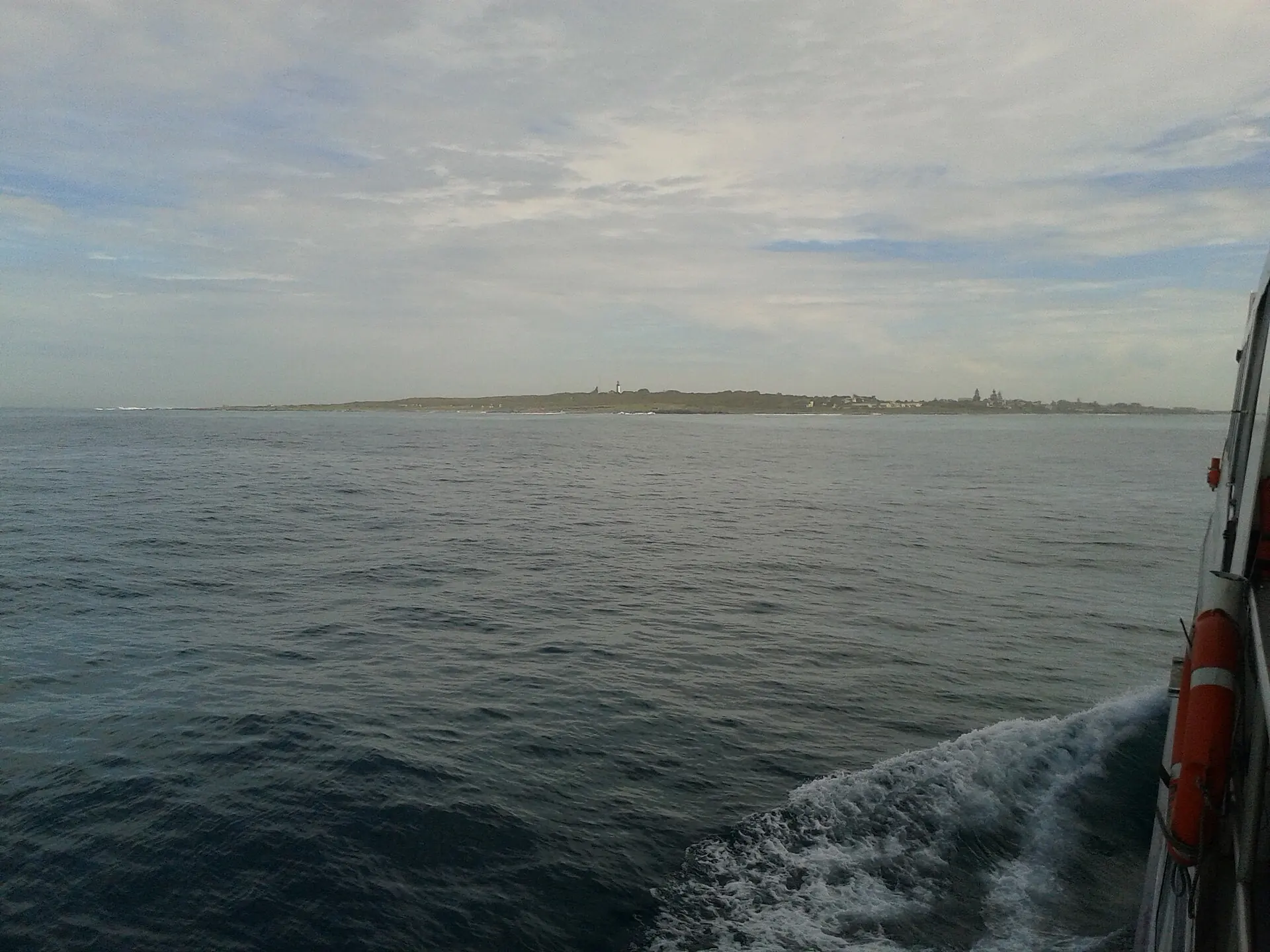 Robben Island tickets
 Nelson Mandela Gateway
 Robben Island history