
How to Get to Robben Island: from anywhere in Cape Town to the ferry
 By Andrea Semonella
Updated on 10 min read
By Andrea Semonella
Updated on 10 min read
In short
Robben Island lies in Table Bay, just under 7 km off Bloubergstrand and about 11 km from Cape Town. The only way to get there is the Robben Island Museum ferry tour, which leaves from the Nelson Mandela Gateway at the Clock Tower in the V&A Waterfront. What you need to plan, then, is how to reach the Gateway: on foot, by MyCiTi bus, by car or by taxi.
Where is Robben Island?
Robben Island lies in Table Bay, the wide bay in front of Cape Town, in South Africa's Western Cape. Seen from the city it is a low, flat line on the horizon: the island is about 3.3 km long and 1.9 km wide, and its highest point, Minto's Hill, is only 24 m above the sea.
On a world map it sits at the south-western tip of Africa, at about 33.80 S, 18.36 E, the coordinates South African History Online gives for the island. Type "Robben Island" into Google Maps or any map app and it comes up as the small island north of Cape Town's harbour. Geologically it is not a separate piece of land: it is the top of a mountain that was once joined to the mainland and is now mostly under the sea.
It sits closer to the northern shore of the bay than to the city. The nearest stretch of mainland is the beach at Bloubergstrand, just under 7 km away. No boat for visitors leaves from there, however: every tour departs from the V&A Waterfront, the harbour district of Cape Town, on the opposite side of the bay.
Robben Island on the map
The map below shows Table Bay with the ferry route. The boats leave the Waterfront, head north across the bay and dock at Murray's Bay Harbour, on the east coast of the island.
How big is Robben Island?
Robben Island covers roughly 5 square kilometres: an oval about 3.3 km from north to south and 1.9 km across. That is why the standard tour moves you round by bus, and why the museum's longer Walking Tour covers about 5 km.

Robben Island from the air in the late afternoon light
How far is Robben Island from Cape Town?
The answer depends on where you measure from, and the official sources do not agree to the kilometre:
- From Bloubergstrandjust under 7 km
- From Cape Townabout 11 km
- From the V&A Waterfront12 to 13 km
- From Table Mountainabout 18 km
Cape Town: Robben Island Museum. V&A Waterfront, Table Mountain and Bloubergstrand: Wesgro, the Western Cape tourism board.
We also measured it ourselves on OpenStreetMap: from the Nelson Mandela Gateway, where the ferries leave, to Murray's Bay Harbour, where they dock, it is about 12.7 km in a straight line, which fits the figure given by Wesgro. The ferry does not sail a perfectly straight line, so the distance on the water is somewhat more.
What matters for your day is time, not distance. The crossing takes 30 to 60 minutes each way, depending on the boat, and the whole visit, ferries included, lasts about 3.5 to 4 hours.
The only way there: the museum ferry tour
You cannot visit Robben Island on your own. It is a museum and a UNESCO World Heritage Site, and visitors reach it only on the guided tour run by the Robben Island Museum. The ticket includes the return ferry from the Nelson Mandela Gateway, a bus tour of the island with a guide and the visit to the Maximum Security Prison.
In high season, from 1 September to 30 April, ferries leave at 09:00, 11:00, 13:00 and 15:00. From May to August there are usually three departures, at 09:00, 11:00 and 13:00, always weather and demand permitting. You will find the full timetable, the boats and what to expect on board in our guide to the Robben Island ferry.
Seats are limited, so book early. The simplest ticket is the Ferry Ticket & Prison Museum Tour on Tiqets: it starts at €42.50 and arrives on your phone within minutes. If your dates are not fixed yet, the flexible version costs €65 and can be cancelled or moved for free up to 24 hours before. Prices and every other option are on the Robben Island tickets page.
What about tours with hotel pickup?
Some tours add a transfer from your hotel, such as the Robben Island guided tour with return transfer. They save you the trip across town, not the crossing: the van drops you at the Waterfront and you board the museum ferry like everyone else. They make sense if you are staying far from the harbour.
If you also want Table Mountain on the same day, the full-day tour with Robben Island and Table Mountain picks you up at your hotel and fits both in.

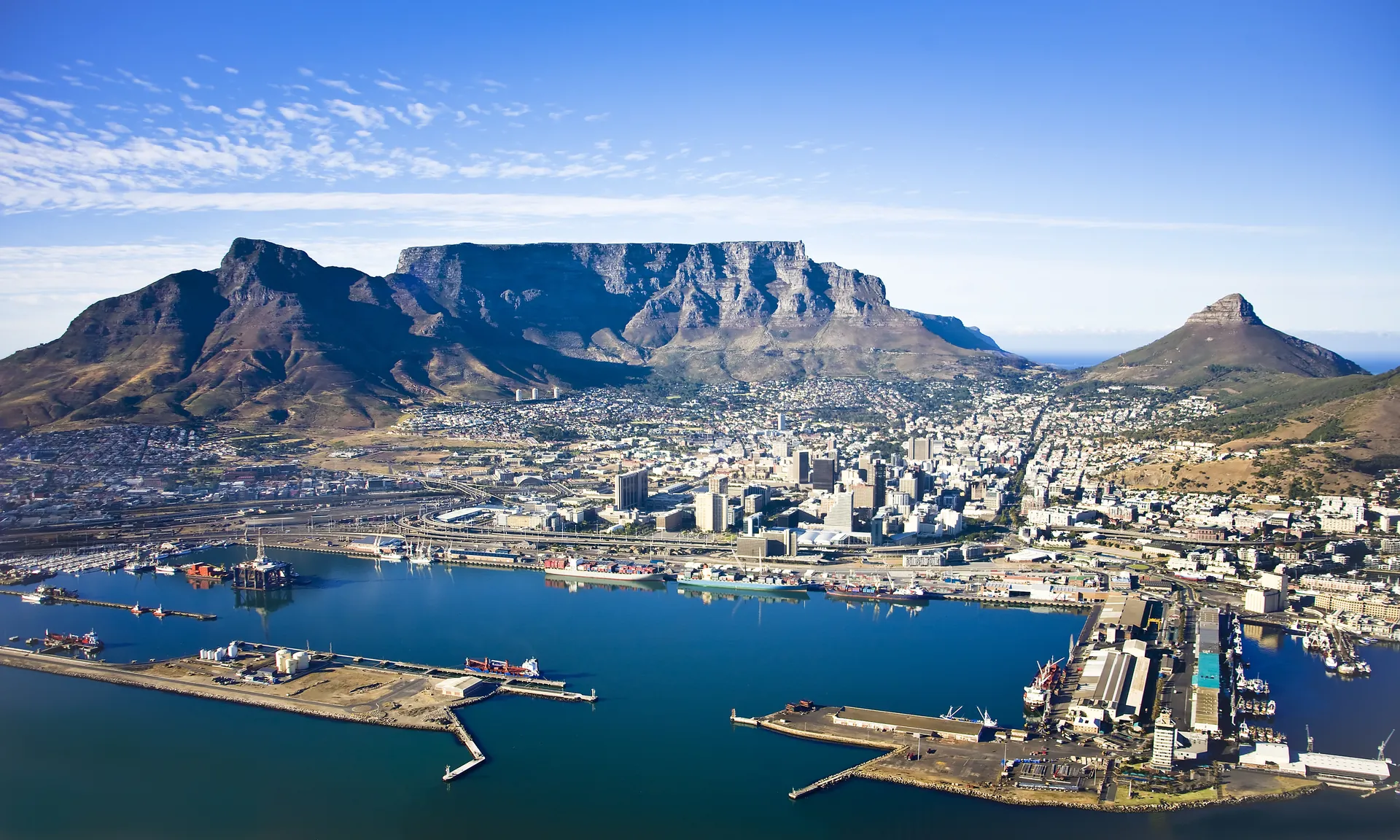
Cape Town from Signal Hill: the city centre, the harbour and Table Bay
How to get to the Nelson Mandela Gateway
Getting to Robben Island really means getting to the Nelson Mandela Gateway. The building stands in the Clock Tower Precinct, at the far end of the V&A Waterfront, right next to the Clock Tower. The museum does not publish a street address, so when you ask for directions, ask for the Clock Tower.
On foot
If you are staying at the Waterfront, you are already there: follow the signs to the Clock Tower. From De Waterkant and Green Point the Waterfront is within walking distance too. From the city centre it is a longer walk, so check the route on your phone before you set off and leave enough time to arrive 30 minutes before your ferry. The map below gives you walking directions to the Gateway from wherever you are.
Nelson Mandela Gateway, V&A Waterfront
Open in Google MapsBy MyCiTi bus
Cape Town's MyCiTi buses are the simplest public transport to the ferry. Route 104 runs between Civic Centre station in the city centre and Sea Point, passing through the Waterfront. When the city introduced it in 2022 it announced a bus every 20 minutes on weekdays and every 40 minutes at weekends.
Get off at the Waterfront Silo stop. From there the Gateway is about 350 m away in a straight line: walk towards the Clock Tower. Many older guides mention a "Clocktower" stop: it was temporary and the city removed it in 2022, so do not look for it.
You pay with a myconnect card. The new card, introduced on 14 February 2026, costs R40 (about €2 / $2) at station kiosks, does not expire and needs no PIN. The ticket machines at stations were switched off on 13 February 2026, so you load credit at the kiosks or at partner shops. Fares change every 1 July: check the current ones on the MyCiTi website before you travel.
Some guides also send you to the Waterfront on routes 105 or 106. We found no official MyCiTi source that confirms them for the Waterfront, so check the MyCiTi journey planner before you rely on them.
By car
The V&A Waterfront has several car parks, each with its own payment and pricing system. The closest to the Gateway are the Clock Tower Parking Garage and the Silo Parking Garage. Rates are shown at the entrance; if you want to check them in advance, the Waterfront information centre answers on +27 (0)21 408 7600, from 09:00 to 21:00.
Remember that the tour lasts about 3.5 to 4 hours, so plan to leave the car for at least half a day.
By taxi, Uber or Bolt
The Waterfront has designated drop-off and pick-up zones for meter taxis and ride-hailing cars. Ask the driver to take you to the Clock Tower or the Nelson Mandela Gateway, and allow a few minutes to walk from the drop-off point. On the way back, the same zones work for pick-up.
From the airport
Cape Town International Airport is about 20 km from the V&A Waterfront: 25 to 40 minutes by car, depending on traffic. A taxi or a ride-hailing car is the most direct option. Do not plan to land and catch a ferry on the same morning: a late flight or a long queue at passport control is enough to miss the boarding gate, which closes 10 minutes before departure.
By hop-on hop-off bus
The V&A Waterfront is one of the departure points for Cape Town's hop-on hop-off buses. According to the operator, City Sightseeing, its Stop 2 is at the Clock Tower, a few steps from the Gateway. Check the current route and times with the operator, as this is not information the museum publishes.
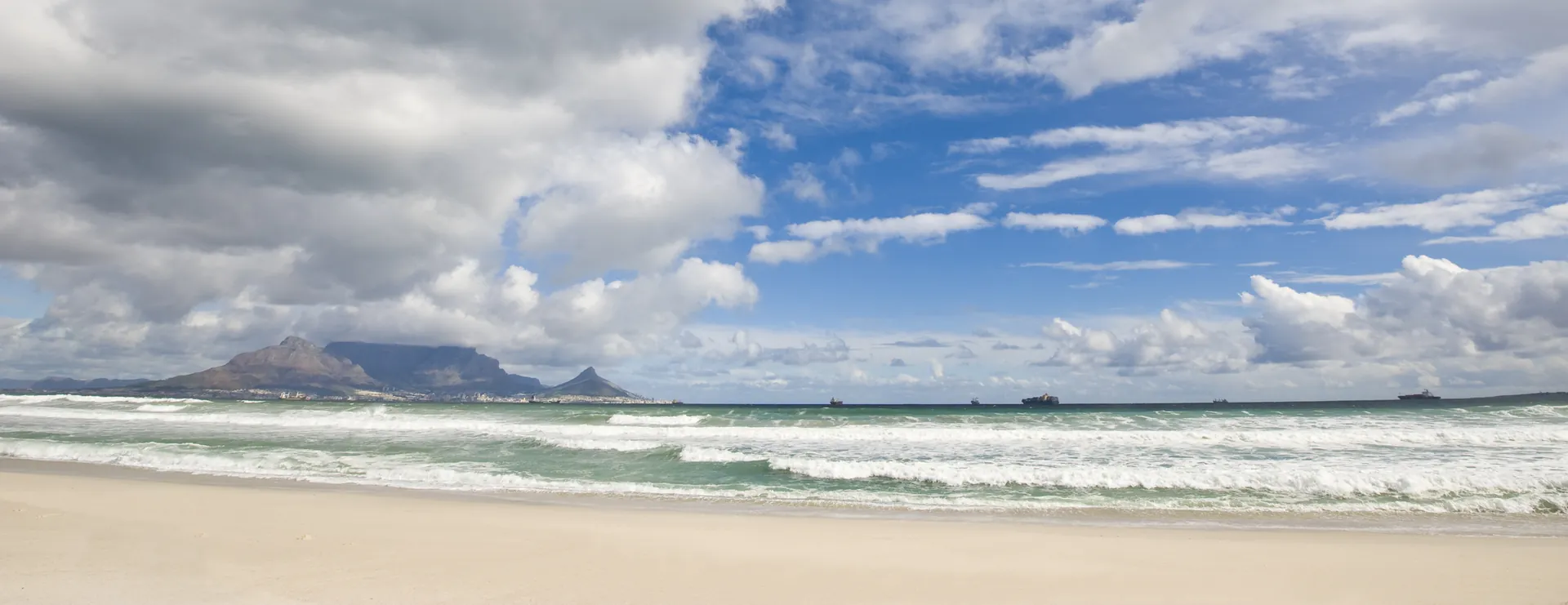
Robben Island and Table Mountain from Bloubergstrand beach
Can you swim or sail to Robben Island?
Not as a visitor. The island is a museum and a protected site, and a 2004 UNESCO monitoring report describes a 1 km marine reserve around it. Visitors land only from the museum's own ferries at Murray's Bay Harbour, as part of the guided tour.
People have asked it for centuries, though. The sea was what kept prisoners on the island, and the museum records those who tried to cross it:
- 1659: Autshumato, the Khoikhoi leader often named as the island's first prisoner, escaped with another captive by rowing to the mainland in a stolen boat.
- 1690: a convict called Jan Rykman swam to the mainland. The museum calls it the first recorded swim from Robben Island.
- 1819: Makana, the Xhosa leader sent to the island that year after a failed uprising, later overpowered his guards but did not survive the crossing.
The shortest stretch of water is the one to Bloubergstrand, just under 7 km. South African History Online sums up why so few made it: treacherous rocks, icy water and the possibility of sharks. The rest of this story is in our guide to Robben Island history.
Every road to the island ends at the Clock Tower.
When to arrive and what to bring
The Robben Island Museum asks you to be at the Gateway at least 30 minutes before your ferry. The boarding gates close 10 minutes before departure, and a late arrival means you lose your seat.
- A valid ID: you need a passport, an ID card or a driver's licence to board.
- Your ticket: digital or printed, both are accepted. If you book on Tiqets, it is already on your phone.
- Something warm: the island has stronger winds than Cape Town, so bring a jacket even in summer.
- Sun protection and comfortable shoes: the museum recommends a hat, sunglasses and sunscreen.
- Seasickness tablets, if you need them: take them an hour before boarding, as the museum suggests.
- Food: there is no restaurant on the island, only a small shop with snacks and drinks. You can bring your own food, but not alcohol.
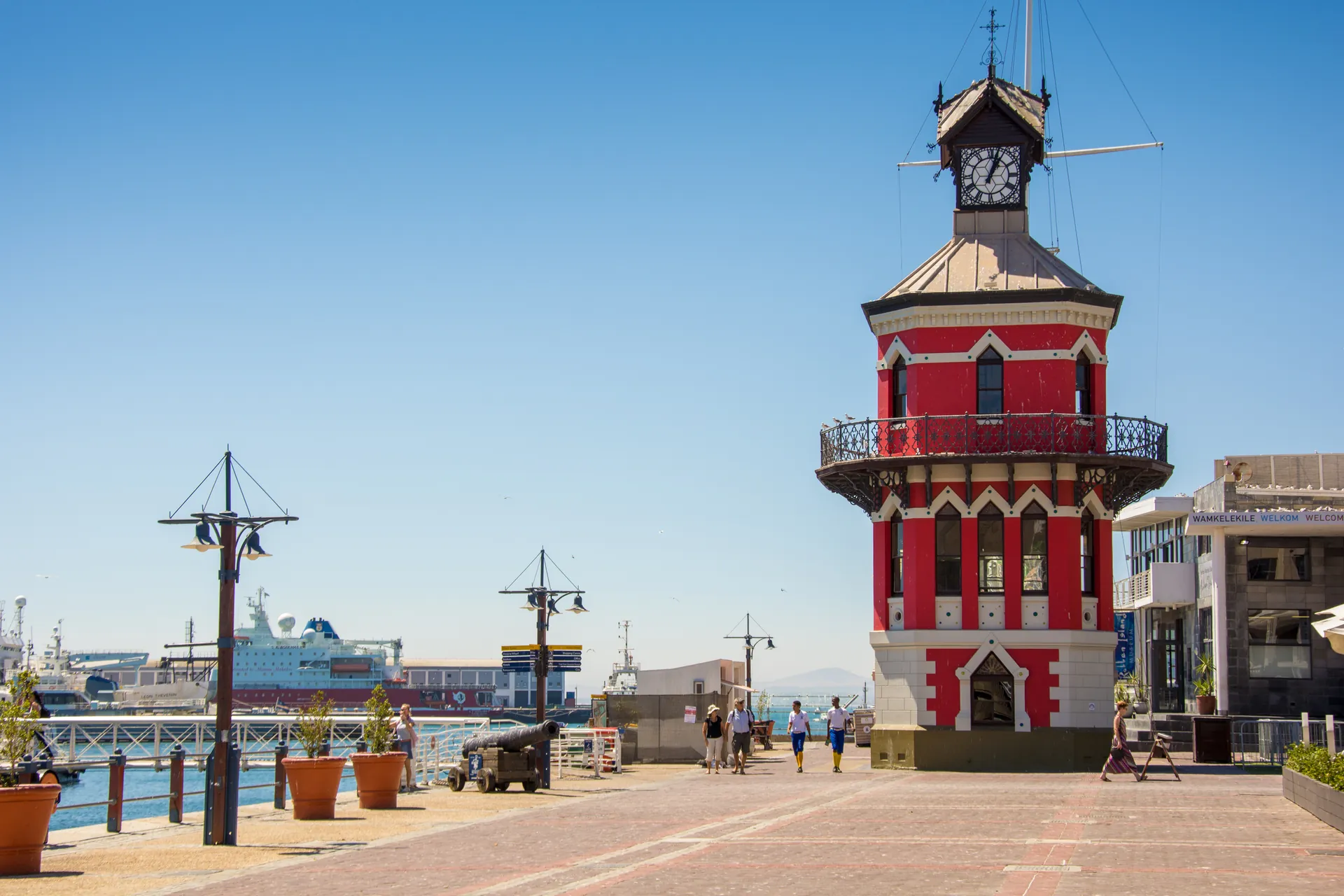
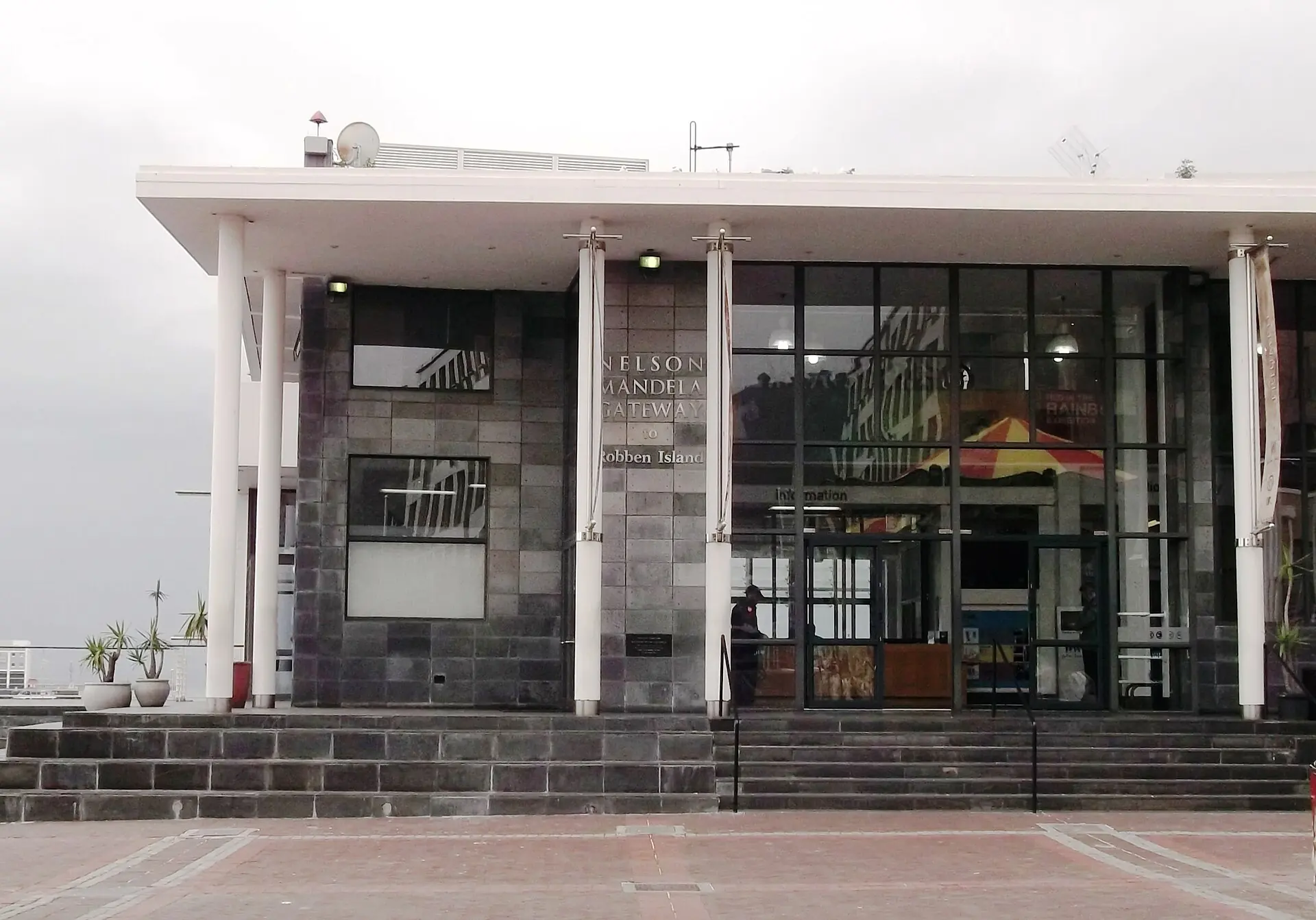
If you are coming from far away or in rush hour, be careful with the first ferry of the day: aim to reach the Waterfront early, have breakfast nearby and walk to the Gateway with time to spare. What you will find inside the building, from the free exhibition to the ticket office, is in our guide to the Nelson Mandela Gateway. If you would rather walk to the ferry, our list of hotels near Robben Island shows where to stay.
Once you land
The ferry docks at Murray's Bay Harbour, where a short walk takes you to the buses. From there the visit follows a set route, from the island stops to the prison and Mandela's cell, described in our guide to the Robben Island tour.
Getting to Robben Island: FAQ
Where is Robben Island located?
In Table Bay, off Cape Town, in South Africa's Western Cape. It lies just under 7 km off the beach at Bloubergstrand and about 11 km from the city, where the ferries leave.
How far is Robben Island from Cape Town?
About 11 km, according to the Robben Island Museum. Other official sources give 12 to 13 km from the V&A Waterfront: the figure changes with the point you measure from. The ferry takes 30 to 60 minutes each way.
How do you get to Robben Island from Cape Town?
Only on the Robben Island Museum ferry tour, which leaves from the Nelson Mandela Gateway in the Clock Tower Precinct of the V&A Waterfront. You cannot visit the island on your own: book the ferry and prison tour on Tiqets, from €42.50.
Can you take a bus to the Robben Island ferry?
Yes. MyCiTi route 104 links Civic Centre station in the city centre and Sea Point with the Waterfront. Get off at Waterfront Silo and walk to the Clock Tower. You pay with a myconnect card.
Where do you park for Robben Island?
The closest car parks to the Gateway are the Clock Tower and Silo parking garages at the V&A Waterfront. Each garage sets its own prices, shown at the entrance.
How far is the airport from the Robben Island ferry?
Cape Town International Airport is about 20 km from the V&A Waterfront, 25 to 40 minutes by car depending on traffic. Leave a wide margin if you are coming straight from a flight.
How big is Robben Island?
Roughly 5 square kilometres: an oval about 3.3 km from north to south and 1.9 km across. Its highest point, Minto's Hill, is only 24 m above sea level.
Can you swim to Robben Island?
Not as a way to visit: visitors land only from the museum ferry. Historically the shortest crossing is to Bloubergstrand, just under 7 km, and the museum records a convict, Jan Rykman, as the first person known to have escaped by swimming, in 1690.
Why is it called Robben Island?
The name comes from the old Dutch word robben, which means seals.
Andrea SemonellaBorn and raised in Genoa, Italy. Co-founder of Benicool, which publishes independent guides to cultural sites. He has travelled to every continent and writes about how to visit them without wasting time or money.
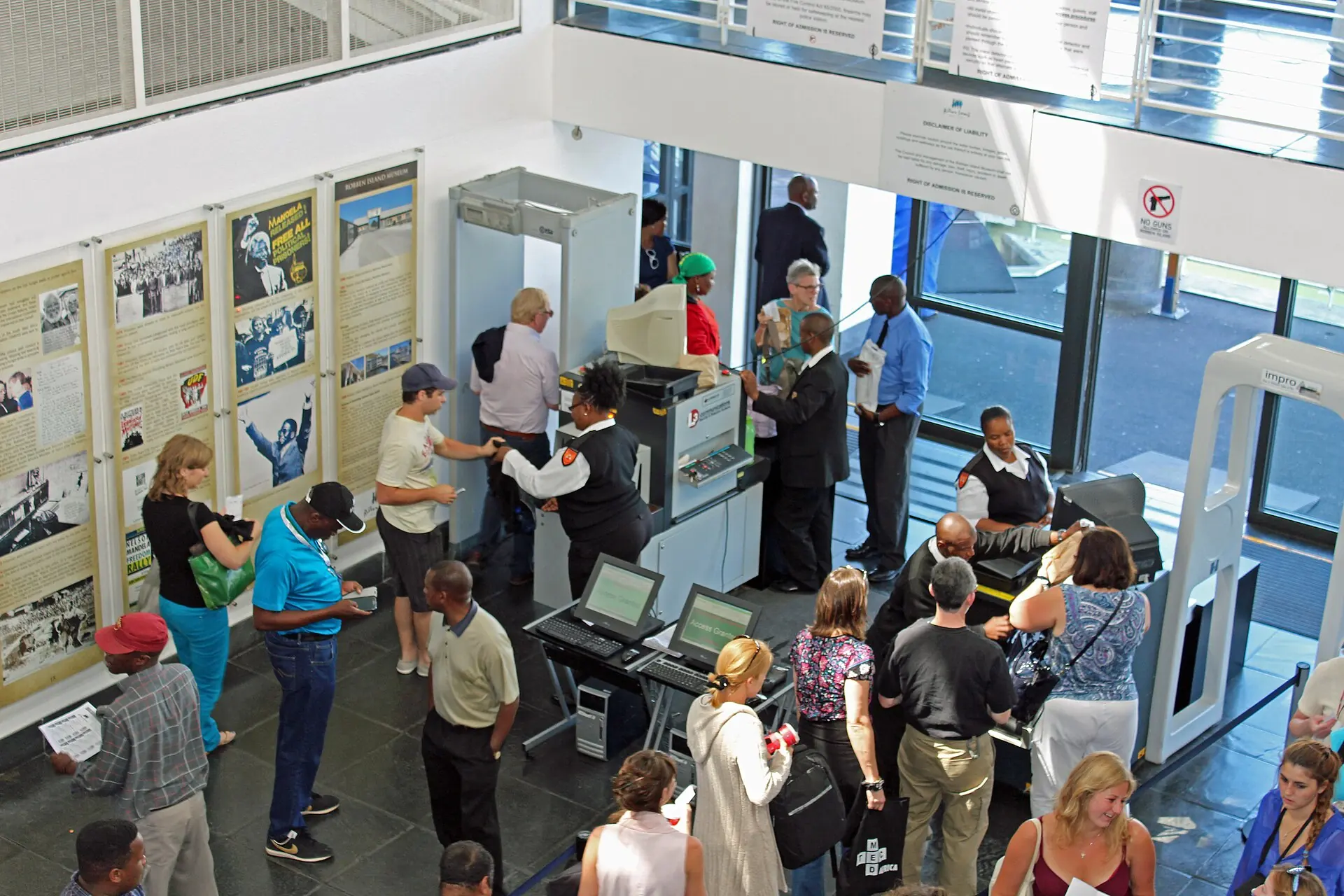 The Nelson Mandela Gateway
 The Robben Island ferry
 Hotels near Robben Island