Robben Island Penguins: and the other wildlife on the island
 By Andrea Semonella
Updated on 10 min read
By Andrea Semonella
Updated on 10 min read
In short
Yes, there are penguins on Robben Island: a breeding colony of African penguins lives near the harbour, where the museum has built a wooden boardwalk to watch them. The island also has about 132 bird species and around 23 mammal species, from bontebok to fallow deer, and from the ferry you can see Cape fur seals and, with luck, whales and dolphins.
African penguins on Robben Island
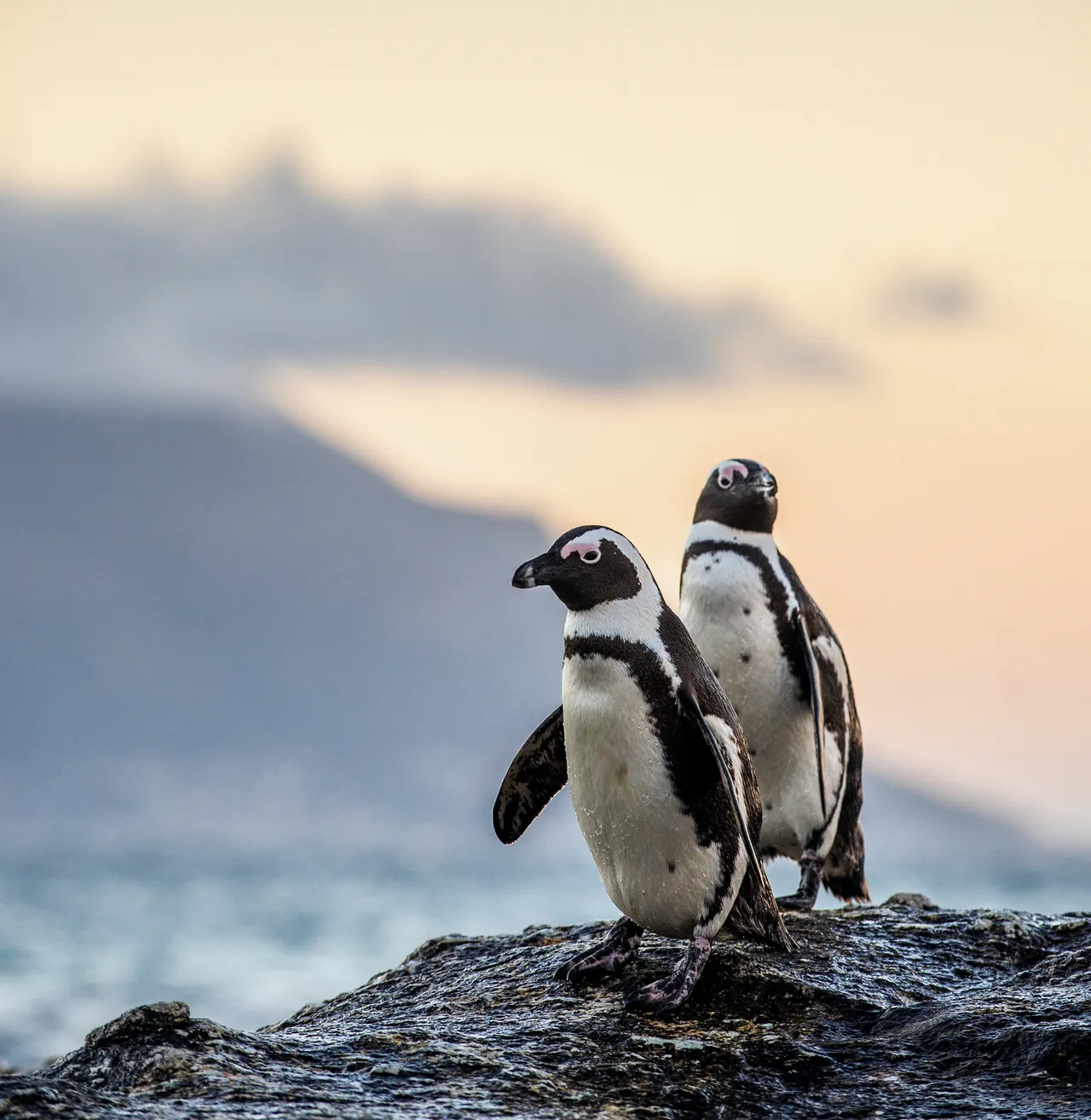
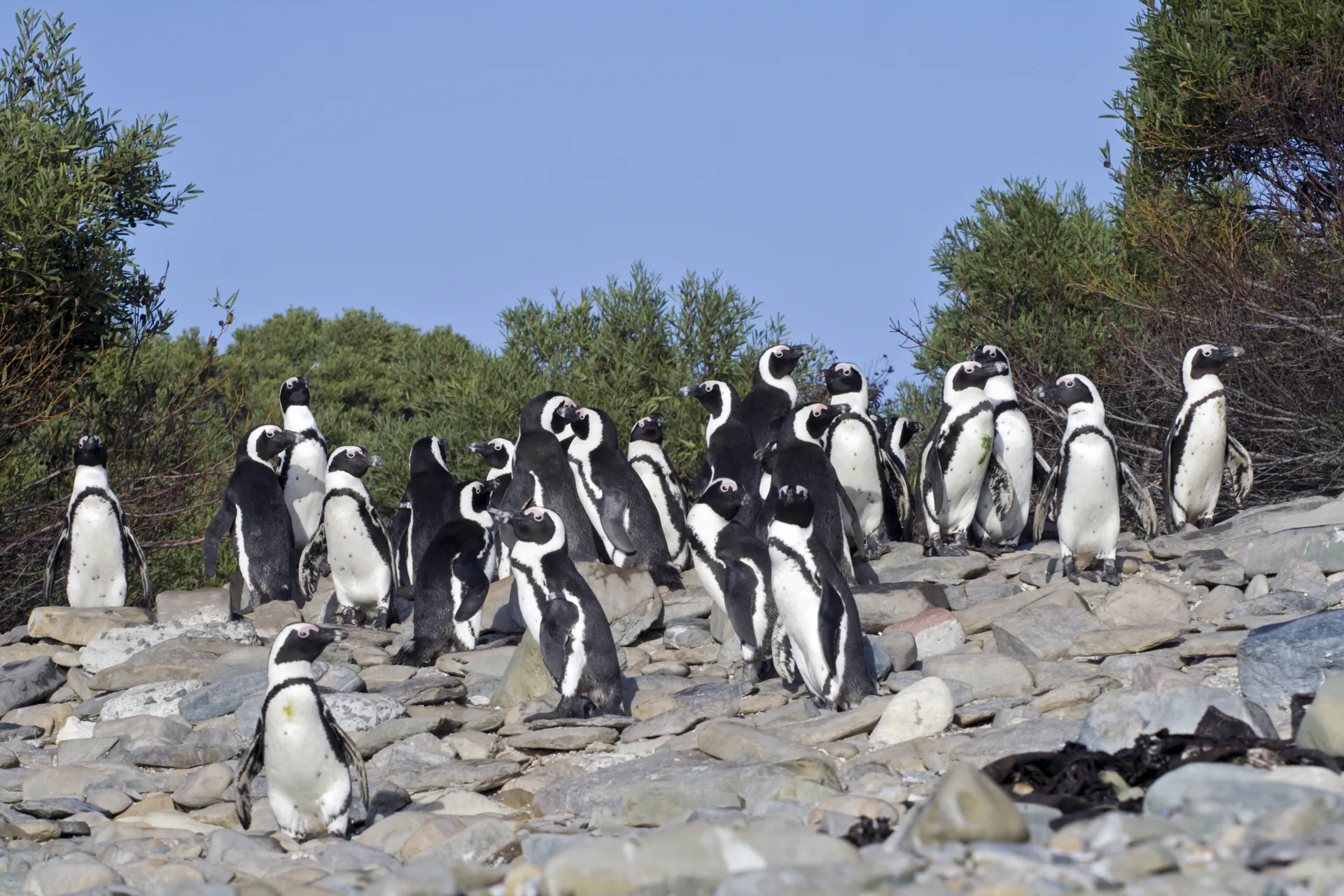
The penguins you see on Robben Island are African penguins, and they breed here: this is a nesting colony, not a group of birds passing through. The colony was re-established in the 1980s, usually dated to 1983.
They are not newcomers, though. When Jan van Riebeeck arrived at the Cape in 1652, South African History Online records, the island had plenty of seals, tortoises and penguins, and the Dutch hunted all three for passing ships. The colony the first settlers found did not survive: the one you see today is a return, not a continuation.
In a place known for its prison, they are one of the surprises of the visit. The same island where political prisoners dug lime for years is now a breeding ground for a species that the world's conservation body considers critically endangered.
The Penguin Boardwalk
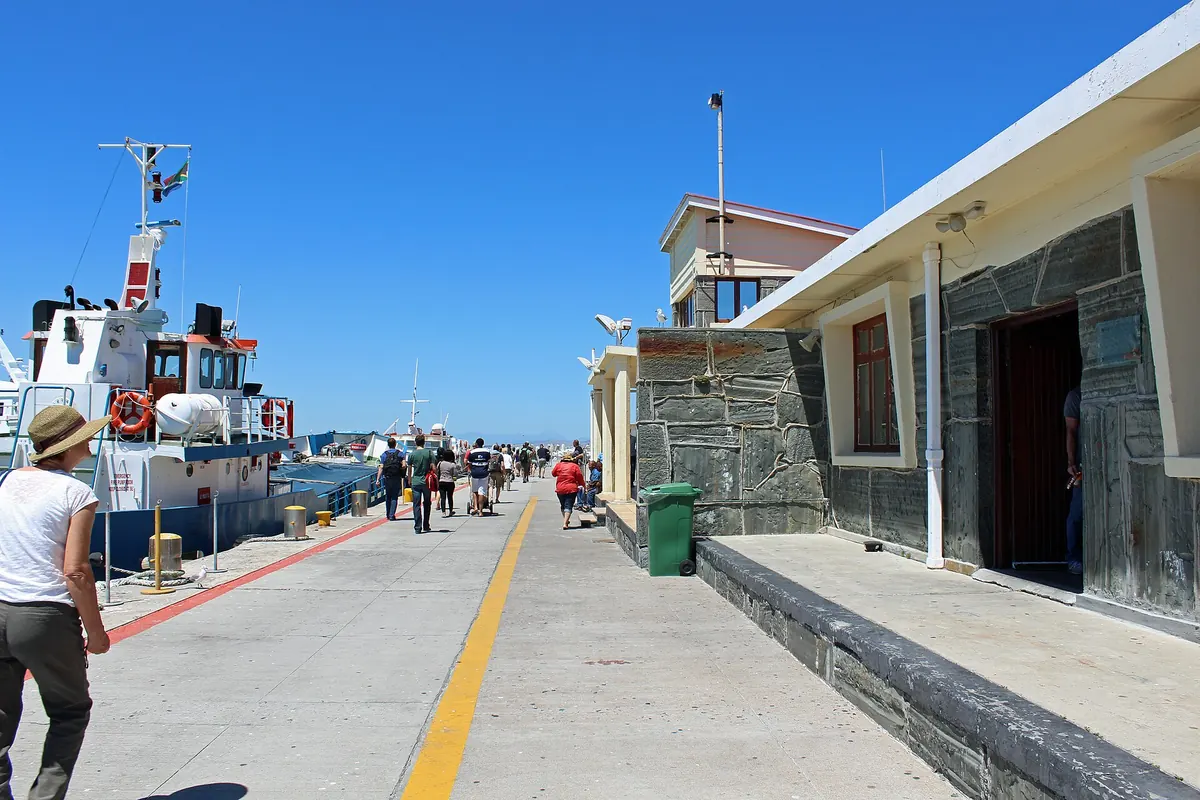
The museum has set aside a sanctuary near Murray's Bay Harbour, where you arrive by ferry: on our map it lies about 500 m north of the quay in a straight line. The museum describes it as a place where you see the penguins going about their daily routine under a wooden bridge and ramp trail, so you watch them from above, without walking among them. The Robben Island Museum lists the Penguin Boardwalk among the island's sites on its website.
One caveat: the museum does not list the boardwalk among the stops of the standard bus tour, which covers the leper graveyard, the quarries, Robert Sobukwe's house, the wartime bunkers and the prison. Many visitors do see penguins, but we cannot promise that your bus will stop there. More on that in the tips at the end.
The penguin colony and its decline
The numbers are worrying. According to Earthwatch, the Robben Island colony counted more than 8,000 breeding pairs in 2004 and is down to about 900 today, roughly one pair left for every nine.
- 2004more than 8,000
- Todayabout 900
Earthwatch estimates. The museum does not publish its own count.
Wikipedia gives a peak of around 16,000 birds in 2004 and about 3,000 in 2015. The museum does not publish its own count, so treat these figures as estimates rather than a census.
The decline is not only local. In October 2024 the International Union for Conservation of Nature listed the African penguin as critically endangered, one step from extinction in the wild, as reported in the South African press. Food is at the centre of the debate: the sardines and anchovies the penguins hunt are also the target of commercial fishing.
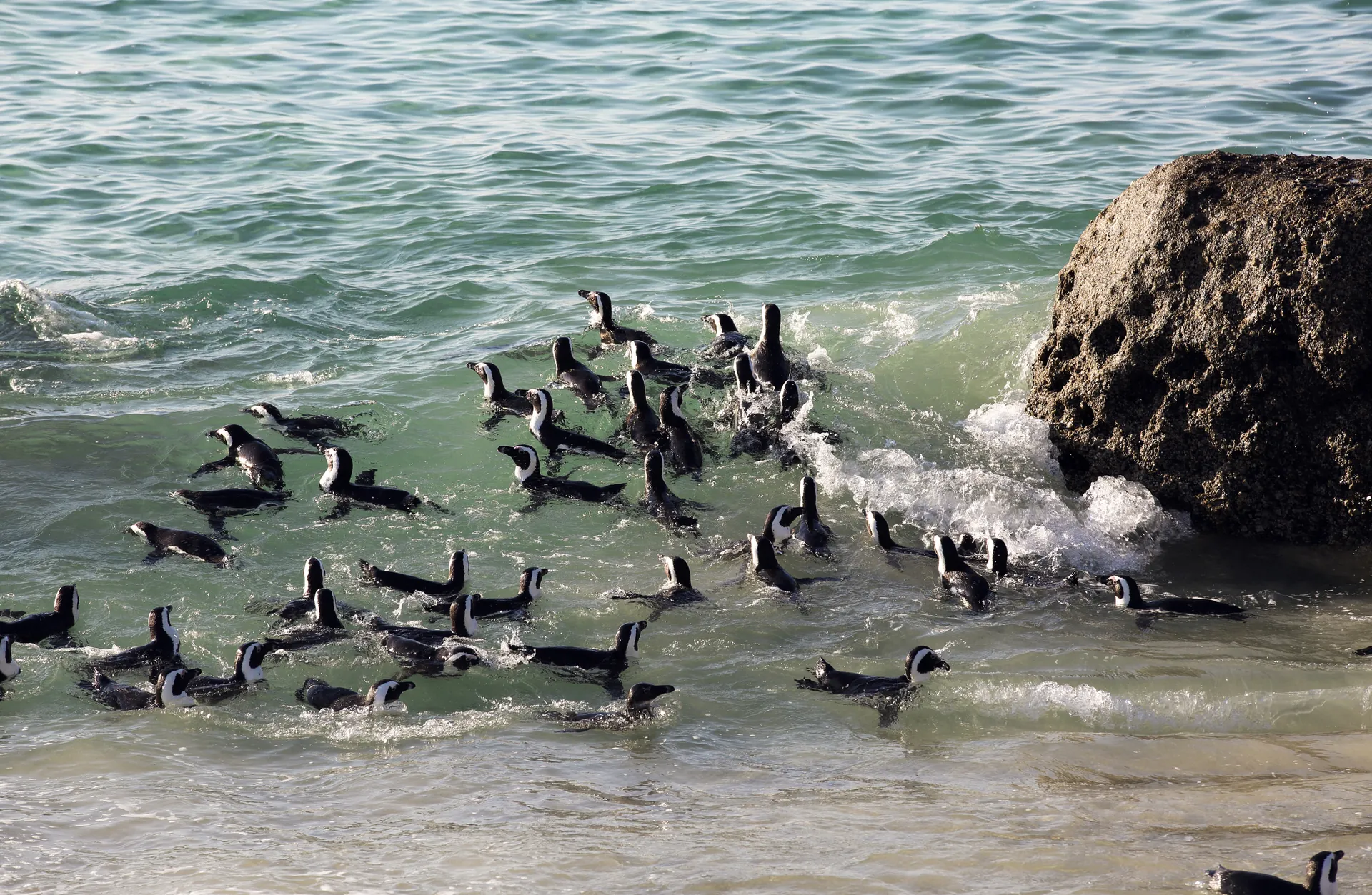
African penguins in the surf, where they hunt sardines and anchovies
In March 2025 a South African court order banned commercial fishing for sardines and anchovies around six penguin colonies, Robben Island among them, according to the newspaper IOL.
- about 132Bird species recorded
- about 23Mammal species
- 3Tortoise species
- 2024African penguin listed critically endangered
Where the penguins nest, and why the bus drives slowly
The best official account of how the colony lives on the island is a 2004 report by the UNESCO monitoring mission, made up of experts from IUCN, ICOMOS and ICCROM. It is more than twenty years old and we found nothing more recent from the museum, but it explains a lot of what you see from the bus.
Nests in the scrub
Many penguins on Robben Island do not nest on open beaches. The report found them nesting in the thickets of alien plants, rooikrans and spider gum, that spread across the island after centuries of planting. That shelter comes with a risk: the same scrub is a fire hazard, and a fire in the breeding season would hit the nests. At the time the museum was also experimenting with artificial nesting boxes for the penguins.
Penguins on the road
As the colony grew, the birds started crossing the island's roads between the sea and their nests. The report records penguin road deaths, with 36 vehicles on the island at the time, and notes that speed restrictions were in place to prevent them. So if a driver slows down near the coast, watch the road: there may be penguins crossing. The museum worked on this with the Avian Demography Unit of the University of Cape Town.
A protected sea
The same report describes a 1 km marine reserve around the island, and records that the museum had banned island residents from any recreational use of the inshore marine resources, after concerns about the poaching of abalone.
Other birds: 132 species
Penguins are only one of about 132 bird species recorded on the island by the Robben Island Museum. Because the island is small, low and largely left alone, it works as a refuge for seabirds and waterbirds.
The museum singles out two kinds of colony: crowned cormorants and black-crowned night herons, which come from the mainland to breed here in large numbers. Both live on the island alongside the penguins, so it is worth looking along the shore and in the bushes as well as at the water.
Two more seabirds nest on the island, according to the 2004 UNESCO report: swift terns and Hartlaub's gulls. The report also found that feral cats were hurting their breeding success. Not every bird is wild in origin: the museum lists chukar partridges and guineafowl among the species brought to the island by people.
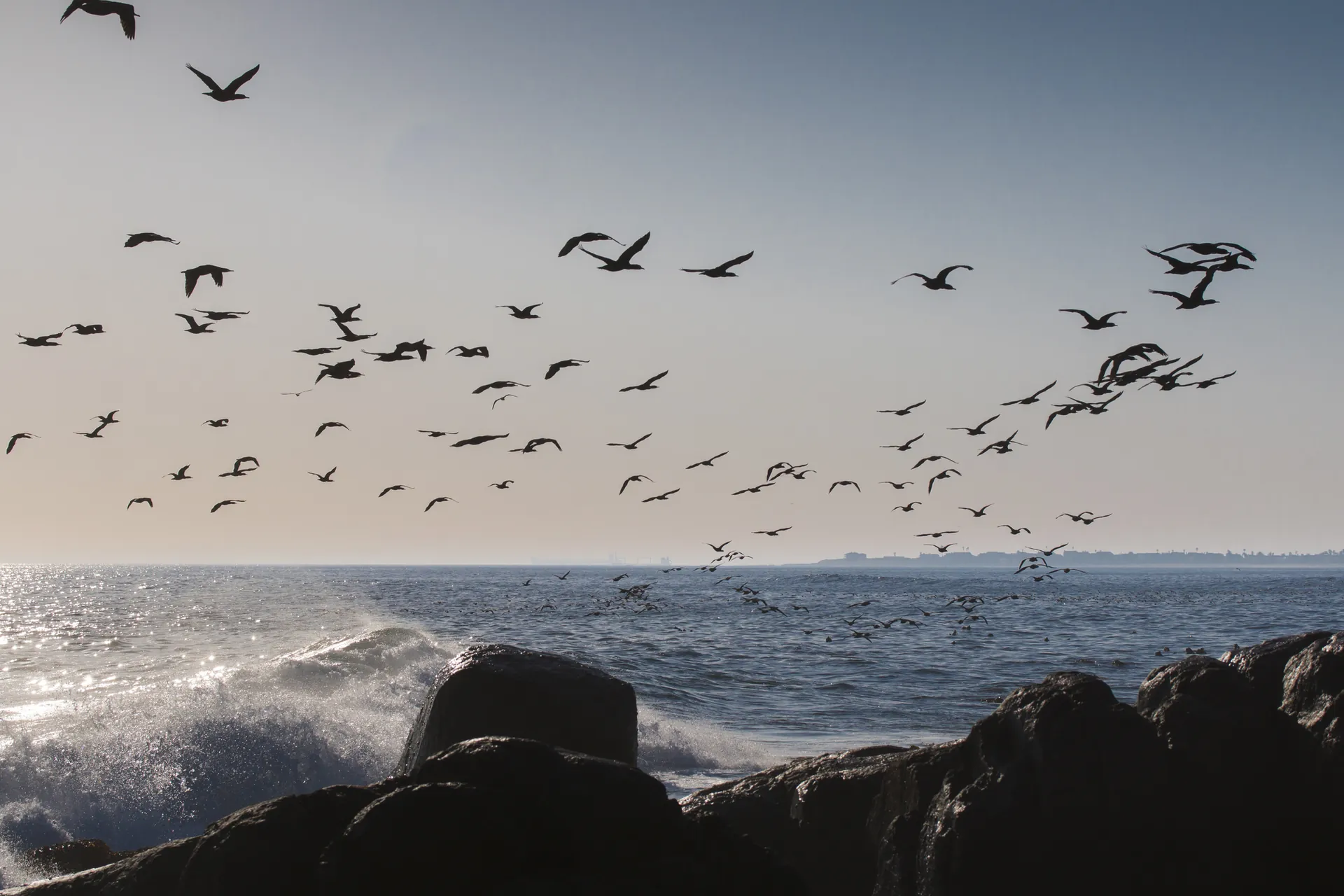
Cape cormorants flying low over the surf
Robben Island animals on land
The island is home to about 23 mammal species, according to the museum's conservation page. The ones it names are four kinds of antelope, bontebok, springbok, steenbok and eland, and fallow deer.
Ostriches also live on the island, and so do three species of tortoise, as well as lizards, geckos and snakes. None of them is kept in an enclosure you visit, so what you see depends on where they are when your bus passes. Keep an eye on the open ground between the stops.
Why are there deer on Robben Island?
Because people brought them. The 2004 UNESCO report lists the European fallow deer, springbok, eland, steenbok, bontebok and ostrich as large animals introduced to the island, and found that their numbers had grown beyond what the vegetation could feed, so the museum had to provide extra fodder and water points. The island's environmental plan recommended removing them; the museum preferred to reduce the herds while keeping small populations that reflect the island's history.
The same report names the other newcomers: a long-established population of European rabbits, which has changed the island's plant cover, feral cats and black rats. It is a reminder that the "wild" Robben Island is also a landscape shaped by four centuries of people. We found no more recent official figures on how many deer or rabbits live there today.
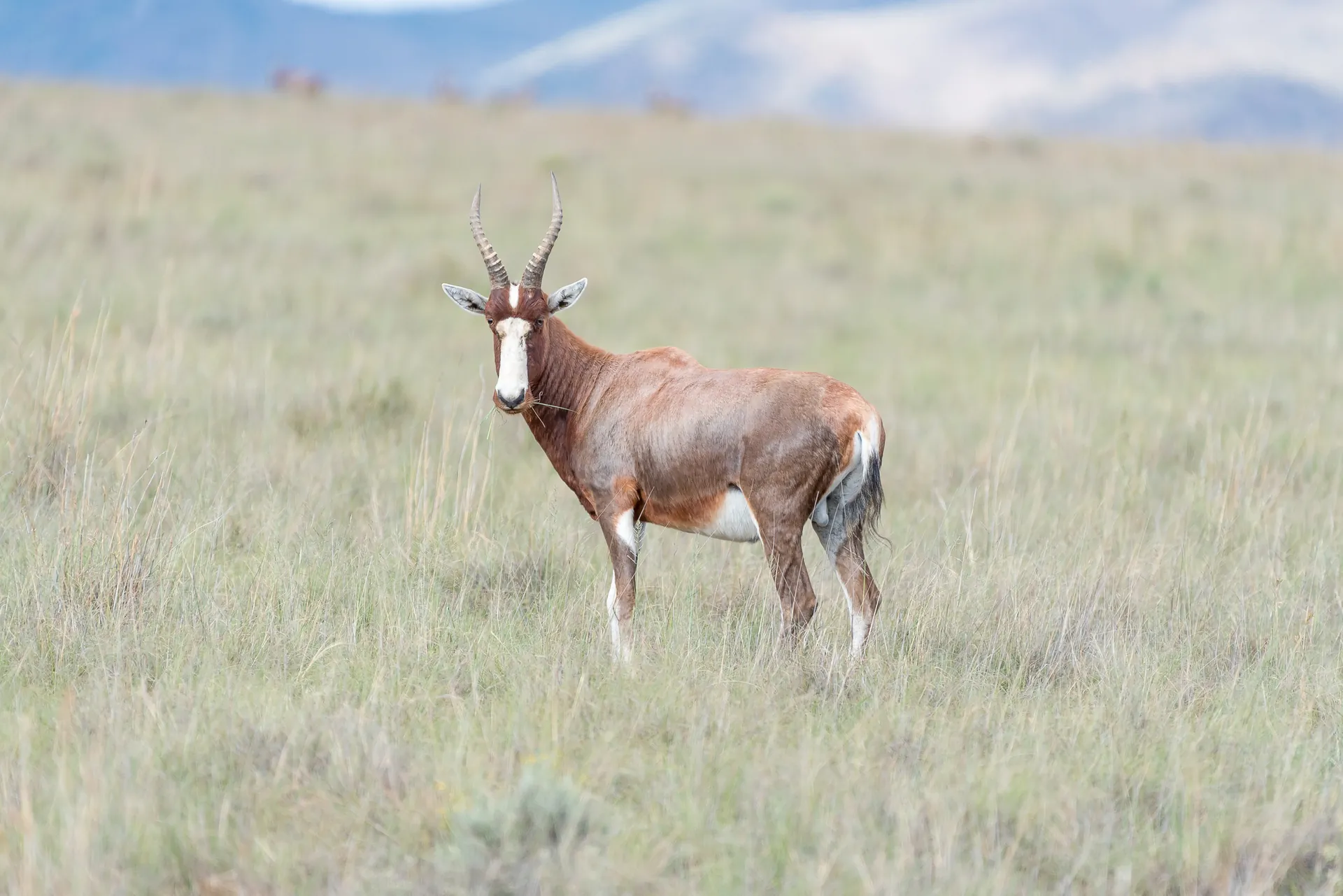
A bontebok, one of the four kinds of antelope on Robben Island
Seals, whales and dolphins from the ferry
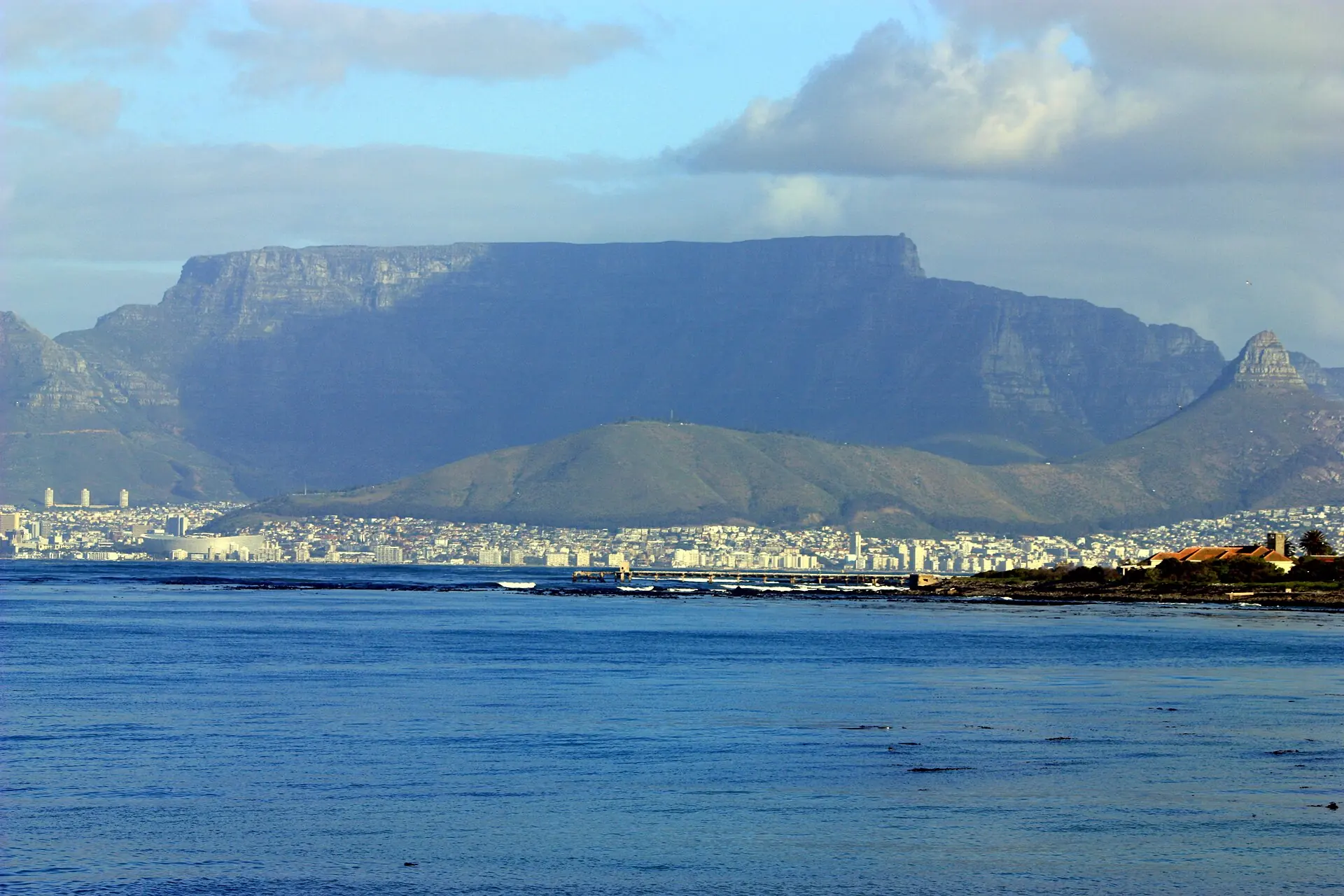
Some of the best wildlife watching happens before you reach the island. During the crossing from the V&A Waterfront, which takes 30 to 60 minutes depending on the boat, the museum lists these animals among those you may see:
- Cape fur seals, the animals that gave the island its name: robben is old Dutch for seals, as our page on Robben Island history explains.
- Southern right whales.
- Dusky dolphins and Heaviside's dolphins.
We could not find an official season for whale sightings from the ferry, so do not book your visit around them; take them as a bonus. Everything about the crossing, from times to seasickness, is in our guide to the Robben Island ferry.
The island that held Mandela is now a refuge for a critically endangered bird.
Spring flowers and the island's climate
In spring, from September to October, the island's veld flowers bloom. The museum describes them as West Coast veld flowers. If you visit in those months, look at the ground as well as the buildings.
The climate is Mediterranean, like Cape Town's, but the museum notes that the island has stronger winds and greater temperature extremes than the city. Bring a windproof jacket even in summer, as well as a hat and sunscreen. Crossings can be cancelled in strong wind or heavy swell, in any season.
How to see wildlife on your visit
There is no wildlife tour of Robben Island: animals are something you see along the way, on the standard tour of the island and the prison. A few habits help.
Watch the water on the ferry. If you can get outside on deck, do: seals and dolphins are easier to spot in the open than through a window, and the crossing is when you are closest to the sea life.
Watch the harbour area. The penguin sanctuary is near Murray's Bay Harbour, where you land and where you board again at the end. Whether your bus stops at the boardwalk is not confirmed by the museum, so look out for penguins near the harbour before and after the tour, and ask your guide.
Sit by a window on the bus. Antelope, ostriches and tortoises are seen from the bus between the stops, not at them.
Bring a zoom, not a tripod: tripods and drones are not allowed. A phone with a good zoom, or binoculars, is the most useful thing to bring.
Keep your distance. The penguins are critically endangered and the island is their nesting ground. The boardwalk exists so that you can watch them without getting close.
You can only reach the island on the museum's guided tour, which includes the ferry, the bus around the island and the prison. The simplest way to book it is the ferry and prison tour on Tiqets, from €42.50. Prices and every other option are on our Robben Island tickets page, and the Robben Island tour page explains what happens from the moment you land.
If penguins are your main reason: Boulders Beach
Think about why you are going. If you want history and the prison, Robben Island is the place, and penguins are a possible bonus. If you want to be sure of seeing African penguins up close, the more reliable choice in the Cape Town area is Boulders Beach in Simon's Town, on the False Bay side of the Cape Peninsula. Wesgro, the Western Cape tourism board, calls its African penguin colony one of Simon's Town's most famous residents, and there you watch the birds in their natural setting.
The two do not compete: Boulders is a separate trip to the south of the peninsula, Robben Island a half day from the Waterfront. If you have the time, they fit well on different days. Check entry times and fees for Boulders with the park authority before you go, as we do not cover them here.
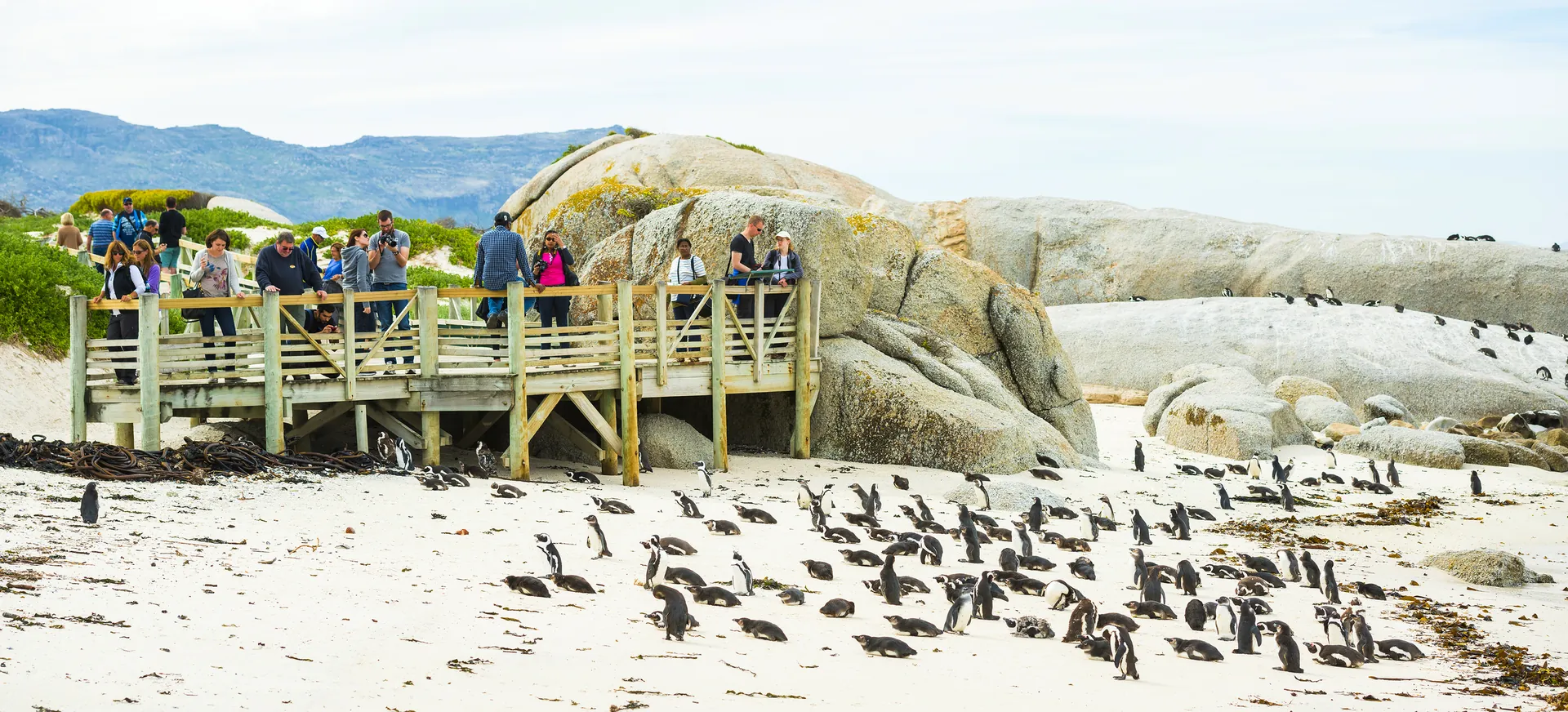
Visitors on the boardwalk above the penguins at Boulders Beach
Boulders Beach is on the opposite side of the peninsula from the Waterfront, so look at the map before you plan the day around it.
Boulders Beach, Simon's Town
Open in Google MapsRobben Island penguins and wildlife: FAQ
Are there penguins on Robben Island?
Yes. Robben Island has a breeding colony of African penguins, re-established in the 1980s. The museum has a Penguin Boardwalk near the harbour, from where you can watch them below a wooden walkway.
Will I see penguins on the standard Robben Island tour?
Possibly, but it is not guaranteed. The museum does not list the Penguin Boardwalk among the stops of the standard bus tour, so whether you see penguins depends on the route and the guide on the day.
How many penguins live on Robben Island?
Numbers have fallen sharply. Earthwatch puts the colony at about 900 breeding pairs, down from more than 8,000 in 2004. The museum does not publish its own count.
What other animals live on Robben Island?
About 23 mammal species, including bontebok, springbok, steenbok, fallow deer and eland, as well as ostriches and three species of tortoise. The museum has recorded about 132 bird species.
Can you see seals from the Robben Island ferry?
Often, yes. Cape fur seals are common in Table Bay, and the island takes its name from them: robben means seals in old Dutch. The museum also lists southern right whales, dusky dolphins and Heaviside's dolphins among the animals you may see from the ferry.
Why are there deer and antelope on Robben Island?
They were brought by people. A 2004 UNESCO monitoring report lists fallow deer, springbok, eland, steenbok, bontebok and ostrich as introduced animals whose numbers had outgrown the island's vegetation, and the museum said it intended to reduce the herds.
Where else can I see penguins near Cape Town?
The best-known colony is at Boulders Beach in Simon's Town, on the False Bay side of the Cape Peninsula, where you watch African penguins in their natural setting. It is a separate trip from Robben Island, and a more reliable one if penguins are your main goal.
Can I fly a drone to film the wildlife?
No. The museum does not allow drones or tripods on the island. Photos for personal use are fine, so a phone or a camera with a zoom lens is the way to go.
Andrea SemonellaBorn and raised in Genoa, Italy. Co-founder of Benicool, which publishes independent guides to cultural sites. He has travelled to every continent and writes about how to visit them without wasting time or money.
 Robben Island ferry
 The Robben Island tour
 Robben Island history